





 Portuguese
  English
  Spanish
  4 min of reading
  0 comments


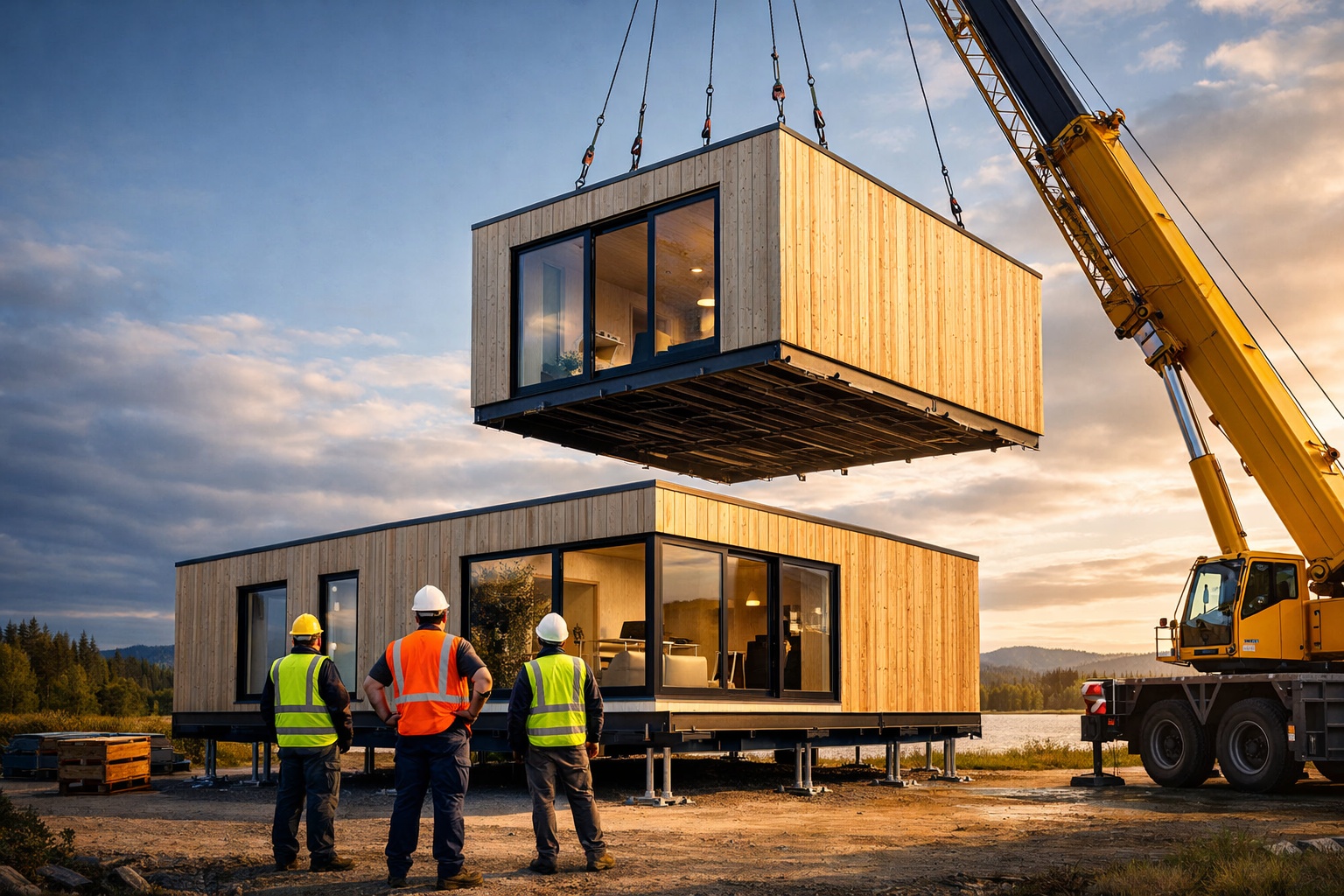
Swedish Modular Homes Are Built Like Industrial Blocks, Reduce Waste Almost to Zero, Shorten Deadlines, and Transform the Construction Sector in Europe.
In Sweden, a country known for its strong industrial culture and environmental concern, the construction industry has been undergoing a silent yet profound transformation. Instead of noisy construction sites filled with debris and lengthy execution times, structures are assembled as if they were large pieces of an industrial system. Houses and residential buildings are produced in factories, transported as ready-made modules, and assembled in just a few days on the final site. Swedish companies like Lindbäcks have become references in this model known as industrialized modular construction or “off-site construction”. The system drastically reduces waste, lowers carbon emissions, and changes the traditional logic of construction based on wet work and complex foundations.
Swedish Modular Construction: How the Industrialized System Works
Unlike the conventional method, where almost all stages occur on-site, Swedish modular construction transfers most of the process to the factory environment.
The modules — which already include walls, insulation, electrical and plumbing installations, windows, and internal finishes — are produced in a controlled assembly line. This closed environment allows for:
-
The lack of welders, electricians, and operators becomes a structural threat in 2025, with the construction industry and manufacturing already suffering from delays, cost pressures, and labor shortages in Brazil.
-
Brazil and Paraguay are just 46 meters away from a historic union on the bioceanic bridge that promises to revolutionize trade between the Atlantic and the Pacific.

-
With 55 km over the sea, a cost of US$ 20 billion, and enough steel to build 60 Eiffel Towers, China’s largest project has connected Hong Kong, Zhuhai, and Macau in a colossal bridge that defies the logic of engineering.

-
A trick with joint compound transforms a Styrofoam ceiling into a plaster-like ceiling: leveled panels, wires and mesh at the joints, sand, paint, and change the environment while spending little today.

- Millimeter precision in cuts
- Strict quality control
- Nearly total reduction of rework
- Protection against weather

When ready, the modules are transported by trucks and positioned on-site by cranes, being structurally connected to each other. The result is a house or building assembled like structural blocks.
No Deep Foundation: Smart Structural Adaptation
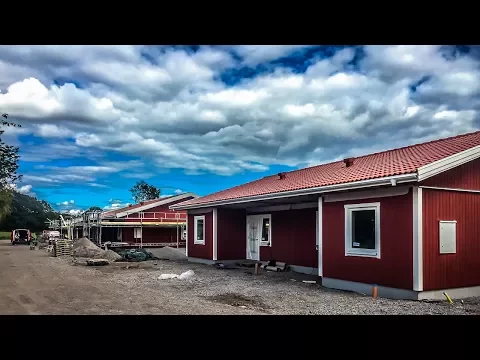
One of the striking points is the reduction in the need for deep foundations. As the modules are designed with even load distribution and controlled weight, many projects use optimized shallow foundations, reducing heavy excavation.

This means:
- Less soil movement
- Reduced concrete consumption
- Lower structural costs
- Less environmental impact
In stable soils, the system can be installed with a simplified base, further speeding up the schedule.
Waste Reduction Almost to Zero
Traditional construction is responsible for one of the highest waste rates in the global industry. European studies indicate that up to 30% of materials can become waste in conventional works.
In the Swedish industrial model:
- Wood cutting is optimized by software
- Scraps are reused in the factory
- Purchases are made to exact demand
- Waste is separated and recycled immediately
Inventory control is digitized, reducing logistical losses. This model aligns with the EU’s climate goals and Sweden’s emission reduction policies.
Engineered Wood as Structural Base

Sweden has a tradition of using structural wood. Modern modular construction uses engineered wood, such as structural panels and lightweight framing systems, which offer:
- High structural resistance
- Excellent thermal insulation
- Low carbon footprint
- Speed of assembly
The use of certified wood also connects to the country’s sustainable forestry policy.
Timeframes Dramatically Reduced
One of the biggest advantages is the execution time. While a traditional house can take months to be completed, the modular system allows for:
- Production parallel to site preparation
- Structural assembly in just a few days
- Reduction of climate-related delays
In larger residential buildings, the structure can be assembled in a matter of weeks. This directly impacts financial costs, loan interest, and return on investment.
Energy Efficiency and Scandinavian Standard
Swedish homes follow strict thermal efficiency standards due to the cold climate. Modular construction facilitates the integration of:
- High-performance thermal insulation
- Air-tight sealing
- Heat recovery ventilation systems
The result is buildings that consume less energy for heating.
Possibility of Disassembly and Reuse
A strategic differentiator is the future disassembly capability. Since the modules are mechanically interconnected and do not rely exclusively on monolithic concrete systems, it is possible to:
- Reconfigure units
- Expand structures
- Relocate buildings
This introduces a concept of circularity in construction, something rare in the traditional model. The industrialization of construction is gaining ground in various European countries, but Sweden is among the leaders in this segment. The predictability of cost and timeline makes the system attractive to investors and governments.
Sustainability as the Main Vector
Swedish modular construction is aligned with the EU’s climate goals and national environmental policies. The construction sector is responsible for a significant share of global CO₂ emissions, especially due to cement use.
By reducing concrete, optimizing materials, and using structural wood, the model contributes to:
- Reduction of emissions
- Less waste generation
- Energy efficiency throughout the life cycle
Is It Changing the Way of Building in Europe?
Although it does not completely replace the traditional method, modular industrialization has been growing consistently.
The concept is not just technological, but cultural: transforming construction into a predictable, clean, and standardized industrial process.

In Sweden, this change is already a large-scale reality. Without deep foundations, without debris, and with the possibility of future disassembly, the Swedish modular home represents a transition from artisanal construction to a high-efficiency industrial model.
Assembled like structural blocks, these buildings reduce waste almost to zero, shorten timelines, and redefine construction standards in various European countries.
The question remains: how long will it take for this model to become dominant outside Scandinavia?










-

-

-

-

-

-

48 pessoas reagiram a isso.