





 Portuguese
  English
  Spanish
  5 min of reading
  0 comments


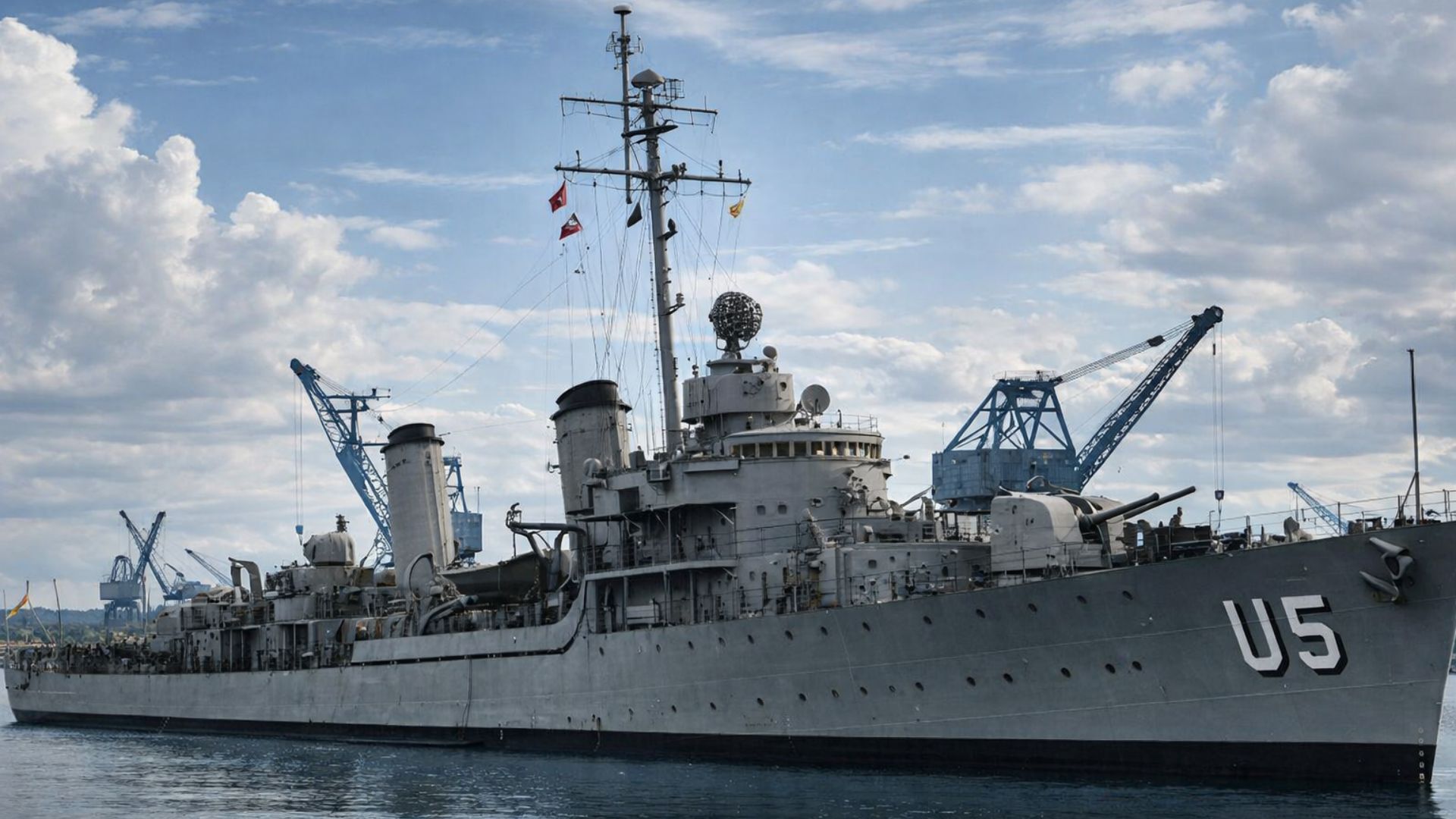
Episode Surrounded by Military Secrecy, Controversial Science, and Extreme Reports Fueled One of the Most Enduring Urban Legends of the 20th Century, Associating a U.S. Navy Ship with Tests of Invisibility, Teleportation, and Physic Effects Never Proven, Despite Official Denials and Conflicting Historical Records.
The story of a U.S. Navy ship that allegedly disappeared in a greenish fog and reappeared minutes later in another port, hundreds of miles away, continues to circulate as one of the most well-known military myths of the 20th century.
The case became known as the Philadelphia Experiment and is usually associated with the escort destroyer USS Eldridge, supposedly subjected to a secret test in 1943 to become “invisible.”
Military authorities and historians, however, claim that the episode did not occur and point out that the legend is based on unverified accounts and contradictions with records from the time.
-
Friends have been building a small “town” for 30 years to grow old together, with compact houses, a common area, nature surrounding it, and a collective life project designed for friendship, coexistence, and simplicity.

-
This small town in Germany created its own currency 24 years ago, today it circulates millions per year, is accepted in over 300 stores, and the German government allowed all of this to happen under one condition.

-
Curitiba is shrinking and is expected to lose 97,000 residents by 2050, while inland cities in Paraná such as Sarandi, Araucária, and Toledo are experiencing accelerated growth that is changing the entire state’s map.

-
Tourists were poisoned on Everest in a million-dollar fraud scheme involving helicopters that diverted over $19 million and shocked international authorities.


Over the decades, different versions have blurred the lines between science, war, and horror elements, with descriptions of disoriented crew members and even extreme narratives of people “fused” to the ship’s structure.
None of this has been demonstrated with verifiable documentation, and the Navy itself maintains that the story is incompatible with known facts about the Eldridge and with the type of technology available at the time.
What the Legend Says Happened in 1943

At the core of the popular account, an escort ship was said to have undergone an experiment to manipulate electromagnetic fields.
In some versions, the goal was to create a “camouflage” capable of deceiving radar.
In others, the intervention allegedly went further and caused the hull to disappear, reappearing elsewhere for a brief moment.
Repeated accounts in books and pop culture describe a mist with a greenish hue enveloping the ship before the supposed “jump.”
From there, the narrative fragments.
Some say the Eldridge appeared in Norfolk, Virginia, and then returned.
Others mention even more extraordinary relocations, including the idea of a “time jump,” without a consensus or a confirmed primary source for the scene.
The attempt to lend scientific veneer to the rumor often appears, with mentions of theories attributed to Albert Einstein and the so-called Unified Field Theory.
This point, however, usually emerges in later versions and is not accompanied by public documentation linking the physicist directly to the supposed naval test described by the legend.
Origin of Accounts and Dissemination of the Legend
Although the legend is set in 1943, it did not become known during that time.
The clearest circulation of the story appears years later, in the mid-1950s.
At that time, a man identified as Carl M. Allen, who also used the name Carlos Miguel Allende, began sending letters and materials to Morris K. Jessup, an author who wrote about UFOs and related topics.
In these sets, Allen claimed to have witnessed the experiment and suggested a secret operation involving unusual physical effects.
From these messages, the story was retold, edited, and expanded.
Over time, elements such as “invisibility,” teleportation, and terrible consequences for the crew began to accumulate.
Often, readers could not distinguish what constituted the original account, later interpretation, or pure literary addition.
This mechanism helps explain why the Philadelphia Experiment behaves like an urban legend.
The plot adapts with each new retelling, maintaining a compelling core while its details change according to the source.
Invisibility and Naval Technology in World War II

One of the most cited points by those who challenge the legend is that “invisibility,” in the naval context of World War II, can be confused with a real and common procedure.
This process is known as degaussing.
It involves reducing or controlling the magnetic signature of the hull to decrease the risk of detonation by magnetic mines.
These devices reacted to changes in the magnetic field caused by the passage of large metal structures.
In other words, when some accounts speak of “invisible” ships, the plausible and documented explanation is that they could become less detectable by magnetic sensors linked to mines.
This does not mean disappearing from human sight or radars.
The historical documentation of the Navy mentions the installation and use of degaussing equipment on ships.
The contrast between this real procedure and the idea of teleportation helps understand why the popular narrative clashes with technical reality.
Historical Records of the USS Eldridge
Another line of contestation refers to the timeline of the ship associated with the case.
The USS Eldridge (DE-173) was commissioned on August 27, 1943.
This means that versions placing the ship in complex tests months earlier face calendar problems.
In addition to the commissioning, there are references to records of the Eldridge’s movements during the period when the legend usually situates the supposed experiment.

These documents indicate the ship’s presence in New York, participation in convoys, and passage through Norfolk related to operational routines.
There is no mention of disappearances or extraordinary phenomena.
At this point, conspiratorial narratives often suggest falsification or concealment of records.
Still, there is no reliable public evidence that documents have been altered to cover up an event of this nature.
Extreme Accounts and Lack of Verification
The most shocking descriptions, such as crew members “fused” to the hull or victims of permanent physical alterations, are part of the imagery that keeps the story alive.
These elements frequently appear in books and entertainment productions.
However, they do not emerge accompanied by verifiable evidence. Historical analyses treat this set of accounts with skepticism.
The recurring pattern is to point out the absence of evidence and emphasize that the episode is considered a hoax or fiction.
Additionally, the fact that some versions attribute the experiment to military agencies created only after the Second World War weighs heavily.
This institutional incompatibility reinforces doubts about the veracity of the account.
Why the Philadelphia Experiment Still Fascinates
Even with official denials and inconsistencies pointed out for decades, the Philadelphia Experiment continues to resurface.
The plot combines military secrecy, poorly understood science, and striking imagery, such as the fog and the disappearing ship.
Moreover, the story adapts well to cycles of misinformation.
It blends real technical procedures with literal and extraordinary interpretations.
In this context, the USS Eldridge becomes more of a narrative symbol than an object of historical investigation.
If the documentary basis points to a legend fueled by letters and reinterpretations, what explains the persistence of this story in the collective imagination?









Seja o primeiro a reagir!