





 Portuguese
  English
  Spanish
  3 min of reading
  0 comments



Contrary to What Many Think, the First to Obtain a University Degree in Brazil Was Not a Law Graduate, But a Surgeon, in a Story That Begins With the Arrival of the Portuguese Court in 1808.
The story of who was the first to obtain a university degree in Brazil is often told inaccurately. A popular myth speaks of a law student graduated in 1817, from a military academy. However, a deeper analysis of historical records reveals a different and even more interesting reality.
The true genesis of higher education in the country did not start with Law, but with Medicine, and was a direct consequence of the arrival of the royal family in Brazil. The need to train professionals to serve the new seat of the Portuguese empire was what sparked the creation of the first colleges in the country, where merit was the only path, invalidating any idea of simply buying a degree.
The Beginning of It All: The Arrival of the Portuguese Court in 1808
Until the arrival of D. João VI and the Portuguese Court in Brazil, the Crown’s policy was clear: to prohibit the establishment of universities in the colony. The elite’s children who wanted a degree had to travel to the University of Coimbra in Portugal.
-
Friends have been building a small “town” for 30 years to grow old together, with compact houses, a common area, nature surrounding it, and a collective life project designed for friendship, coexistence, and simplicity.

-
This small town in Germany created its own currency 24 years ago, today it circulates millions per year, is accepted in over 300 stores, and the German government allowed all of this to happen under one condition.

-
Curitiba is shrinking and is expected to lose 97,000 residents by 2050, while inland cities in Paraná such as Sarandi, Araucária, and Toledo are experiencing accelerated growth that is changing the entire state’s map.

-
Tourists were poisoned on Everest in a million-dollar fraud scheme involving helicopters that diverted over $19 million and shocked international authorities.


Everything changed in 1808. With the transformation of Rio de Janeiro into the new capital of the empire, the urgent need to train qualified professionals on Brazilian soil arose. It was the state’s pragmatism, not a cultural plan, that led to the establishment of the first higher education institutions in the country.
The Real Pioneers: The Medical Schools

The first field of knowledge to be institutionalized in Brazil was Medicine. On February 18, 1808, just days after landing in Salvador, D. João signed the creation of the School of Surgery of Bahia, now the Faculty of Medicine of UFBA. This is, officially, the first higher education institution in Brazil.
Shortly thereafter, in April of the same year, a similar school was established in Rio de Janeiro. And it was in Bahia that the first graduation on record took place. On January 11, 1820, surgeons Antonio Torquato Pires de Figueredo and Fortunato Cândido da Costa Dormund became the first Brazilians to complete a higher education course in the country.
The Royal Military Academy: The Cradle of Engineering and the Origin of a Myth
Many associate the first graduation with the Royal Military Academy, but this institution, created on December 4, 1810, had a very different focus. Its mission was to train officers for the army and, mainly, military and civil engineers, with a curriculum focused on mathematics and sciences. There was no law course in its curriculum.
The confusion likely arose from a report from 1817 that mentioned eighteen “approved” candidates in annual exams, which was mistakenly interpreted as a graduation. The academy functioned for a time in the Largo de São Francisco, in Rio de Janeiro, a name that generated historical confusion with the famous Law School of Largo de São Francisco, in São Paulo.
The Establishment of Law Courses: A Need of the Brazilian Empire
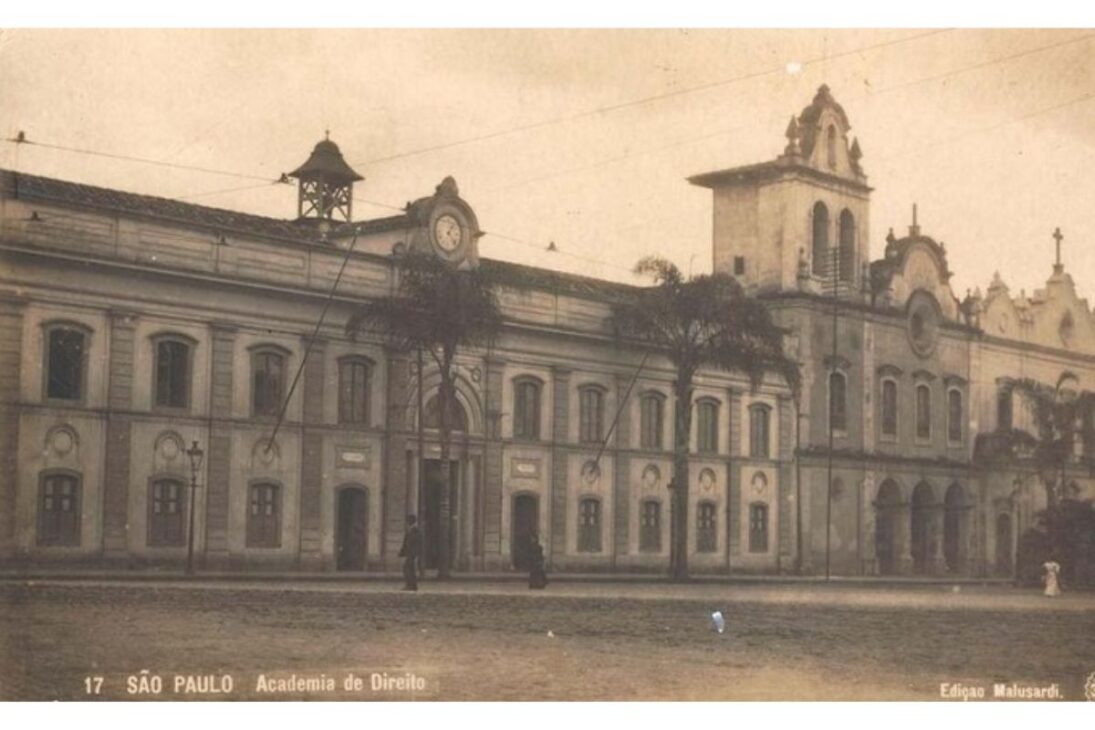
The teaching of Law in Brazil was only created after Independence. With the need to create its own laws and train an elite to manage the new country, D. Pedro I sanctioned the law of August 11, 1827, which simultaneously created the first two Law schools in Brazil: one in São Paulo and another in Olinda (PE).
The first class of law graduates, therefore, graduated only in 1832, from the Law School in Olinda, fifteen years after the date that popular myth points to.
The Correct Chronology and the End of the Myth
The analysis of the facts establishes a clear timeline for higher education in Brazil. The first area was Medicine (1808), followed by Engineering (1810), and lastly, Law (1827).
The story that the first to obtain a university degree in Brazil was a law graduate from 1817 is, therefore, a myth. The true pioneers were the surgeons graduated in Bahia in 1820, a reflection of the pragmatic need that shaped the beginning of higher education in our country.










-

-

-

-

8 pessoas reagiram a isso.