





 Portuguese
  English
  Spanish
  5 min of reading
  8 comments


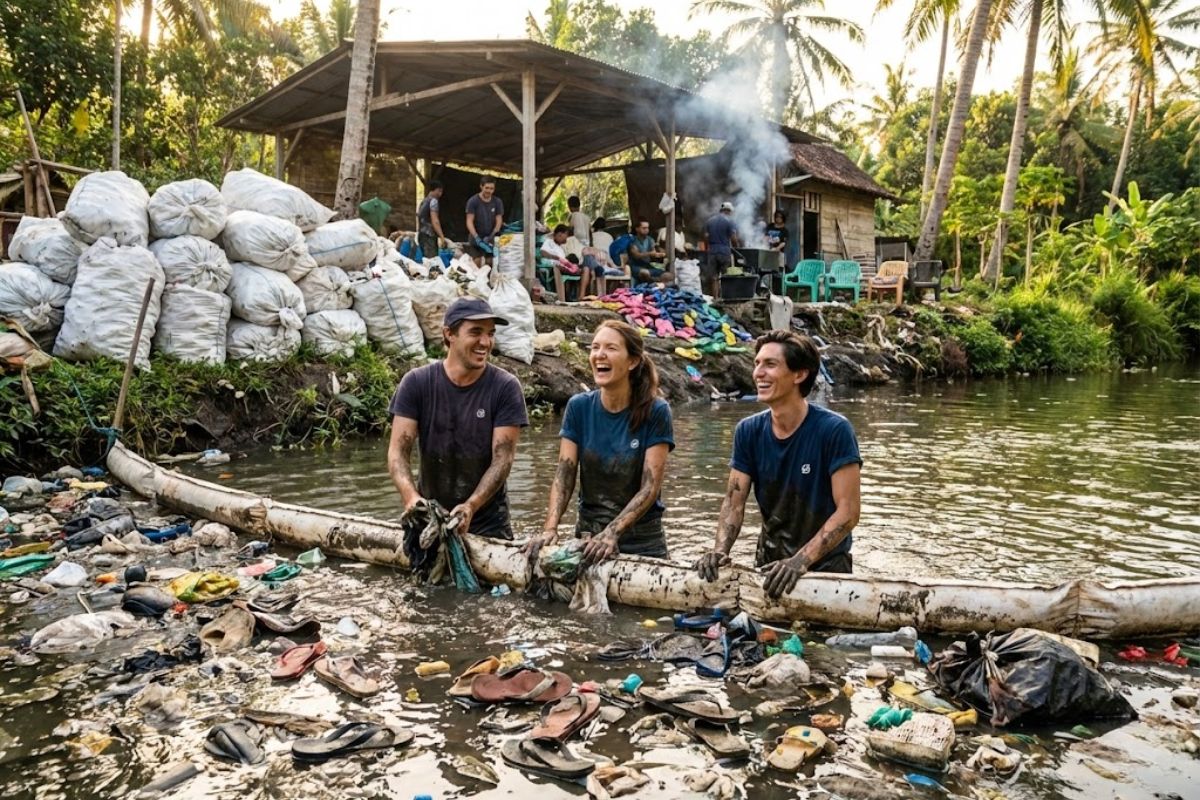


In Four Years, An Operation Created By Three Brothers Removed More Than 2,000 Tons Of Waste From The Rivers In Bali And Java, Combining Barriers, Manual Collection, And Daily Sorting, While Part Of The Plastic Becomes New Products And Another Part Exposes The Limits Of Recycling And Calls For Stronger More Urgent Public Policies.
The waste from the rivers has stopped being just a portrait of everyday disposal in Bali and Java and has started to function as a thermometer of environmental management. Since 2020, brothers Gary, Sam, and Kelly Bencheghib have led a continuous operation that has already removed more than 2,000 tons of waste in four years.
With floating barriers, manual collection, large-scale sorting, and industrial partnerships, the initiative combines emergency action and long-term strategy. The Progress Is Concrete, But The Challenge Is Greater Than Daily Cleaning: preventing plastic from returning to the riverbed requires structural change, stable funding, and effective reduction of disposables.
Where The Operation Came From And Why It Started In Bali

The organization was born after a visible transformation in the territory. The three brothers, who have lived in Bali since childhood, claim to have witnessed the island transform from a postcard into a landscape marked by plastic waste in urban areas, canals, and stretches of river.
-
Friends have been building a small “town” for 30 years to grow old together, with compact houses, a common area, nature surrounding it, and a collective life project designed for friendship, coexistence, and simplicity.

-
This small town in Germany created its own currency 24 years ago, today it circulates millions per year, is accepted in over 300 stores, and the German government allowed all of this to happen under one condition.

-
Curitiba is shrinking and is expected to lose 97,000 residents by 2050, while inland cities in Paraná such as Sarandi, Araucária, and Toledo are experiencing accelerated growth that is changing the entire state’s map.

-
Tourists were poisoned on Everest in a million-dollar fraud scheme involving helicopters that diverted over $19 million and shocked international authorities.


In 2020, they created Sungai Watch and began treating the waste from the rivers as an operational priority, not as a one-off action.
This decision occurred in a contradictory context: Bali banned single-use plastics, such as bags and straws, in 2019, but the production of plastic waste remained high.
The problem is not limited to end consumption; it involves the packaging chain, illegal disposal, and a culture of fast disposable items. When waste management infrastructure does not keep pace with the volume generated, the river becomes a transport corridor for waste to the sea.
How Manual Cleaning Works When Each Rain Changes The Scale Of The Problem

The routine begins with field monitoring and rapid response. In one reported case, a resident sent a video of a river with critical waste accumulation; the team was mobilized immediately because the next rain could wash the material into the ocean, making recovery much more difficult. In about three hours, the group removed approximately two tons of waste.

To reduce this “race against time” effect, 170 floating barriers have been installed in Bali and East Java. They concentrate the material at catch points but require daily maintenance to avoid overflow and flood risk.

The work involves 132 people distributed among barriers, disposal points, and sorting centers. There is no real operational break: cleaning happens today knowing that tomorrow there will be new accumulation.
What Happens After Collection: Sorting, Data, And The Limits Of Recycling

Removing the waste from the rivers is just the first step. The material goes to nine sorting facilities, which process about 3,000 kilograms per day.

Sorting is manual and detailed, in approximately 30 categories by type of material, color, and quality.
Part of the recyclables is compacted into bales to facilitate transportation and marketing, as in the case of plastic bottles pressed into blocks.

This level of detail generates two simultaneous outputs: disposal and operational intelligence. Items with higher recyclability go to external recyclers, but only about one-third of the collected volume finds this route.
About 40% goes to landfills due to degradation or low technical viability. The most strategic data is not just “how much has been collected,” but “what goes back to the river, where it comes from, and how often”, because this guides regulatory pressure on brands, packaging, and public policies.
When Waste Becomes Product: From Discarded Flip-Flops To Furniture
Among the most recurring waste are discarded flip-flops. The operation has already gathered more than 200,000 units, about 3% of the total collected. In partnership with Indosole, this material is crushed, heated, molded, and converted into new shoe components.

The process combines repurposing of recycled base material with other inputs to form a usable final product.

The logic expanded in 2024 with Sungai Design, focused on using plastic bags in furniture manufacturing. One of the first products, a lounge-type chair, uses approximately 2,000 bags collected from rivers in Indonesia.

It Is An Industrial Response To Environmental Liability, But Without Concealing The Central Limit: Transforming Waste Into Products Helps, But Does Not Replace Reduction At The Source Or A Robust Collection And Treatment System.
What The Case Reveals About Public Policy, Funding, And Scale
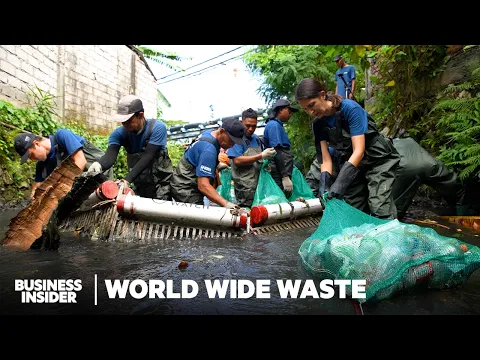

On a national level, the scenario amplifies the dimension of the problem. Indonesia produces nearly 7 million metric tons of plastic waste per year, and more than half is poorly managed.
Part of this volume ends up on roadside margins, illegal dumps, and unregulated landfills, which serve as a permanent source of contamination for waterways.
The international context has also pressured the local system. After 2017, when China halted the importation of waste from other countries, there was an increase in the influx of plastic into countries in the region, including Indonesia in 2018.

At the same time, the government set an ambitious goal of reducing marine plastic by 70% by 2025, but implementation faces known bottlenecks: sorting stations that open and close due to lack of funding and continuous operation.

Even so, there are signs of measurable impact. In Denpasar, a river was considered clean enough for the removal of barriers and reintroduction of fish by the community.
The organization also conducts workshops with youth and women on waste separation, publishes an annual report, and brings data to institutional debates. The decisive point is to turn cleaning into state policy, not an exception sustained by voluntary effort.
The case of Bali and Java shows that tackling the waste from rivers depends on a complete equation: efficient capture, qualified sorting, viable repurposing, continuous public funding, and real reduction of disposable plastic.
Manual cleaning proves that it is possible to recover critical areas, but it also evidences that the flow of waste only decreases when the source of the problem is consistently confronted.
In your city, which disposal point do you repeatedly see near streams, canals, or rivers, and why does it remain active? If you had to choose an immediate priority, would you bet on more capture barriers, enforcement of illegal disposal, or strong restrictions on single-use packaging? I want to read concrete experiences and solutions that you consider applicable in your neighborhood.










A melhor notícia que vi desde o nascimento de meu filho, em1999.
Que a humanidade multiplique essas ações, que pessoas tenham milhões de ideias transformadoras, o mundo está esperando pessoas que cuidam e valorizam a vida.
Nas redes sociais depositem, compartilhem soluções ambientais, e critiquem menos.
Substituam palavras por atitudes concretas.
KELLY, SAM, GARY CONGRATULATION…
Restrição de embalagens por que o povo não tem consciência
O correto seria as indústrias fabricarem algum material que fosse biodegradável e que substituísse o plástico, principalmente sacolas plásticas. Deveria ser proibido produzir sacolas plásticas. Já encontraram plástico em todos os lugares, até na chuva, no sangue humano e dentro dos animais marinhos. O plástico está destruindo a natureza. Por que as indústrias não investem na criação de uma solução para isso?