





 Portuguese
  English
  Spanish
  4 min of reading
  0 comments


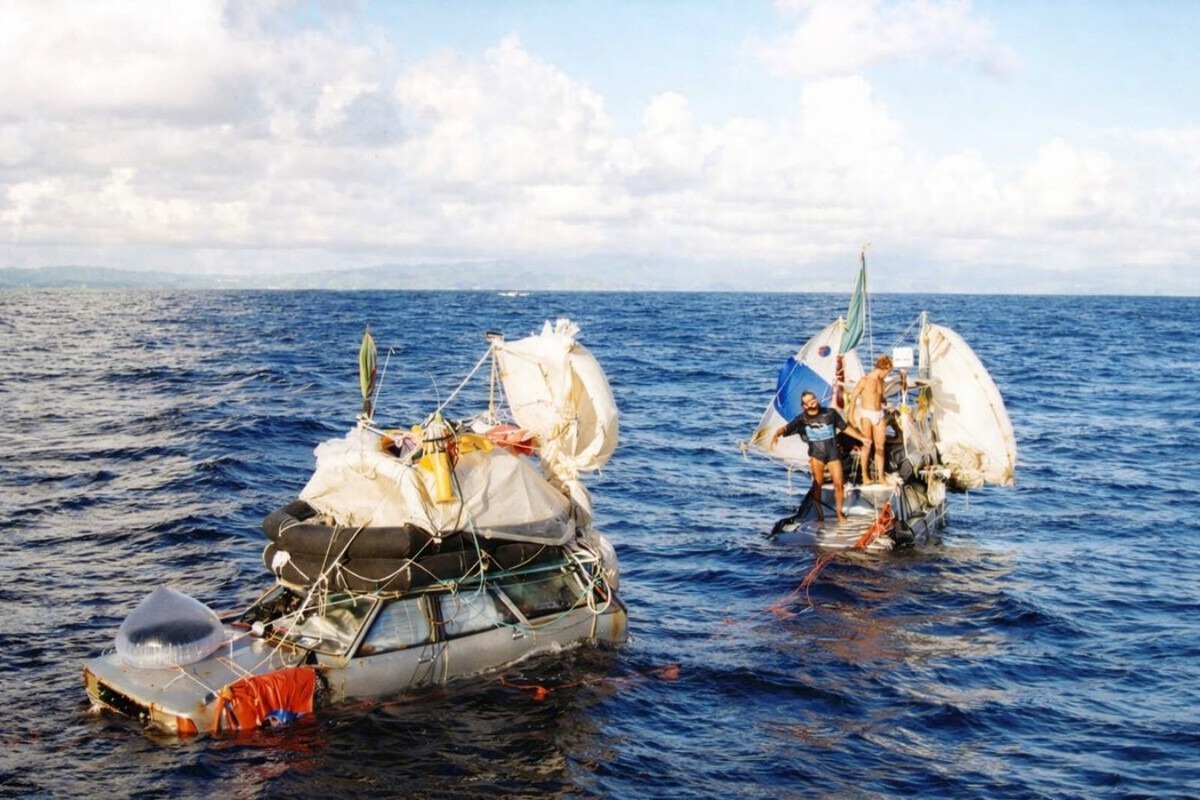
An Impossible Journey Turned Cars Into Boats And Children Into Heroes As They Crossed The Ocean Guided By A Father’s Final Wish That Became An Eternal Legacy
On the morning of May 4, 1999, the coast of the Spanish island of La Palma became the starting point for one of the most unlikely stories of perseverance and affection ever recorded. Italian brothers Marco, Fabio, and Mauro Amoretti, along with their friend Marcolino De Candia, pushed two cars transformed into floating motorhomes into the Atlantic Ocean.
The goal was not just to cross unknown waters, but to fulfill a long-held dream of their father, Giorgio Amoretti, who no longer had the strength to realize it.
A Dream Interrupted, But Not Forgotten By The Brothers
Giorgio was a photojournalist and explorer, and for decades he nurtured the obsession of crossing the Atlantic in a Volkswagen Beetle filled with foam, named “Automare.”
-
Friends have been building a small “town” for 30 years to grow old together, with compact houses, a common area, nature surrounding it, and a collective life project designed for friendship, coexistence, and simplicity.

-
This small town in Germany created its own currency 24 years ago, today it circulates millions per year, is accepted in over 300 stores, and the German government allowed all of this to happen under one condition.

-
Curitiba is shrinking and is expected to lose 97,000 residents by 2050, while inland cities in Paraná such as Sarandi, Araucária, and Toledo are experiencing accelerated growth that is changing the entire state’s map.

-
Tourists were poisoned on Everest in a million-dollar fraud scheme involving helicopters that diverted over $19 million and shocked international authorities.


In 1978, he managed to take the project to the Canary Islands, but was prevented from proceeding by Spanish authorities for safety reasons.
The frustration never left him. In 1999, terminal cancer ended any possibility of a new attempt, leaving the crossing only in the realm of wishes.

The Children’s Decision And The Adapted Cars
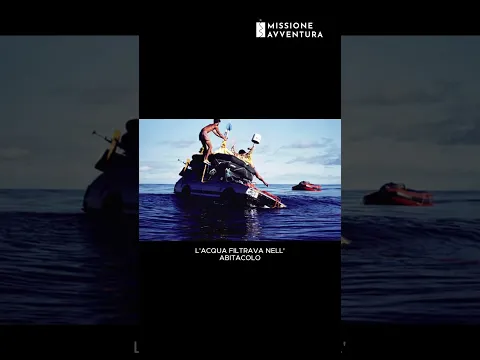
Faced with the impossibility of their father continuing, the children decided to take on the mission. They chose a Volkswagen Passat and a Ford Taunus, both converted into floating caravans.
To do this, they installed boat engines and sealed the structures with large blocks of polystyrene, ensuring buoyancy.
The cars were adapted as small shelters, with minimal space for water jugs, dehydrated food, and basic equipment.
Sleeping inside the vehicle was the only option. On the roof, they carried an inflatable boat with a central opening for entering and exiting at sea, as well as makeshift sails that would help catch the trade winds.
Knowing they wouldn’t obtain permits, they set off at dawn, discreetly.
Brothers Adrift Among Engines And Currents
Shortly after departing, they tied the two cars together with ropes to prevent them from separating. In the first few days, they progressed with the help of the engines.
When the fuel ran out, they were completely dependent on the wind and currents, entering a more uncertain phase of the crossing.
The physical wear and tear quickly manifested. Fabio and Mauro began suffering from intense dizziness and constant fatigue.
Ten days later, they made the difficult decision to abandon the journey and were rescued by helicopter after contacting emergency services.
Two Men Alone In The Middle Of The Atlantic
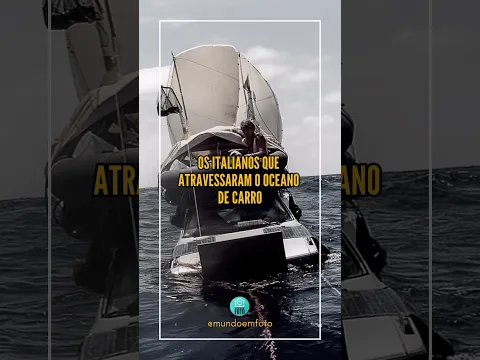
Marco and Marcolino continued alone, tied together by a rope, in the middle of the ocean. In Italy, meanwhile, Giorgio passed away on May 28.
The family chose not to inform Marco, fearing that the news would lead him to give up. Shortly thereafter, the satellite phone stopped working, and for weeks there was no contact with the mainland.
The routine became marked by basic tasks: fishing, rationing water, emptying the cars’ interiors when moisture entered, reinforcing the ties, and keeping the makeshift vessels together.
On some occasions, the rope would break, forcing them to jump into the water to redo the knots. Every afternoon, they wrote in a diary.
The Arrival And The End Of The Journey
On August 31, 1999, after 119 days and nearly 4,700 kilometers, the two reached the coast of Martinique.
A small group of onlookers witnessed the improbable scene of the floating cars coming from the Canary Islands.
The initial plan was to continue to Cuba and then to the United States, but physical exhaustion and lack of resources ended the trip there.
Marco later learned of his father’s death. Still, he felt that the dream had been fulfilled.
A Legacy That Continues
Over the years, the story of the “Autonauts” has been compiled into a book and presented in lectures and archival images, according to the protagonists themselves.
More recently, they have been working to bring this journey to the cinema or into a documentary, certain that it was not just an extreme adventure, but a gesture of farewell, courage, and love.
In addition to the crossing of the brothers, there remain the diaries, the photographs, and the memory of two cars transformed into a home, a boat, and a symbol of a dream that refused to sink.
With information from Xataka.









-

-

2 pessoas reagiram a isso.