





 Portuguese
  English
  Spanish
  5 min of reading


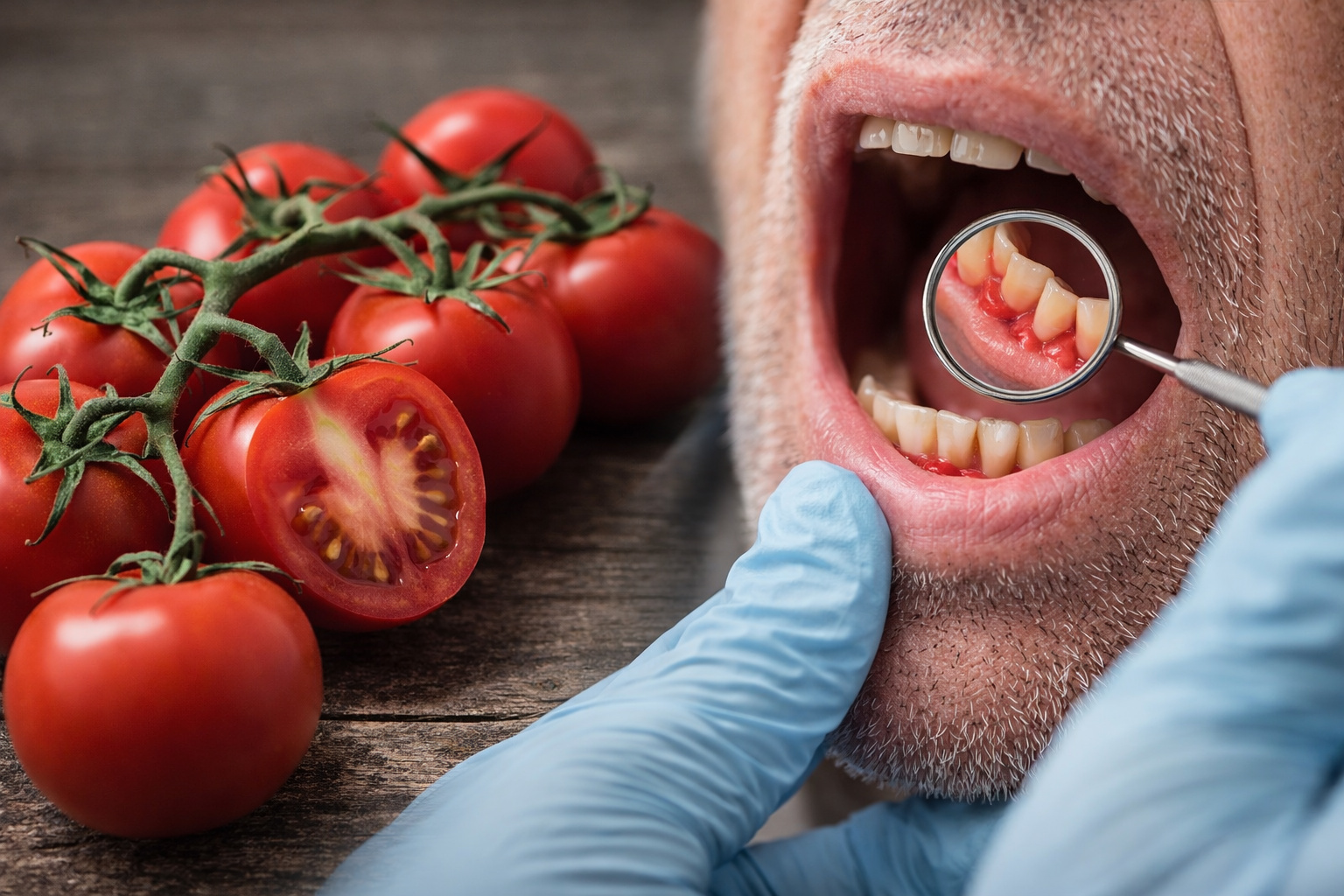
Study Indicates That Low Intake of Lycopene, A Nutrient Found in Tomatoes, May Increase the Risk of Gingivitis in Seniors, Reinforcing the Link Between Diet and Oral Health.
A nutrient found in one of the most common foods on Brazilian tables has caught the attention of science. A large-scale study published recently pointed out that low lycopene intake — an antioxidant mainly found in tomatoes — may be associated with a higher risk of severe gingivitis, especially in the elderly.
The discovery draws attention because it connects daily diet and oral health, two areas that have long been studied separately in clinical research. Now, researchers emphasize that what goes on the plate can directly influence the health of gums and teeth.
According to the authors of the study, individuals with lower lycopene consumption showed a higher prevalence of advanced gingival inflammation. The finding suggests that silent nutritional deficiencies may worsen common oral problems with aging.
-
Friends have been building a small “town” for 30 years to grow old together, with compact houses, a common area, nature surrounding it, and a collective life project designed for friendship, coexistence, and simplicity.

-
This small town in Germany created its own currency 24 years ago, today it circulates millions per year, is accepted in over 300 stores, and the German government allowed all of this to happen under one condition.

-
Curitiba is shrinking and is expected to lose 97,000 residents by 2050, while inland cities in Paraná such as Sarandi, Araucária, and Toledo are experiencing accelerated growth that is changing the entire state’s map.

-
Tourists were poisoned on Everest in a million-dollar fraud scheme involving helicopters that diverted over $19 million and shocked international authorities.


The research was led by Katherine Khong from the Department of Human Development at Connecticut College in New London, Connecticut. She collaborated with scientists from Tulane University, University of California San Diego, Yunnan University, Southern Illinois University, and Louisiana State University Health Sciences Center.
What Is Lycopene and Why Has It Gained Attention
Lycopene is a carotenoid with strong antioxidant properties. It gives a red color to tomatoes, watermelon, and other fruits. In the body, it acts by combating oxidative stress, a process linked to cellular aging and inflammatory diseases.
Historically, studies have linked lycopene to cardiovascular health, reduced risk of certain types of cancer, and cellular protection. However, its relationship with oral health had received little scientific attention.
Now, this scenario is beginning to change. With new population analyses, researchers have started to observe that dietary antioxidants also influence oral tissues, such as the gums.
Diet and Oral Health: A Historically Underexplored Relationship
For decades, dentistry has focused efforts on oral hygiene, such as brushing and flossing. These habits remain essential. Still, science has begun to recognize that diet plays a complementary role in preventing oral diseases.
In the early 20th century, research already pointed out that nutritional deficiencies worsened dental issues. However, only recently have studies begun to investigate specific nutrients, such as vitamins and antioxidants, in isolation.
In this context, lycopene emerges as a new point of interest. Gingivitis, being an inflammatory disease, can be directly influenced by anti-inflammatory compounds present in the diet.
What the Study Observed About Severe Gingivitis
The study analyzed data from thousands of participants, with a special focus on the elderly population. Researchers compared lycopene intake levels with clinical indicators of gum health.
The results showed that people with lower antioxidant consumption had a higher incidence of severe gingivitis. This type of inflammation, when untreated, can progress to periodontitis, a condition that leads to tooth loss.
According to scientists, lycopene may help to reduce inflammatory processes and cellular damage in the gums. Thus, its absence in the diet could make oral tissues more vulnerable.
Why the Discovery Draws Public Attention
The curious nature of the study lies in the fact that it involves an extremely common food. Tomatoes are part of the daily diet of millions of people and are often associated with simple dishes.
Thus, the idea that a nutrient found in such accessible foods could significantly influence oral health generates surprise. At the same time, it expands the public’s interest in more conscious dietary choices.
Moreover, the study reinforces a growing trend in science: an integrated view of health, connecting the mouth, body, and diet as parts of the same system.
Lycopene Does Not Replace Brushing, Warn Experts
Despite the promising results, researchers emphasize that lycopene does not replace basic oral hygiene care. Regular brushing, flossing, and dental check-ups remain fundamental.
However, a balanced diet is increasingly viewed as an ally. According to the authors, a diet rich in fruits, vegetables, and antioxidants may help reduce inflammatory risks in a complementary manner.
The study also warns that lycopene supplements should only be used under professional guidance. The preference, according to experts, should always be for natural intake through foods.
Aging, Inflammation, and the Role of Diet
With advancing age, the body tends to exhibit a greater inflammatory response. This explains why the elderly are at higher risk for gum diseases.
In this context, antioxidant nutrients gain strategic importance. Lycopene acts by neutralizing free radicals, which damage cells and tissues over time.
Thus, researchers emphasize that adequate nutrition can serve as a protective factor, especially in populations more vulnerable to aging and chronic diseases.
What Still Needs to Be Investigated
Although the results are relevant, scientists state that new studies are still necessary. They want to better understand how lycopene acts directly on gum tissues and what the ideal amount is for protective effects.
Furthermore, future research should evaluate whether increasing the consumption of lycopene-rich foods can, in fact, reduce the progression of gingivitis in the long term.
Even so, the study already contributes to broadening the debate on functional nutrition and oral health, an area that is gaining increasing attention in scientific research.
Simple Diet, Unexpected Impact
The discovery reinforces that small daily choices can have significant impacts. A simple, accessible food present in different cultures is now seen as a potential ally against oral problems.
Lycopene, previously remembered only for cardiovascular benefits, now enters the debate on the prevention of severe gingivitis. This unexpected connection broadens the understanding of how diet and health go hand in hand.
By highlighting the importance of common nutrients, science also invites the public: to view diet not just as a source of energy but as a tool for comprehensive care of the body — including the smile.









Seja o primeiro a reagir!