





 Portuguese
  English
  Spanish
  7 min of reading
  0 comments


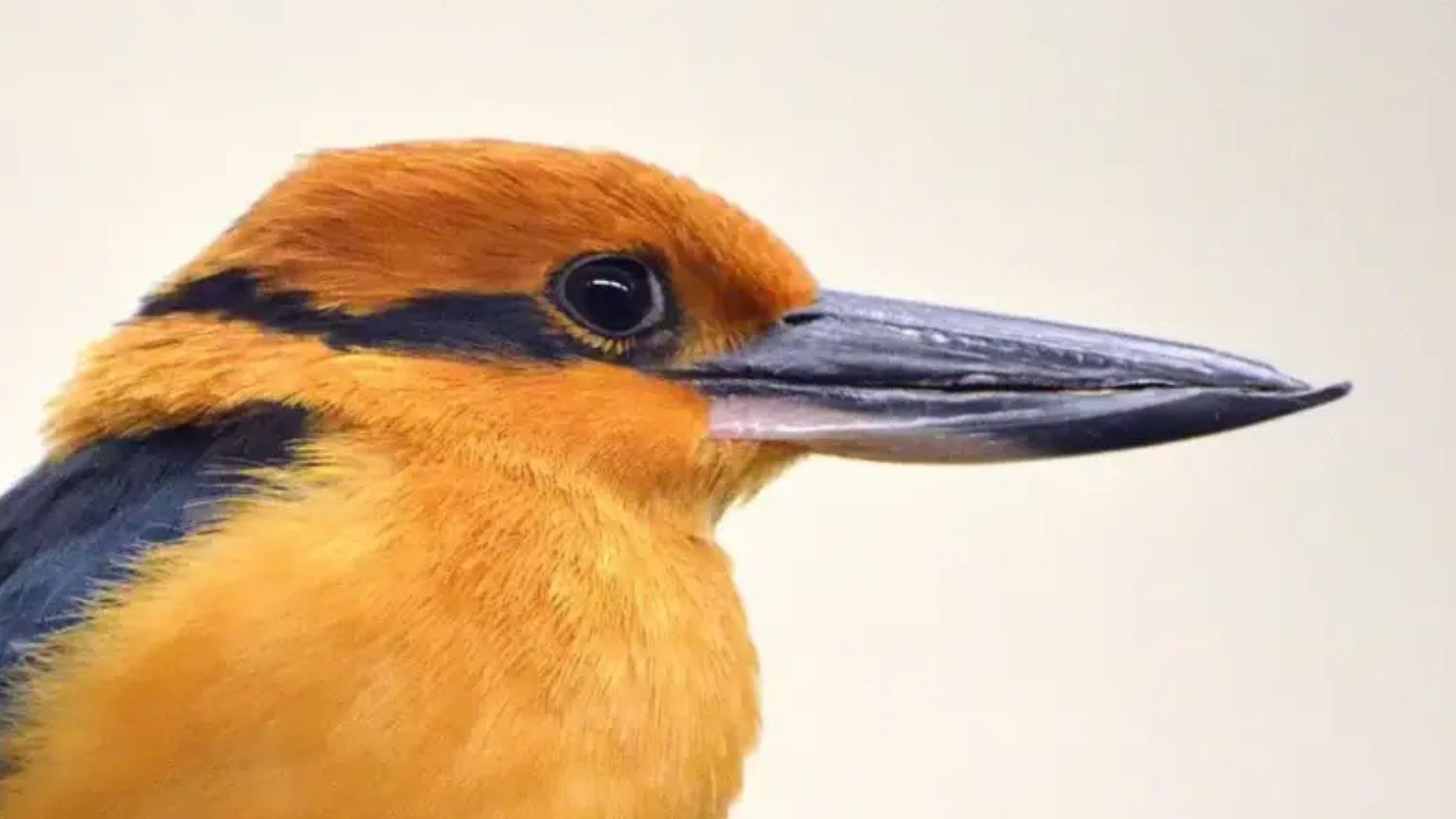
Endemic Species of Guam, The Sihek Returns to Live in Freedom After Decades Restricted to Conservation Programs, in an International Action That Seeks to Rebuild a Wild Population in a Protected Atoll in the Pacific. Project Combines Monitored Release, Scientific Management, and Strategies to Reduce Risks Associated with Invasive Predators.
A bird with striking plumage and discreet behavior, which had completely disappeared from the wild, is back living outside cages and controlled enclosures after being released on a remote atoll in the central Pacific, within a protected area considered free of invasive predators.
Known by the local name sihek and scientifically registered as Guam kingfisher, the bird spent decades existing only in conservation programs, and now is part of an international effort to rebuild a self-sustaining population in a natural environment.
Sihek: The Guam Kingfisher That Disappeared from The Wild
The measure is treated by conservation institutions as an experimental introduction to reestablish a wild population, in a location where it is possible to monitor behavior, adaptation, and survival.
-
He started running at 66 years old, broke records at 82, and is now a subject of study for having a metabolic age comparable to that of a 20-year-old, in a case that is intriguing scientists and inspiring the world.

-
Oldest tree on the planet reappears after 130 years of searches: Wattieza, 385 million years old, was 10 meters tall and had no leaves or seeds; Gilboa fossils in New York solved the mystery in 2007.

-
A 48-square-meter house assembled in hours with 4,000 bricks made of recycled plastic that does not absorb moisture, has natural thermal insulation, and costs less than 90,000 reais in a complete kit.

-
Luciano Hang revealed that Havan’s air fleet has already accumulated more than 20,000 landings, 10,000 flight hours, and 6 million kilometers traveled, and he says that without the planes, the company would never have grown so quickly.


The declared objective of the project partners is to create a “return point” for a species that ceased to occupy its original habitat due to an introduced threat, while accumulating conditions and knowledge for a possible reentry onto its island of origin.
The sihek is an endemic bird of Guam, in the western Pacific, also culturally relevant: organizations involved in the program highlight that the species is traditionally associated with the CHamoru people.
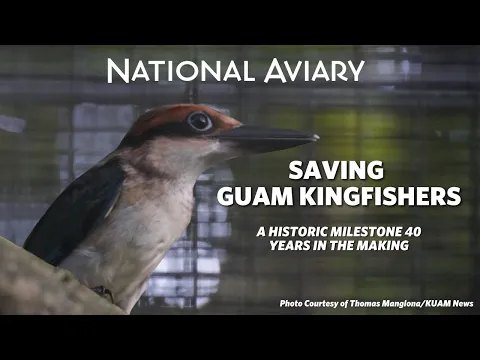

The trajectory that transformed it into a symbol of “extinction in the wild” is linked to the arrival of the brown tree snake, an invasive predator that spread throughout Guam and heavily impacted native birds.
The U.S. Fish and Wildlife Service records that the species was officially recognized as extinct in the wild after the last observation in the wild occurred in the late 1980s.
Invasive Predators and The Collapse in Guam
The solution found to avoid total disappearance was the construction of a population under human care.
According to the same agency, authorities from Guam and partners from the Association of Zoos and Aquariums rescued a small founding group and established a captive management program that kept the species alive over the following decades.
This type of strategy requires strict control of reproduction, health, and genetic diversity, along with standardization of diet and management, because the ambition is not just to “maintain individuals,” but to enable, in the future, a population equipped to survive outside human structures.
Captive Conservation for Decades and Rigorous Management
The most visible step of this effort occurred when nine siheks were transported to temporary facilities on Cooper Island, within the Palmyra Atoll, managed as a preservation and research area.
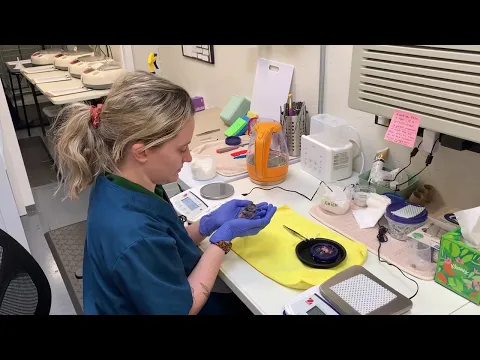
After a period of acclimatization in aviaries, some of the birds were released into the rainforest of the atoll, with technical support and radio monitoring.
The strategy includes health examinations before release, lightweight trackers to locate individuals, and the provision of supplemental feeding during the transition phase, a practice used to reduce the immediate loss risk while the animals become fully dependent on their environment.
Palmyra Atoll as a Refuge and Monitored Reintroduction
Palmyra was chosen for its characteristics that directly respond to the problem that brought down the species in Guam.
The U.S. Fish and Wildlife Service states that the atoll is considered free of invasive predators and is entirely within a mosaic of protection, which includes a national refuge and a large marine protected area.
In practice, this means a scenario where the predation pressure from introduced species is treated as controlled, allowing observations of how the sihek behaves and establishes itself when returning to live in freedom.
The birds’ own response during the initial period was used as an indicator of adaptation.
Reports released by program managers describe expected behaviors for a species that needs to resume a repertoire of wild life: exploring the environment, preening feathers after rain, and hunting available prey on the atoll, such as small invertebrates and other animals that make up the observed local diet by the team.
In a project of this type, the assessment of success does not depend on a single release event, but on consistent signs of permanence, establishment of territories, and, above all, reproduction.
Radio Monitoring and Signs of Adaptation

The program is also structured as a long-term operation, with repeated releases and follow-up to expand the number of individuals in the natural environment.
The institutions involved describe the initiative as part of an applied learning process, in which behavior observed in Palmyra serves to adjust breeding techniques, individual selection, transport logistics, and tracking methods.
By concentrating the first stage in a protected and monitorable location, the consortium aims to reduce variables that typically hinder reintroductions: early mortality, dispersion to risky areas, and failures in dietary adaptation.
The Bridge to a Future Return to The Original Habitat
The story of the sihek is often associated with a typical island dilemma: species evolved without terrestrial predators have little defense when an invader is introduced, and the chain of impacts can be rapid and irreversible.
In the case of Guam, the brown tree snake is officially cited as the main force behind the collapse, and this direct relationship defines the plan’s tempo.
Documents and announcements from the program place the return to the native territory as the final objective, but conditioned on the effective control of the threat posed by snakes, in addition to a management scheme that prevents further predation pressures.
International Partnerships and Long-Term Strategy
At the same time, the creation of a wild population outside the original site is not presented as a replacement for Guam, but rather as a bridge.
In conservation terms, this type of action can be understood as an attempt to reconstruct a stage of the life cycle that was lost: the species returns to exist in a natural environment, with compatible climate, vegetation, and resources, while more complex and sensitive measures are discussed for returning to the historic habitat.

The introduction in Palmyra is also supported by the fact that the area has a research and conservation structure that facilitates continuous monitoring, something crucial when working with a small number of individuals.
The international dimension of the effort is another central component of the case.
The American agency describes a partnership involving conservation institutions from different countries and networks of zoos and research centers, in addition to local Guam agencies and organizations operating in protected areas of the Pacific.
This architecture is common in projects with species extinct in the wild, because it requires infrastructure for breeding, transport capacity with sanitary safety, trained field teams, and, primarily, coordination for generated data in one stage to be incorporated into the next.
Why “Extinct in The Wild” Mobilizes The Public
The sihek also draws attention for gathering ingredients that tend to mobilize public interest: a species lost in the natural environment, maintained for decades through human management, and the concrete chance of becoming part of a real ecosystem again.
In a scenario of accelerated extinctions, well-documented reintroductions tend to be treated as rare demonstrations of status reversal, even though they depend on years of work before any formal change in category in threat assessments.
From the moment individuals live freely again, practical questions arise that guide the next steps: where and how to expand the population, how to ensure biosecurity to prevent the entry of invaders, which areas offer enough food, and which metrics should be used to prove that the population no longer depends on continuous support.
In the case of the sihek, these points are linked to management decisions of the atoll, to the routine of radio monitoring, and to the strategy of gradually increasing the number of birds capable of surviving, competing for territory, and forming pairs.
If a species extinct in the wild can return to exist freely thanks to protected islands and control of invaders, to what extent should creating new populations outside the original habitat become the rule to save animals that have disappeared from the wild?








-

-

-

-

-

-

46 pessoas reagiram a isso.