





 Portuguese
  English
  Spanish
  4 min of reading
  0 comments


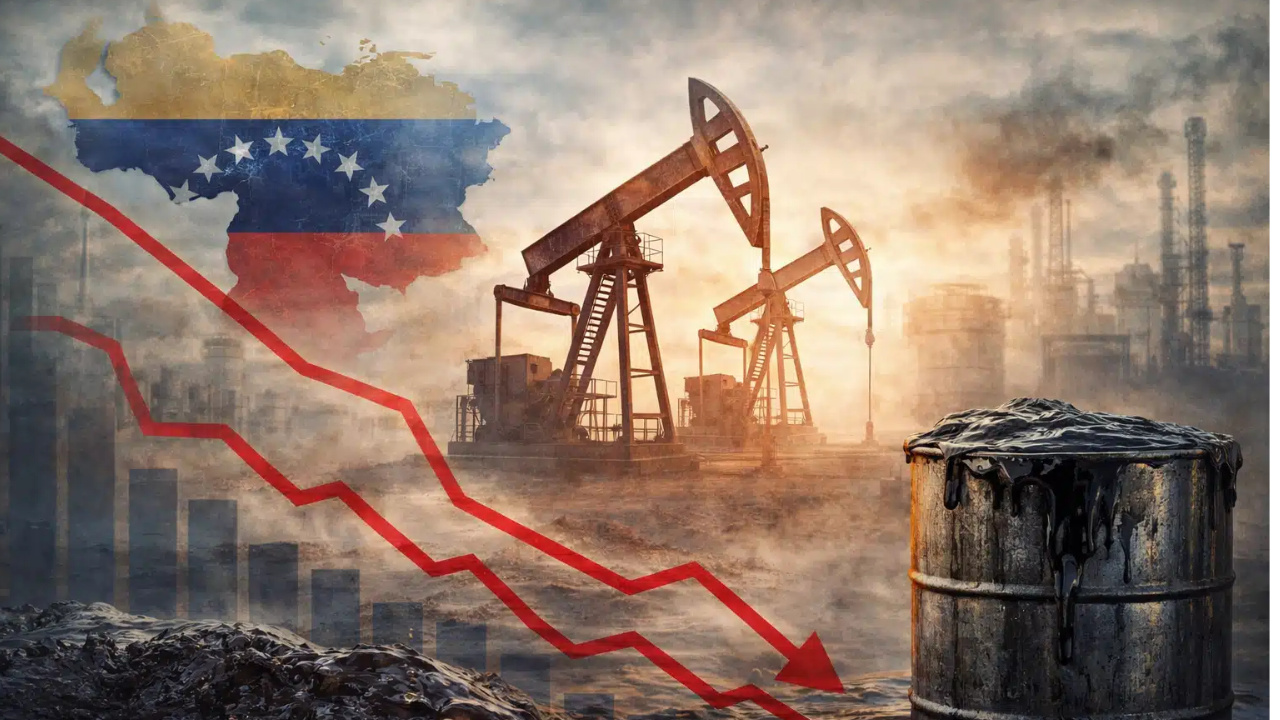
Trump Statements on Exploring Venezuela’s Oil Reignite Warnings in the Market. The Traumatic Experience of Iraq Shows That the Path Can Be Long, Expensive and Full of Risks for Oil Companies.
Oil has returned to the center of international debate after Donald Trump’s statements suggested that the United States could “go in, take the oil, and start exporting” from Venezuela.
The remark sounded direct, almost simplistic. However, for industry analysts, the reality tends to be much more complex.
Moreover, the recent history of the Middle East serves as a major warning. The case of Iraq, after the 2003 invasion, shows that controlling large oil reserves does not necessarily mean turning them into quick profit.
-
Lula reveals a masterstroke by Petrobras to undo a deal made by Bolsonaro, which involves the return of an important refinery that currently produces less than half of what was expected and makes Brazil dependent on international diesel.
-
A study confirms that the natural gas sector will reduce greenhouse gas emissions in Brazil by 0.5% and accelerate the energy transition by 2026.

-
Petrobras implements a severe adjustment and confirms a 55% increase in the price of aviation kerosene with a proposal for installment payments for the companies.

-
The rise in oil prices could ensure an extra revenue of R$ 100 billion for the Federal Government, indicates a recent economic study.


On the contrary: the path can be long, unstable, and politically dangerous.
The Parallel Between Caracas and Baghdad
Just as in Iraq, the United States captured the leader who held power over immense oil reserves.
In 2003, it was Saddam Hussein. Now, decades later, U.S. special forces captured the former Venezuelan president Nicolás Maduro in Caracas.
Although the parallel is tempting, experts remind that the contexts are different. In Iraq, there was open war and the occupation of foreign troops.
In Venezuela, there is no large-scale armed conflict or U.S. military presence on the territory. Still, the challenges faced by oil companies in Iraq expose a script that could repeat itself.
Why Oil Companies Hesitate to Invest in Venezuela
According to international analysts, it may take many years before major oil companies make substantial investments in Venezuela. The main reason is political instability and security risk.
For Bill Farren-Price, a senior research fellow at the Oxford Institute for Energy Studies, “it will be an extremely arduous task.” He adds: “The efforts to rebuild the oil industries — even in large producers like Iraq and Venezuela — take years.”
In other words, the promise of quick gains is unlikely to materialize when the institutional scenario is still fragile.
What Went Wrong in Iraq After the Invasion
Just a few days after the invasion of Iraq, then Deputy Secretary of Defense Paul Wolfowitz told Congress that the country’s vast oil reserves could pay for reconstruction costs. However, that never happened.
According to Mohamad Bazzi, director of the Middle East Studies Center at New York University, “the Bush administration certainly believed that the U.S., Iraq, and the oil industry would see the economic benefits (from Iraqi oil) much sooner than they did.”


Furthermore, the Iraqi oil industry had been nationalized since the 1970s and was isolated from Western companies. Shortly after the invasion, the armed forces were dissolved and thousands of employees linked to Hussein’s regime were dismissed. This created a power vacuum that affected even the Ministry of Oil.
Only in 2009, years after the invasion, did the Iraqi government begin offering contracts to foreign companies. Even so, the conditions were not attractive.
Raad Alkadiri, managing partner at the consultancy 3TEN32 Associates, explained that the contracts invited companies to act only as service providers, without rights to the reserves.
He stated: “Part of the promise and ambition that surrounded the minds of oil companies before the invasion… were quickly frustrated when the Iraqis introduced their own system.”
Violence, Sabotage, and Insecurity
It was not just the contracts that scared the market. The security situation deteriorated rapidly. There were looting, attacks, and sabotage of oil infrastructure.
Bazzi summarizes the scenario: “So, for years after the U.S. invasion, there was oil theft, attacks, and sabotage of the existing oil infrastructure, and of course, there was the unfolding of the insurgency and later the civil war in Iraq itself.”
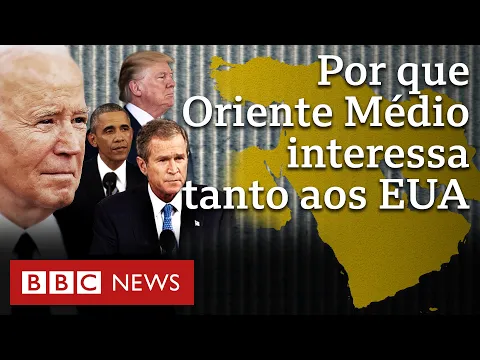
Therefore, when talking about “taking the oil” from Venezuela, Trump reignites a delicate debate. The market fears that the country will follow a path similar to that of Iraq, with grand promises and slow results.
Meanwhile, major oil companies are watching with caution. Experience shows that, without political stability, clear rules, and security, oil can become more of a problem than a solution.
Do you think Venezuela can repeat Iraq’s drama, or will oil finally generate real wealth for the country?








-

Uma pessoa reagiu a isso.