





 Portuguese
  English
  Spanish
  7 min of reading
  11 comments


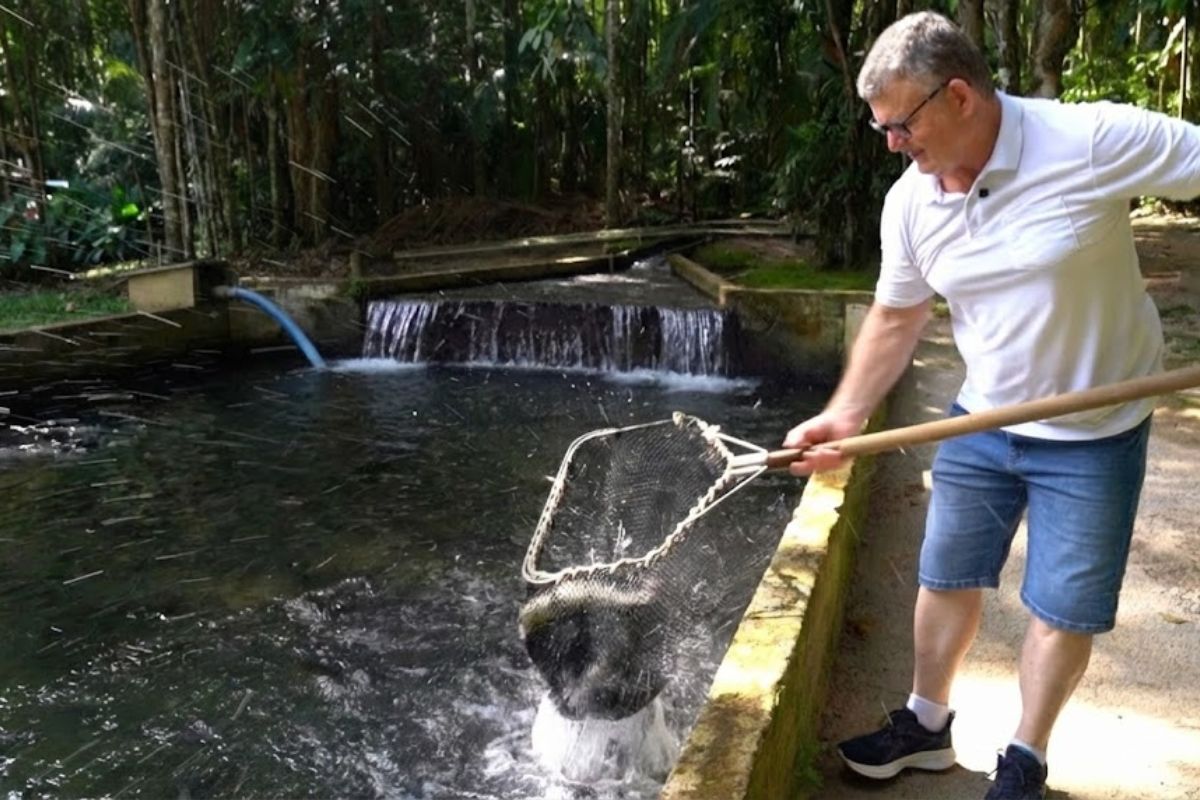


Trout in Gaspar Proves That Cold Water from the Mountains Sustains Demanding Fish 40 Km from the Sea and Transforms Rural Farming into Gastronomic Tourism in the Itajaí Valley
In Alto Gasparinho, in the Itajaí Valley, the water flows cold, clean, and pollution-free, maintaining temperatures between 19ºC and 20.5ºC in the summer. This is what allowed the Bertold brothers to raise trout just 40 km from the sea, complete the production cycle, and attract tourists with a rustic restaurant and unexpected flavors.
The change began when the old sawmill lost ground after the environmental regulations of 1993, which restricted the cutting of native forest. From then on, the family invested in the countryside with trout production from fry to plate, expanded tanks, structured a kitchen, and transformed the property into a tourist attraction in Gaspar.
From Saw Mill to Demanding Fish: The Turning Point That Began in the 1990s

The origin of the project is linked to an economic and environmental necessity. Until the early 2000s, the brothers worked in the sawmill, but the routine changed with the environmental laws of 1993, which prevented the clearing of native tree forests. In 1996, they began fish farming, and in 2001, they stopped the sawmill to dedicate themselves solely to trout.
-
He started running at 66 years old, broke records at 82, and is now a subject of study for having a metabolic age comparable to that of a 20-year-old, in a case that is intriguing scientists and inspiring the world.

-
Oldest tree on the planet reappears after 130 years of searches: Wattieza, 385 million years old, was 10 meters tall and had no leaves or seeds; Gilboa fossils in New York solved the mystery in 2007.

-
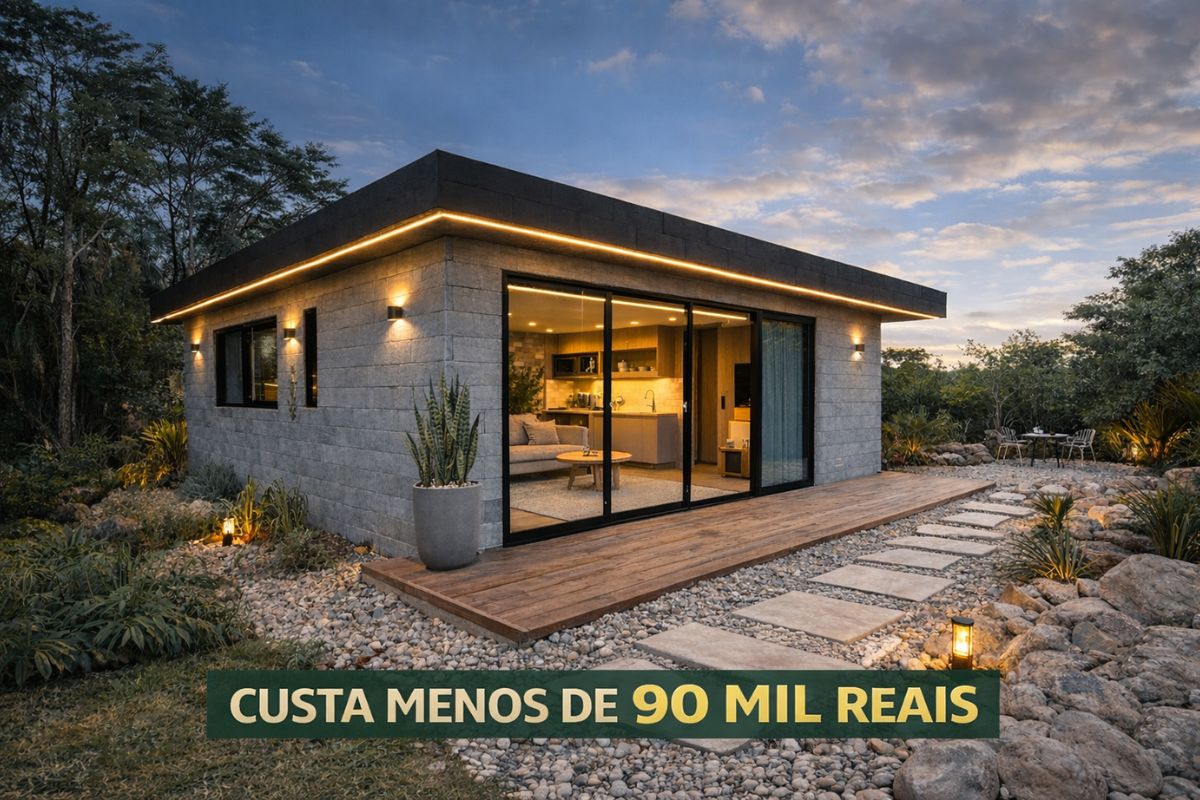
A 48-square-meter house assembled in hours with 4,000 bricks made of recycled plastic that does not absorb moisture, has natural thermal insulation, and costs less than 90,000 reais in a complete kit.
-
Luciano Hang revealed that Havan’s air fleet has already accumulated more than 20,000 landings, 10,000 flight hours, and 6 million kilometers traveled, and he says that without the planes, the company would never have grown so quickly.

The decision faced local skepticism. The turning point came from a visit to Atalanta, where they met producer Daniel Cheffer and Mrs. Anita. The advice was straightforward: not to listen to pessimism, to start and learn day by day, because fish farming could work outside the “traditional map” for trout.
The Test That Defined Everything: Thermometer, Limit of 23ºC, and Pollution-Free Water

The main concern was the water temperature, as Gaspar is about 40 km from the sea, and the Itajaí Valley is known for its hot periods. The cutoff point was clear: the water could not exceed 23ºC.
The method was simple and decisive. One brother insisted: “buy the thermometer and measure.” The measurements showed that, even in December and January, the water remained at 19ºC, 20ºC, and even 20.5ºC, within the requirements for trout. The explanation, according to the family, lay in the geographical detail: higher region of the municipality, with no nearby residents, no pollution, and constant flowing water.
First Numbers: 5,000 Trout Per Year and Customers Migrating to the Pay-To-Fish

The fish farming began on a modest scale, focusing on serving those who already knew the family from the sawmill days. They started with 5,000 trout per year, with an initial structure based on pay-to-fish and simple portions.
The experience was homemade and direct: portions accompanied by homemade bread, cream, and cheese. The public’s response led to increased demand, and with it came the typical problem of early success: lack of space.
The Technical Heart of Fish Farming: Nursery, Settling Tank, and Water Flowing 24 Hours a Day

The fry arrive weighing about 2 grams and first go into a tank called a nursery. Before that, the water passes through a settling tank that retains silt and leaves.
The care with leaves is not just an aesthetic detail. The logic is technical: decaying leaves consume oxygen, and oxygen is a lifeline for trout. That’s why the operational rule is strict: the water must not stop flowing in.
The routine includes extra attention during heavy rain. The property is located in a basin that collects a lot of water, and when it rains heavily, the management becomes vigilant to prevent changes that could harm the fish farming. The producer sums up the central point: flowing water 24 hours a day, 7 days a week, 30 days a month, 365 days a year.
Feeding as the Second Secret: Minimum Protein, Quality Feed, and Frequency by Stage
In addition to water, the other essential factor is feeding, with percentages defined by stage.
For fry, the feed needs to contain at least 45% protein. When the fish reaches adulthood, in the range of 250 g to 300 g, the feed can drop to 40% protein, as below this level, according to the fish farming, the trout does not develop.
The frequency also changes according to weight. Fry are fed four to five times a day. After they exceed 200 g, the protocol shifts to twice a day, morning and afternoon. The message remains the same: feed must be “truly” quality to maintain performance and health.
The Trip to Italy in 2001 and the Structural Adjustment That Improved Oxygen
In 2001, Dionísio received an invitation to visit a trout farm in Italy and brought back practical changes. One of the main changes was the removal of PVC piping used in the fish farming station.
The Italian recommendation was to replace it with concrete troughs and elevate the structure to allow water to “break” more, increasing oxygenation. This reasoning aligns with intensive fish farming: in environments where large volumes are grown per year, oxygen dissolves the margin for error.
Density, Cleaning, and Stress-Free Management: 36 Kg Per Meter and Tanks Every 15 Days
The system operates with a density indicated in the fish farming itself: about 36 kg of trout per cubic meter of water. Maintenance is scheduled: cleaning the tanks every 15 days, always with care to minimize stress.
The alert even arises during capture: trout are described as stressed fish, and quieter handling is viewed as an advantage. In Botuverá, for example, the mentioned routine is streamlined: observation, feeding in the morning, feeding in the afternoon, and that’s it.
Expansion to Botuverá: 80,000 Trout Per Year, 80% in the Restaurant, and 20% in the Market
To increase production, the brothers partnered with a cousin in Botuverá and set up a fish farming structure in the municipality. The stated volume is 80,000 trout per year.
The distribution was also detailed: 80% goes to the restaurant and 20% is sold to fish stalls. Meanwhile, the operation in Gaspar shows a smaller production, around 10,000 trout per year, making up a model where fish farming and gastronomy mutually support each other.
The business evaluation is straightforward: with income from trout and the restaurant, the family reports being able to live comfortably, within a logic of sustainable farming and local market.
From Tank to Plate: 10 to 12 Months of Growing and Capture with a Scoop Net
The trout takes 10 to 12 months to be ready for consumption. Capture is done with a scoop net, allowing for control and minimizing damage.
The point here is to close the cycle consistently: the family does not rely solely on buying fish, as they produce from fry and bring it to the grill. This has become a distinctive aspect of the visit, as the public sees the tanks, water, and management, and shortly after finds the same fish on their plate.
The Tourist Restaurant in Gaspar: Grilled, Smoked, One-Hour Polenta, and Rice Flour
The mentioned restaurant was built in 2001 and helped transform fish farming into a complete gastronomic experience. Maria Terezinha, Nivaldo’s wife, manages the grill. She describes the process precisely: fillets on the grill, the right time to flip, and finishing with sauces, such as the classic capers and almonds.
There is also the option of smoked trout, heated and served “open,” already with the spine removed.
In the kitchen, Vera, Dionísio’s wife, details the side dishes. The polenta is made there: one-hour cooking, cooling, refrigeration, and frying to achieve crispy and well-browned results. The trout “in fillet” receives salt and goes to crispiness with an operational trick: breading in rice flour, which helps prevent burning fat and maintains texture.
Menu That Became a Brand: Over 10 Flavors and Four Sweet-Sour Options, Including Sweet Trout
The sequence of dishes includes more than 10 types of trout flavors and accommodates sweet-sour combinations. Four options were mentioned: passion fruit, pineapple, apple with pepper, and chocolate-covered.
The most curious case is the chocolate-covered trout. The method described is literal: grilled fillet and then topped with chocolate and coconut sauce. The justification lies in the fish’s profile: since trout is not “extremely salty,” it would not create a strong conflict, and according to the family, those who tried it approved.
The proposal even reaches the point of reversing the order and “starting with dessert,” presenting sweet trout as an unusual experience for a fish restaurant, but one that has become a signature of the place.
Takeaway Sales: Frozen Fillet, Smoked Vacuum-Sealed, and Tourism That Closes the Cycle
In addition to dining at the table, there is product sales for home. The fillet is sold frozen in a 1 kg package. The smoked trout is offered vacuum-sealed, with a packaging reference of 5 kg.
In practice, the restaurant “closes the cycle” and consolidates tourism: the visitor eats, buys to take home, and returns, reinforcing local income. The described setting combines a rustic environment, tanks, plenty of greenery, and preserved Atlantic Forest surrounding it, with the family highlighting that the model allows for a good life in the countryside while maintaining nature intact.
In the end, the personal account makes the human transformation visible: those who almost never ate fish now say that, in seven days, five have trout on their plate, repeating that the secret is to do it with love and to provide good service.
Would you have the courage to try sweet trout with chocolate and coconut, or do you think fish should only be savory?








Primeira vez em meses que usaram uma foto de verdade e não montagens ridículas feitas por IA.
Texto continua feito por IA, mas aí já é pedir demais
Estive lá.Comida excelente.super recomendo
Qual é o endereço???