





 Portuguese
  English
  Spanish
  4 min of reading
  0 comments


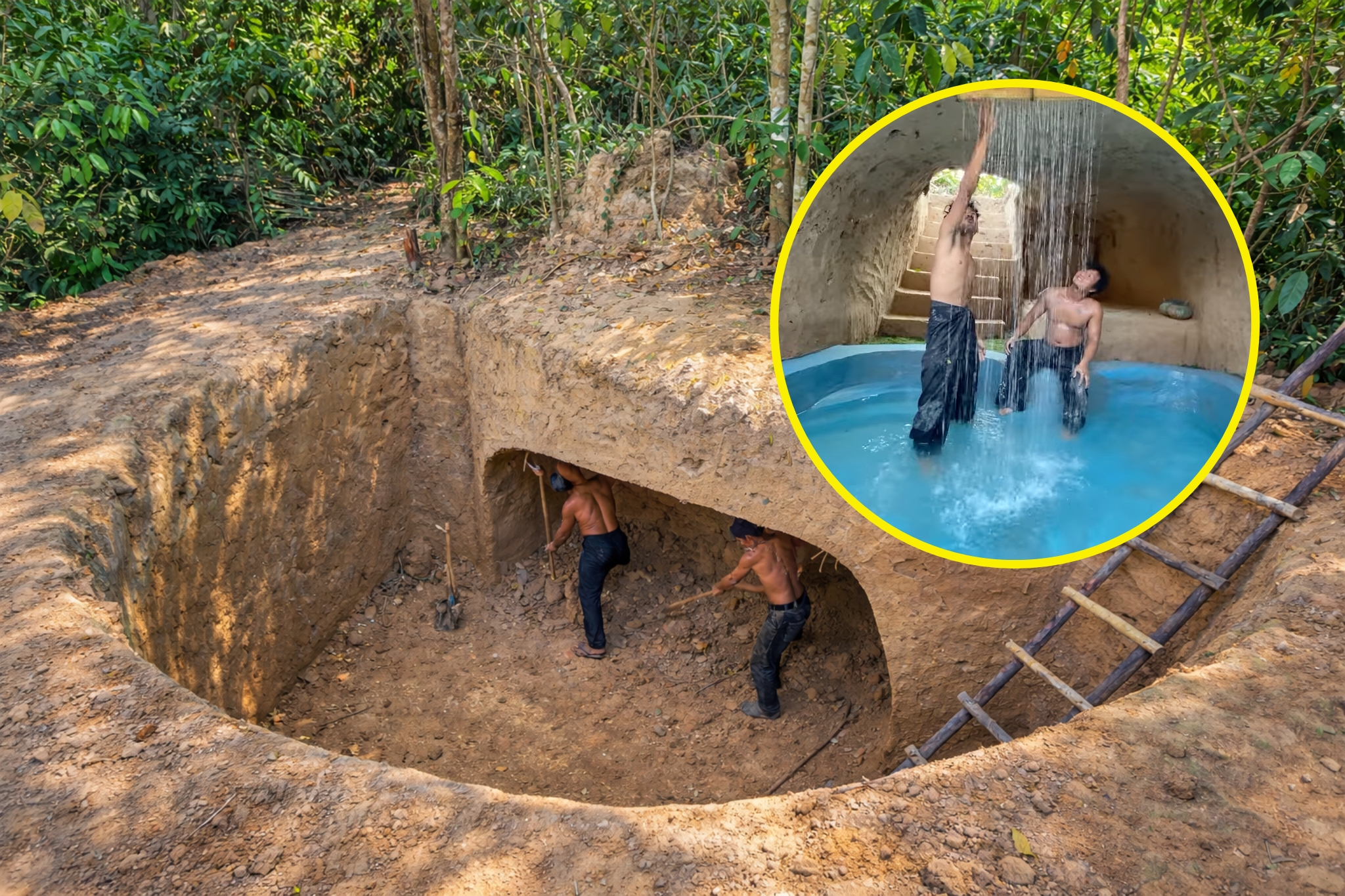
In Thailand, Two Men from Cambodia Built an Underground Pool with a Room in 90 Days Using Manual Labor, Completely Transforming the Land and Attracting the Attention of Curious Onlookers and Practical Construction Enthusiasts
The jungle of Thailand witnessed a project that seemed impossible: in just 90 days, two men excavated and built an underground pool with a room, all by hand, without machines, using simple tools. The result transformed a piece of raw land into a functional space for bathing and resting.
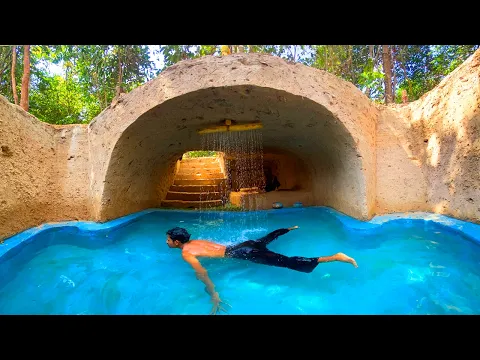
The area gradually took shape, featuring an entrance arch, wide steps, an elevated landing, a blue edge, and a bamboo waterfall that completes the visual. The change was swift and drew attention for its artisanal method and final effect.
The detail that impresses the most is the repetitive physical effort and constant adjustment of the terrain: every centimeter of soil was removed, shaped, and leveled by the two men, creating enough volume to integrate the room and the pool in one space.
-
Friends have been building a small “town” for 30 years to grow old together, with compact houses, a common area, nature surrounding it, and a collective life project designed for friendship, coexistence, and simplicity.

-
This small town in Germany created its own currency 24 years ago, today it circulates millions per year, is accepted in over 300 stores, and the German government allowed all of this to happen under one condition.

-
Curitiba is shrinking and is expected to lose 97,000 residents by 2050, while inland cities in Paraná such as Sarandi, Araucária, and Toledo are experiencing accelerated growth that is changing the entire state’s map.

-
Tourists were poisoned on Everest in a million-dollar fraud scheme involving helicopters that diverted over $19 million and shocked international authorities.


The impact goes beyond aesthetics: the site changed from an irregular, unused piece of land to a safe, practical, and visually striking space, proving that manual techniques can still yield surprising results.

Deep Manual Excavation Transforms the Soil and Defines the Volume of the Underground Pool
It all started with soil being removed in continuous cycles. A shovel and hoe were sufficient to open a deep patio, surrounded by high walls, with mounds of dirt piled near the edge. Each layer of soil removed was carefully considered to shape the pool and room ensemble.
The work required constant effort: in tougher sections, long handles were used to lever blocks of dirt, while short, repeated strikes shaped the wet bottom and heavy mud. The depth made circulation a challenge, turning going up and down into part of the construction process.
The contrast of dark mud with firmer walls helped visualize progress and showed that excavation occurred in stages, always with fine adjustments to ensure safety and practicality in using the pool.

Entrance Arch and Corridor with Continuous Ceiling Structure the Excavated Room
After the main excavation, a side was carved in a curve to form an arch, which became the entrance to the underground room. The space gained visual reference and separated circulation from the open patio, clearly organizing the interior.
The arch required repeated corrections: scraping, cleaning, and adjusting the curve until the edges were rounded and the ceiling continuous. With each pass, aligned marks indicated where the soil needed more attention, ensuring stability and comfort in the internal environment.
As a result, the room became part of the pool ensemble, creating an integration between the bathing area and the covered space.
Carved Steps and Elevated Landing Define Circulation and Support Areas

Wide steps arose inside, molded directly into the soil, leading from the lower level of the pool to the upper edge. Beside it, an elevated landing was created as a support area and transition.
This practical solution allows for predictable and safe circulation. Previously, an improvised wooden ladder provided temporary access, but the permanent steps and landing solidified the space, defining dry and wet zones and preventing mud from spreading.
The result impresses with its detailing: each horizontal cut and every correction on the edges show the care and effort needed to ensure that the pool was functional and comfortable.
Mud and Water Shape the Bottom of the Pool and Adjust the Basin’s Contour
As the water began to appear, the wet bottom and thick mud required short, repeated strikes to remove the material. Each scoop of dirt indicated constant adjustments in the level of the basin.
The outline of the pool began to define itself, making the bottom usable and uniform, without unexpected steps in the wet area. The contrast between mud and firmer walls facilitated space control and emphasized the precision of manual work.
This phase demonstrated that, even under adverse conditions, continuous adjustments and attention to detail were crucial to achieving a quality final result.

Smooth Finish, Blue Edge, and Bamboo Waterfall Complete the Space
With the final shape defined, the surface was leveled and smoothed, reducing deep marks. The blue edge surrounded the entire pool, highlighting the water’s boundary.
At the entrance arch, a bamboo tube releases a direct waterfall into the basin, adding movement to the surface and finalizing the bathing space.
The ensemble now functions as a subterranean pool with an integrated room: circulation resolved by steps, a support area on the landing, an entrance arch, and a simple bamboo shower. The transformation of the land drew attention for its manual execution and surprising result.
The two men demonstrated that it is possible to create something grand with effort, technique, and patience. The space gained form, function, and beauty in just 90 days, inspiring those who follow practical and artisanal constructions.

Did this work surprise you? Leave a comment with your idea for the space and share it with someone who likes handmade projects.










-

-

-

-

-

20 pessoas reagiram a isso.