





 Portuguese
  English
  Spanish
  4 min of reading
  0 comments


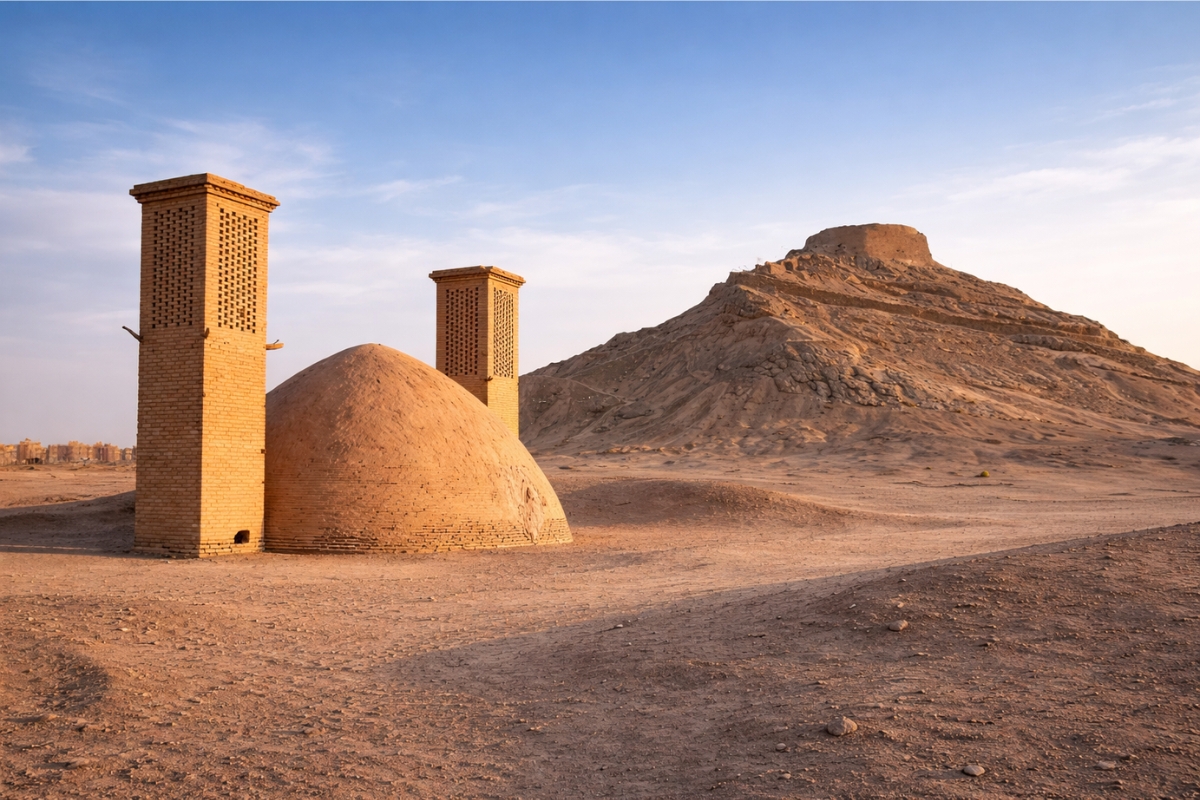
Persian Engineering Created 2,000 Years Ago a Structure Capable of Making and Storing Ice in the Desert Using Only Climate, Thick Walls, and Natural Ventilation, Without Electricity or Machines
Talking about making ice in the desert sounds like a fantasy. But long before electricity, before air conditioning, and before any modern machines, the ancient Persians created a structure capable of producing and storing ice throughout the summer, even in regions where the thermometer exceeded 45°C.
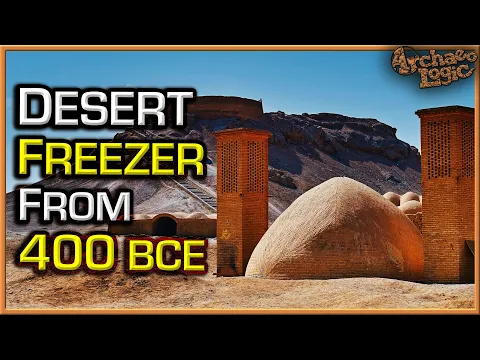
This construction is called Yakhchal, a word that literally means “ice well.” And the more specialists review this ancient technology, the clearer it becomes that it is one of the most advanced examples of passive engineering in history.
The most impressive thing is that none of this depended on motors, fuel, or electrical wires. It was pure mathematics, physics, architecture, and a very accurate reading of the behavior of nature.
-
A 19-year-old is ripped from a mobile home by an F2 tornado, thrown 398 meters, survives with minor injuries, and enters the Guinness World Records in one of the most extreme cases ever recorded in meteorology.

-
An impact crater has turned into agricultural land in Finland, and its almost perfect outline creates a circular design so strange that it resembles a landscape from another planet viewed from space.

-
Embraer proves that the KC-390 Millennium achieves 100% reliability in tests in the Arctic, operating in extreme cold in Sweden with short takeoffs, quick deployment, and simultaneous transport of heavy vehicles and troops.

-
Extratropical cyclone and cold front generate alerts for storms with winds of up to 90 km/h, occurring between April 6 and 10, advancing through 3 regions and risk of heavy rains in the South, Southeast, and Midwest.


The Birth of an Impossible Technology
The first Yakhchals appeared between the 4th century BC and the beginning of the common era, at the height of the Persian Empire. The scenario was the worst possible for preserving ice: scorching summers, dry air, and nights that oscillated brutally in temperature. Paradoxically, this oscillation was precisely what made ice production possible.

During the night, water placed in shallow outdoor tanks naturally froze. This happened because the low humidity and absence of clouds accelerated heat loss through radiation. When day broke, the blocks were transported into the conical structure of the Yakhchal, where engineering did the rest.
The depth of the internal reservoir, the cone-shaped roof, the thickness of the walls, and a sophisticated passive ventilation system transformed the interior into a naturally cooled environment. No noise, no smoke, no pollution. Just smart design.
The “Sarooj”: The Secret of the Wall That Defeated Heat
The material used in the walls of Yakhchals is still studied today by engineers and universities. It is called sarooj, a mixture composed of:
clay, sand, tree bark, lime, egg whites, and ash
This combination formed a type of natural cement resistant to water, heat, and thermal variation. In some structures, the walls reached two meters in thickness, creating a barrier so efficient that the internal temperature remained low even during the hottest times of the year.
Researchers published thermal analyses in ScienceDirect, showing that the conical shape absorbs about 35% less sunlight than a flat ceiling. The less heat that enters, the more ice remains intact.

Natural Air Conditioning Without Spending Anything
Another brilliant element was the upper ventilation system. A small opening at the top of the dome acted as a thermal chimney: the hot air rose and escaped, while the cooler air was sucked in through the base.
In addition, many Yakhchals were connected to qanats, underground tunnels that brought water from distant streams and mountains. These tunnels kept the air cool, functioning as a kind of natural air conditioning. The whole set integrated into a system so efficient that even perishable food could be stored for months.
UNESCO recognizes Persian qanats as heritage, highlighting their historical importance and impact on the region’s urban development.
Ice, Ice Cream, and 100% Sustainable Engineering
The Yakhchal not only stored ice: it allowed the population to have access to chilled drinks, preserved food, and even primitive desserts, such as the famous Persian faloodeh, a type of ancestral ice cream.
And all of this happened with:
- zero electricity
- zero motors
- zero gas emissions
- zero modern environmental impact
It is so efficient that, according to the Encyclopaedia Iranica, several Yakhchals built centuries ago are still in excellent structural condition.

What This Ancestral Technology Teaches for Today’s Cities
At a time when the planet is experiencing the hottest decade ever recorded, experts in urbanism and engineering have revisited ancient technologies with “modern eyes.” Smithsonian Magazine highlights that the Yakhchal is an emblematic example of Nature Based Architecture, a line of thought that seeks sustainable solutions inspired by nature — and that work even without energy consumption.
The central idea is simple: instead of facing the climate with increasingly larger machines, perhaps it is time to start designing our cities as the Persians did 2,000 years ago, using the climate to our advantage.
With record heat, urban heat islands, and increasingly frequent power outages, many people believe that the answer for the future may not lie in more technology, but in a reconnection with the smart architecture of the past.





-

-

-

4 pessoas reagiram a isso.