





 Portuguese
  English
  Spanish
  4 min of reading
  0 comments


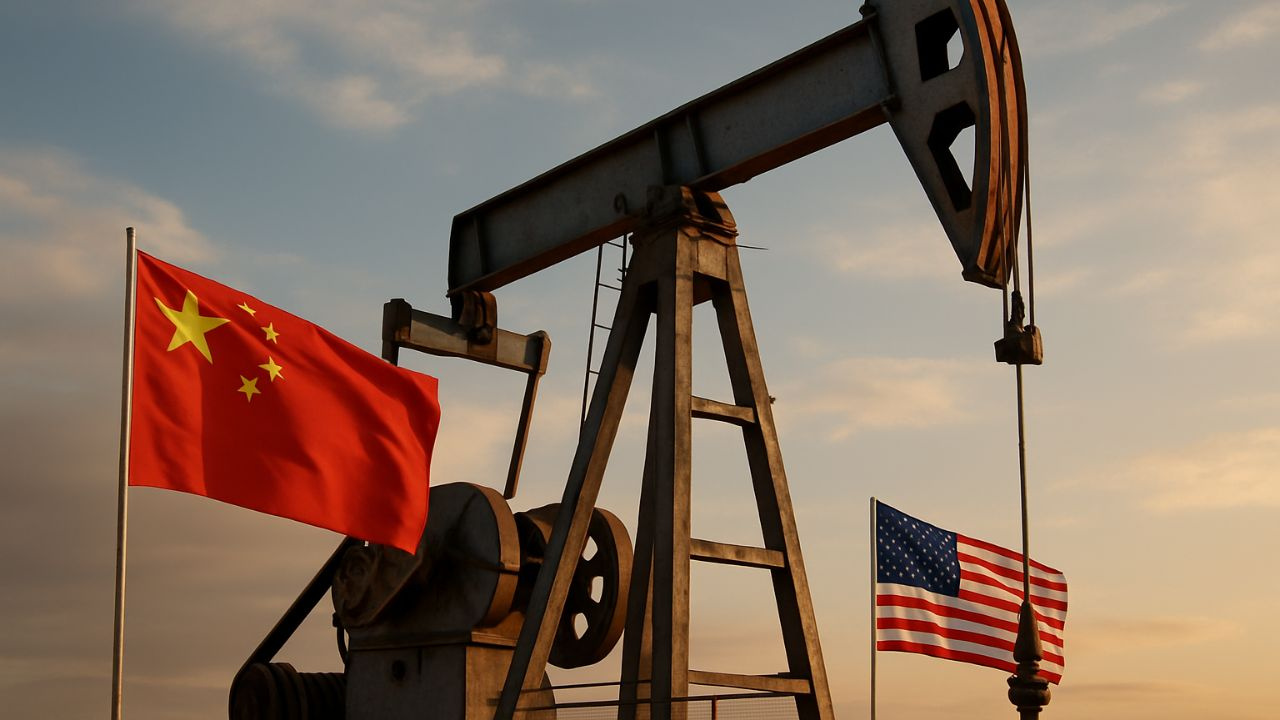
US And Europe Repression Of Sanctioned Oil Affects China’s Purchases, Pressures The Parallel Market And Could Cause Impacts On The Official Oil Price.
The global oil market is beginning to show signs that the repression of illicit trade may have broader effects. Although official prices remain relatively stable, the intensification of actions by the United States and Europe against sanctioned oil is creating increasing tensions outside the traditional supply and demand radar.
Currently, Brent crude, the main international benchmark, is trading around US$ 63. The recent appreciation was limited, under US$ 3, even in the face of significant political events in Venezuela. Part of the impact of the additional supply is already reflected in future contracts, but the physical market tends to react more slowly.
Even in a politically transitional scenario without major disruptions, experts estimate that it will take years to recover Venezuela’s oil infrastructure, which has suffered from a lack of investment. This factor limits any rapid expansion of production and maintains uncertainties regarding the future flow of oil.
-
Lula reveals a masterstroke by Petrobras to undo a deal made by Bolsonaro, which involves the return of an important refinery that currently produces less than half of what was expected and makes Brazil dependent on international diesel.
-
A study confirms that the natural gas sector will reduce greenhouse gas emissions in Brazil by 0.5% and accelerate the energy transition by 2026.

-
Petrobras implements a severe adjustment and confirms a 55% increase in the price of aviation kerosene with a proposal for installment payments for the companies.

-
The rise in oil prices could ensure an extra revenue of R$ 100 billion for the Federal Government, indicates a recent economic study.


Attacks On Venezuela Pressure Parallel Oil Market
The tightening of sanctions against Venezuela and the recent seizure of oil tankers in international waters have raised alarms in the market known as “parallel barrels.” This segment encompasses volumes of oil traded outside the official system, usually at significant discounts, to circumvent restrictions imposed by Western countries.
According to data from Kpler, the volume of oil under sanctions now represents 15% of the global supply, a historical record. Additionally, the so-called shadow fleet — ships used to transport this oil — accounts for about one-fifth of global tonnage, according to Lloyd’s List.
The recent offensive includes the seizure of three oil tankers by the US in just one week. The abundance of supply and relatively low prices create, according to analysts, a rare window for Western governments to intensify oversight without triggering a new wave of energy inflation.
China Feels The Effects Of Repression On Sanctioned Oil
The shift in posture by the US creates a direct challenge for China. Alongside India, the country has been one of the largest beneficiaries of sanctioned oil trade, acquiring large volumes at significant discounts. Data from Kpler indicates that about one-third of China’s oil imports came from Iran, Russia, and Venezuela.
This strategy has significantly reduced the country’s energy costs. In November, for example, China saved nearly US$ 9 per barrel by buying Venezuelan oil compared to a Canadian equivalent, according to Argus Media.
However, this scenario is beginning to change. Approximately 500,000 daily barrels of Venezuelan oil, previously destined for China, are expected to be redirected to US refineries in the Gulf Coast. The White House reported that sanctions on Venezuela will be gradually relaxed, shifting supply from the illicit market to the official market.
Barrel Redirect Affects Price Dynamics
With the migration of Venezuelan oil to formal channels, the discount applied to this type of oil tends to decrease. This could quickly raise Venezuela’s revenue, but it also increases costs for traditional buyers in the parallel market.
Although the heavy oil from Canada and other suppliers has seen recent price declines, it remains much more expensive than the sanctioned volumes purchased by China. This difference exposes the vulnerability of China’s strategy of relying on oil outside the official system.
Furthermore, switching suppliers does not happen immediately. Refineries are adapted to specific types of oil, which limits flexibility in the short term and increases sensitivity to supply shocks.
Chinese Imports Face Recurring Risks
The episode involving Venezuela marks the third time in less than a year that China’s energy imports have been threatened by actions from the White House. Last summer, Israeli attacks on Iran, with US support, had already raised tensions in the market.
In the Shandong region, independent refineries known as “teapots” process about 90% of sanctioned Iranian oil. Any interruption in this flow creates immediate concern among Chinese buyers.
In October, new sanctions imposed by the US on Russian producers Lukoil and Rosneft made the acquisition of oil from Moscow more risky. In response, China strengthened its stockpiling strategy, purchasing volumes above domestic demand and storing the excess.
Stockpiles Provide Temporary Breath, But Do Not Solve The Problem
According to Tom Reed, vice president of oil for China at Argus Media, the country’s heavy oil stockpiles are sufficient until March. After that period, it will be necessary to seek alternative suppliers, such as Canada or Colombia.
This need exposes a strategic dilemma. Although stockpiles offer temporary protection, they do not eliminate the structural risk associated with reliance on sanctioned oil.
In the medium term, Beijing may be forced to reevaluate its investments in politically sensitive regions. Latin America, in particular, emerges as a point of focus, given the Trump administration’s more aggressive stance in limiting the influence of Russia and China.
Chinese Investments In Oil Face Uncertainties
China Concord Resources recently began developing two oil fields in Venezuela. According to analysts at J.P. Morgan, the company plans to invest over US$ 1 billion to reach a production of 60,000 barrels per day by the end of 2026.
However, the future of these projects has become uncertain following the increased political and economic pressure on the country. Iran is also seen as a less reliable partner as protests against the regime intensify.
These factors expand the perception of risk associated with Chinese investments in oil outside the traditional supply axis.







-

Uma pessoa reagiu a isso.