





 Portuguese
  English
  Spanish
 5 min of reading
  0 comments


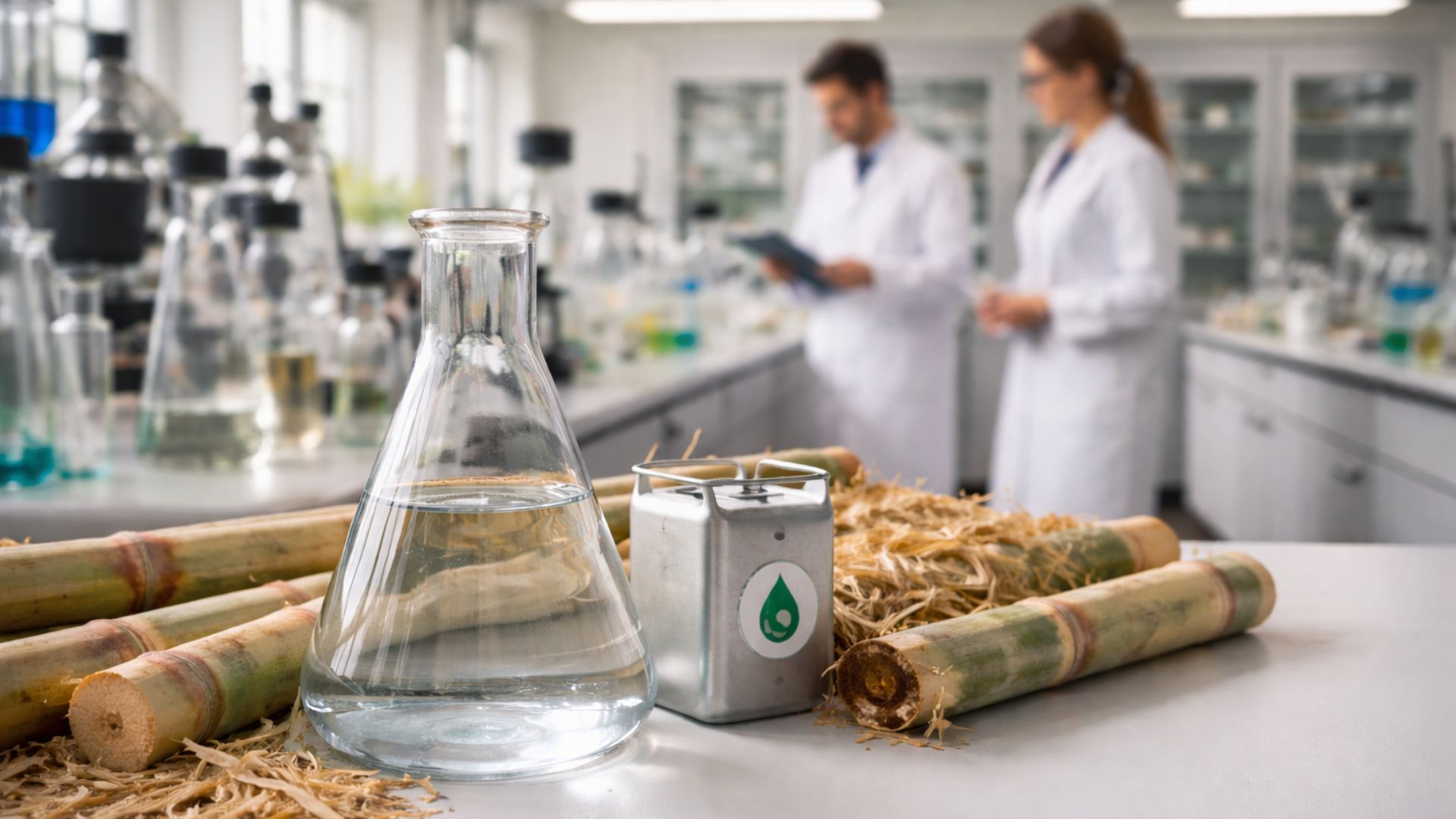
USP Research Reveals Technology That Reuses Ethanol Emissions and Converts Carbon Dioxide Into Sustainable Raw Material, Uniting Agribusiness and Construction With Environmental Innovation
The USP develops research that places ethanol at the center of a new phase of Brazil’s energy transition. According to a story published by Agro Estadão on February 15, recent studies show how the carbon dioxide released in the production of biofuel can cease to be merely a waste and transform into a strategic raw material for agribusiness and construction.
The proposal combines carbon capture, industrial reuse, and materials science, with a concrete potential to reduce emissions and generate economic value. The most relevant point is that the innovation is not limited to reducing environmental impacts. It creates a direct bridge between productive sectors that rarely engaged technologically. The gas once treated as a problem now integrates industrial solutions, enhancing energy efficiency and strengthening Brazil’s image as a reference in biofuels.
Brazilian Science Transforms Emissions Into Industrial Opportunity
Ethanol already occupies a strategic position in the country’s energy matrix. Produced mostly from sugarcane, it represents a renewable alternative to fossil fuels. Nevertheless, its production chain still generates carbon dioxide emissions, especially during the burning of bagasse and straw in the mills.
-
Embrapa’s discovery reveals an unexpected advancement by allowing the production of seedlings from the caatinga using brackish water, opening a new frontier for farmers to face drought more efficiently.

-
6 sources of free fertilizer that you are throwing away every day and can transform your garden without spending anything.

-
With a water crisis on the radar, Sabesp invests in reclaimed water for data centers and transforms sewage treatment into a solution that saves millions of liters and protects public supply.

-
Foresea achieves 100% offshore waste reuse in 2025, eliminates landfill disposal, and consolidates sustainable strategy with 1,500 tons recycled.


This is where the USP becomes relevant. The research aims not only to reduce environmental impact but also to create new uses for the released carbon. Instead of merely capturing CO₂, scientists are investigating ways to reintegrate it into the productive economy, broadening the concept of sustainability.
This approach strengthens agribusiness by adding technological innovation to biofuel production. At the same time, it opens paths for construction, a sector historically associated with high emissions and significant consumption of natural resources. The convergence between science and industry transforms into a strategic development axis.
Carbon Dioxide Capture With Ethanol Gains Momentum at USP
One of the highlighted projects involves the development of a device aimed at the direct capture of carbon dioxide present in the combustion gases of ethanol mills. The study is conducted by researchers from USP in partnership with the Federal University of Ceará and combines computational simulations with laboratory experiments.
The technology uses a process known as temperature swing adsorption. In this method, CO₂ is retained on the surface of a porous solid material called zeolite, widely used in industrial applications. The differentiating factor lies in the optimization of the shape and internal flow of the equipment, which increases the efficiency of the process.
According to the researchers involved, the system has the potential to capture up to ninety-five percent of the gas present in the combustion gases. This rate is considered high compared to traditional techniques based on chemical solvents. The advancement could represent a significant leap for agribusiness, which gains greater control over its emissions.
The economic impact is also noteworthy. Studies indicate that the cost per ton of captured carbon could become competitive, favoring adoption on an industrial scale. This creates a realistic perspective for the integration of sustainability and financial viability.
New Ecological Cement Connects Agribusiness and Sustainable Construction
While one scientific front seeks to prevent carbon from reaching the atmosphere, another aims to make use of the gas already captured. Researchers from the Faculty of Animal Science and Food Engineering at USP in Pirassununga developed a cement reinforced with vegetable fibers capable of absorbing carbon dioxide during the curing of the material.
The product exhibits greater resistance and a lower incidence of fissures compared to conventional composites. Part of the innovation lies in replacing calcium-based compounds with magnesium oxide, reducing alkalinity and preserving the natural fibers incorporated into the cement.
During the accelerated carbonation process, CO₂ is incorporated into the material’s structure, enhancing its durability. According to the researchers, each cubic meter of the new cement can absorb around one hundred kilograms of carbon dioxide. This capacity creates a direct connection between the ethanol produced in agribusiness and the construction industry, forming a more efficient productive cycle.
This technological bond reinforces the concept of a circular economy. What was once seen as waste is now understood as a strategic resource, increasing the added value of biofuels and encouraging new industrial practices.
Circular Economy and USP’s Strategic Role in Ethanol Use
The two lines of research converge on a common goal: to transform emissions into productive opportunities. The USP assumes a leading role by integrating chemical engineering, materials science, and applied sustainability. In this context, ethanol ceases to be merely an energy source and becomes a vector of technological innovation.
The circular economy concept gains traction because carbon dioxide ceases to represent only an environmental liability. It transforms into an input capable of generating new products, reducing waste, and stimulating smarter production chains. This movement also contributes to global decarbonization goals.
The financing from public and private institutions highlights the growing interest in solutions that reconcile environmental responsibility and economic return. The advancement of these technologies strengthens Brazil’s position in the international landscape of renewable energies and applied scientific research.
Technical Challenges and Paths for Large-Scale Application
Despite the advances, industrial implementation still faces technical obstacles. Impurities present in combustion gases, such as water vapor and sulfur compounds, may require additional filtration and thermal control stages. These factors increase operational complexity and demand further studies.
Another relevant point involves logistics and economic viability in real industrial environments. The integration between ethanol mills and construction material factories requires planning, proper transportation of the captured carbon, and adaptation of already established production processes.
Even in the face of these challenges, experts point out that the potential for transformation remains high. The alignment between scientific innovation, sustainability, and industrial interest creates a favorable scenario for these technologies to gradually advance toward the market.
USP Initiative: A New Horizon for Clean Energy and National Industry
The entirety of the research reveals that the future of ethanol goes beyond renewable fuel. By transforming carbon dioxide into useful input, Brazilian science opens concrete paths for agribusiness and construction, two fundamental pillars of the national economy.
The union between carbon capture and the development of new materials indicates a structural change in how waste is perceived. More than mitigating environmental impacts, these initiatives demonstrate that sustainability can walk hand in hand with innovation and competitiveness.
The strengthening of scientific research and the proximity to the productive sector create opportunities for technological leadership and value generation. The integration of science, renewable energy, and industry suggests that Brazil can occupy a strategic position in the global green economy, converting environmental challenges into smart and lasting solutions.











Seja o primeiro a reagir!