





 Portuguese
  English
  Spanish
  3 min of reading
  0 comments


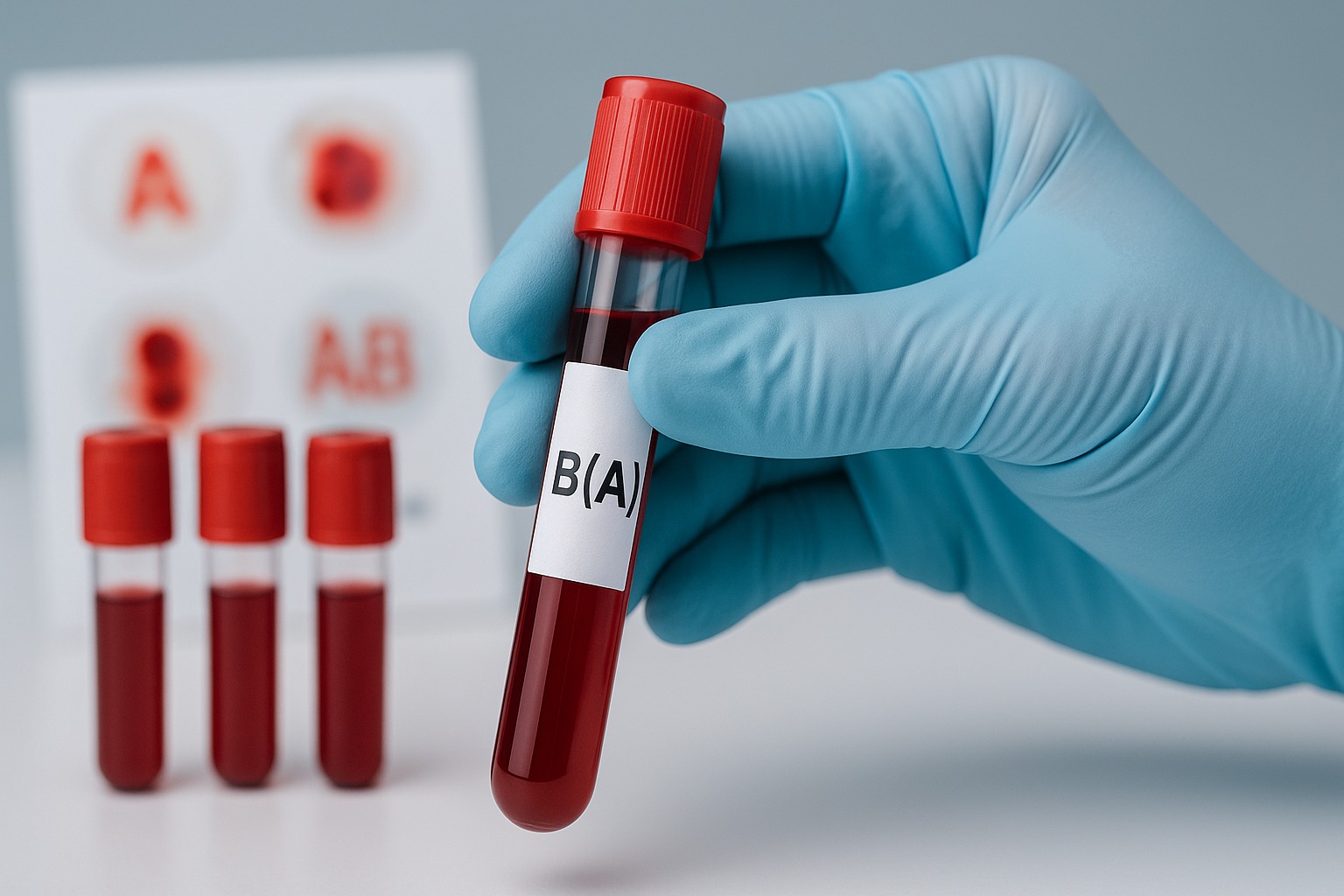
A Survey That Evaluated More Than 544 Thousand Samples Revealed a Rare Phenotype in the ABO System, Identified Only in Three People, Showing Novel Mutations and the Need for Extra Care in Cases of Laboratorial Incompatibility
The analysis of more than half a million samples revealed an unknown blood type. The finding was made by researchers from Mahidol University in Thailand, who were investigating discrepancies in the ABO system. The result appeared in three people among 544 thousand tests and was detailed in the journal Transfusion and Apheresis Science.
An Anomaly That Emerged by Accident
The team was not looking for a new phenotype. The initial focus was to understand why incompatibilities arise between direct and reverse tests.
These situations occur when the typing of the red blood cells does not match the typing of the serum. This concerns doctors because it can pose risks in transfusions.
-
Motorola launched the Signature with a gold seal from DxOMark, tying with the iPhone 17 Pro in camera performance, Snapdragon 8 Gen 5 that surpassed 3 million in benchmarks, and a zoom that impresses even at night.

-
Satellites reveal beneath the Sahara a giant river buried for thousands of kilometers: study shows that the largest hot desert on the planet was once traversed by a river system comparable to the largest on Earth.

-
Scientists have captured something never seen in space: newly born stars are creating gigantic rings of light a thousand times larger than the distance between the Earth and the Sun, and this changes everything we knew about stellar birth.

-
Geologists find traces of a continent that disappeared 155 million years ago after separating from Australia and reveal that it did not sink, but broke into fragments scattered across Southeast Asia.

The research involved 285,450 donor samples and 258,780 patient samples. The specialists from Siriraj Hospital analyzed each case to identify the origin of the discrepancies and observed that they were uncommon.
The group led by Janejira Kittivorapart recorded only 396 discrepancies among more than 544 thousand tests. This corresponds to 0.15% of the total. These numbers already indicated how rare the problem is.
After removing samples that could be related to stem cell transplants, 198 truly conflicting cases remained.
Among them, only one showed the B(A) phenotype. And, in the cohort of donors, the discrepancy rate was even lower, at 0.03%.
Additionally, only two people from this group exhibited the same variation.
New Blood Type? How the B(A) Phenotype Works
The B(A) is a very specific alteration within the ABO system. The blood is classified as type B. However, mutations influence the action of the enzyme that adds antigens to red blood cells.
Due to these changes, the activity resembles that of type A, even though at a low intensity.
In the three observed cases, scientists found four novel mutations in the ABO gene. These mutations had never been mentioned before and modify the behavior of the enzyme.
Conventional tests may not detect the small level of antigen A present.
Therefore, the study serves as a warning for health professionals. Standard typing may fail in exceptional circumstances, and genetic analyses become important when laboratory results do not match.
What the Blood Type Finding Represents
The rarity of the phenotype does not diminish its impact. On the contrary, it reinforces that human blood goes beyond the most widespread classifications.
Understanding these small variations helps avoid transfusion incompatibilities and provides support in complex clinical situations.
Moreover, the study highlights that the field of hematology is vast. Beyond the ABO and Rh divisions, there are more than 45 recognized blood groups.
Each of them presents distinct characteristics that influence how blood is classified.
Other recent findings confirm this scenario. In 2024, researchers solved a five-decade doubt by identifying a new blood group system in a sample from 1972.
Already in 2025, French specialists announced the “Gwada-negative,” considered the rarest type ever recorded and present only in one woman from the island of Guadeloupe.
She is the only person compatible with herself.
These findings show how there are still open questions in this field. Future studies should explain how the newly identified mutations interfere with the structure of the enzyme involved in the ABO system.
With information from Revista Galileu.







-

-

-

3 pessoas reagiram a isso.