





 Portuguese
  English
  Spanish
  6 min of reading
  0 comments


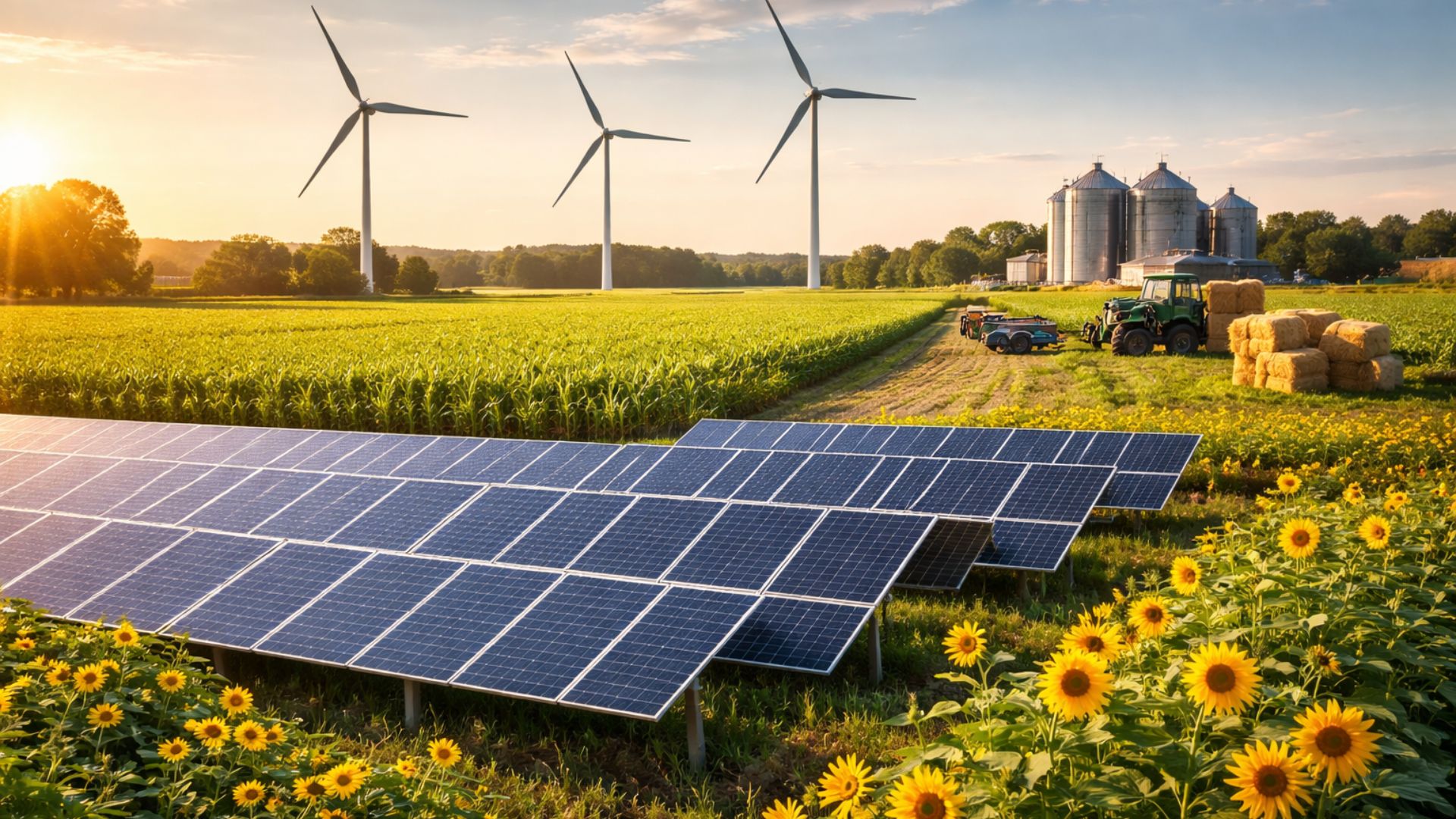
Brazilian Agribusiness Expands Production High with Technology, Environmental Preservation and Renewable Energy, Consolidating Agribusiness as the Economy’s Engine and Protagonist in Decarbonization and Global Competitiveness of Brazil.
The study “Indicators of Sustainability of Brazilian Agribusiness”, released in 2026, presents a detailed overview of how the sector has increased its productive capacity in recent decades based on gains in efficiency, technological innovation and greater renewable energy participation. According to a publication by AgroLink on Tuesday (10), the survey analyzed indicators of production, land use, energy matrix and environmental impacts, gathering official data and information consolidated by technical institutions.
Brazilian Agribusiness Maintains High Production with Sustainability
Right from the first conclusions, the report indicates that Brazilian agribusiness maintains high production with significant environmental preservation, strengthening the strategic role of agribusiness in the national economy. Furthermore, it highlights that the combination of technology, sustainability, and a clean energy matrix positions Brazil as one of the main global protagonists in the production of food, fibers, and bioenergy.
The study reveals that Brazilian agribusiness occupies a central position in the performance of the trade balance. In 2025, Brazil recorded a surplus of US$ 68.3 billion. According to consolidated data in the report, without agribusiness’s contribution, the country would have ended the period with a deficit of over US$ 80 billion. Agribusiness is crucial for the balance of Brazil’s external accounts.
-
The Brazilian state accelerates industrial competitiveness with a focus on the extraction of strategic minerals to boost the energy transition in Goiás.

-
A Canadian retiree creates a hydroelectric system on a real river, generating energy continuously throughout the day and demonstrating how the power of water can supply a house with stability even in a simple structure.

-
Petrobras reaffirms its commitment to the market and ensures that it will carry out the energy transition safely to maintain national sovereignty.

-
Researchers discover a possible hydrogen deposit of up to 46 million tons beneath an ancient coal basin, and the volume could exceed half of the entire global production.


Besides the direct economic impact, the sector has expanded its production mainly through productivity gains. Since the 1985/86 harvest, grain production has increased by more than 500%, while the cultivated area has only doubled in the same period. This means that the high production occurred with greater efficiency in land use, technology, and innovation. Therefore, growth was not based solely on territorial expansion, but primarily on the sustainable intensification of agricultural activity.
High Production in Agribusiness with Efficient Land Use
According to the survey released in 2026, the increase in productivity allowed for an estimated savings of approximately 147 million hectares. This data demonstrates that Brazilian agribusiness has managed to expand the food supply without proportionately pressing new areas.
According to information from Embrapa Territorial cited in the study, about 65.6% of the national territory remains allocated for the preservation of native vegetation. Agricultural use occupies just over 30% of the country’s area. Brazil preserves most of its territory while maintaining high production in agribusiness.
Furthermore, sustainable practices have been widely incorporated into the field. Direct planting reduces erosion and improves carbon retention in the soil. Crop rotation contributes to nutritional balance and biological pest control. The integration of crops, livestock, and forestry promotes simultaneous productive and environmental gains.
Consequently, the Brazilian model demonstrates that it is possible to produce more with less environmental impact, strengthening the sector’s competitiveness in the international market.


Renewable Energy Boosts Competitiveness of Brazilian Agribusiness
Another key point of the study is the strategic role of renewable energy in strengthening agribusiness. Brazil has one of the cleanest energy matrices in the world, which represents a significant competitive advantage.
According to the data presented in the report, 48% of the energy consumed in the country comes from renewable sources, while the global average is 18%. In electricity generation, renewable sources account for 89%. Renewable energy is a structural differential of Brazilian agribusiness.
This characteristic directly benefits the productive sector. International markets increasingly demand sustainable supply chains and products with a lower carbon footprint. In this context, Brazilian agribusiness finds a favorable environment to expand exports and consolidate its global reputation. Furthermore, rural properties have invested in their own generation of solar energy, biomass, and biogas, reducing operational costs and increasing efficiency.
Bioenergy and Decarbonization Strengthen Agribusiness
The study also highlights the importance of biofuels for the Brazilian environmental agenda. The RenovaBio program, a public policy aimed at reducing emissions in the transportation sector, prevented the emission of nearly 200 million tons of CO₂ over five years, according to consolidated data in the report released in 2026.
This result reinforces the direct contribution of agribusiness to mitigating climate change. Brazilian agribusiness not only produces food but also clean and renewable energy.
The production of ethanol, biodiesel, and biogas is closely linked to agricultural activity. Thus, renewable energy expands economic opportunities, adds value to production chains, and strengthens the sector’s international competitiveness. In addition, bioenergy contributes to diversifying the national energy matrix and reduces dependence on fossil fuels.

Technological Innovation Sustains Growth of Brazilian Agribusiness
The high production observed in recent decades is directly related to technological advances in the field. Precision agriculture, for example, allows for monitoring specific areas of the crop, applying inputs locally and reducing waste.
The use of digital technologies, sensors, and monitoring systems increases control over productivity and environmental impact. The genetic improvement of seeds, developed by research centers such as Embrapa, also contributes to increasing productive efficiency. Technology is the foundation of modern agribusiness competitiveness.
Moreover, the expanded use of bioinputs reduces the dependence on synthetic chemical products, promoting more sustainable practices. Integrated production systems increase climate resilience and improve the profitability of rural producers. Therefore, Brazilian agribusiness consolidates itself as a highly technified sector aligned with global sustainability demands.
Recovery of Areas and Strategic Agenda for High Production
The report released in 2026 proposes a strategic agenda to increase production sustainably. Among the priority actions are the recovery of degraded areas, the advancement of digital agriculture, the expansion of bioinputs, the production of bioenergy, and public policies aimed at decarbonization.
The recovery of degraded pastures, for example, represents enormous potential for productive expansion without the need for deforestation. In this way, agribusiness can increase the food supply while maintaining environmental integrity.
Furthermore, consistent public policies are essential to ensure predictability, stimulate investments, and strengthen the position of Brazilian agribusiness in international trade. Sustainability and innovation are permanent pillars of the agribusiness strategy.
Strategic Paths for the Future of Brazilian Agribusiness
The data presented in the study “Indicators of Sustainability of Brazilian Agribusiness” demonstrate that the country has built a productive model based on efficiency, science, and renewable energy. The growth of over 500% in grain production since 1985/86, coupled with the preservation of 65.6% of the national territory, shows that the expansion occurred mainly due to productivity gains.
At the same time, the strong presence of renewable energy in the Brazilian energy matrix enhances the international competitiveness of the sector. The advancement of biofuels and the results of RenovaBio reinforce the commitment to decarbonization. Brazilian agribusiness combines high production, technological innovation, and environmental responsibility.
However, the global scenario demands continuity in investments in research, traceability, and digitalization. The growing global demand for food and clean energy creates strategic opportunities but also imposes rigorous sustainability standards.
Thus, strengthening agribusiness will depend on the integration of technology, effective public policies, and the expansion of renewable energy. The consolidation of this model will allow Brazil to enhance its global leadership, ensure food security, and decisively contribute to sustainable economic growth.
In summary, Brazilian agribusiness demonstrates that it is possible to combine productivity, preservation, and innovation. This balance is the main competitive asset of the national agribusiness and represents a strategic differential for the country’s future. Those interested can access the full study by clicking here.








Seja o primeiro a reagir!