





 Portuguese
  English
  Spanish
  5 min of reading
  6 comments





Update on Provision 65: CNJ Can Facilitate Extrajudicial Usucaption Even with Incomplete Documents, Increasing Disputes Involving Urban Properties and Informal Rentals.
The discussion about the update of Provision No. 65/2017 from the National Justice Council (CNJ) has raised a warning in the urban real estate market: the possibility that extrajudicial usucaption — carried out directly in notaries, without judicial proceedings — may be facilitated even when the property has incomplete documentation, outdated registration, or confusing registration history. The change, advocated by associations of registrars and notaries, could accelerate land regularization but also opens space for conflicts involving informally rented properties, where the line between “legitimate possession” and “prolonged possession with intent of ownership” is not always clear.
Provision 65 regulates extrajudicial usucaption based on article 216-A of the Public Registry Law (Law No. 6,015/1973) and articles 1,238 to 1,244 of the Civil Code, allowing the possessor to regularize ownership without a judicial process, provided that they meet requirements such as a plot plan, notification of adjacent property owners, certificates, documents proving the length of possession, and a declaration that there is no litigation.
Now, with the pressure from notaries to relax documentation requirements, experts point out that urban areas with verbal contracts, informal rentals, and longstanding possession may become fertile ground for litigation.
-
The Chamber opens a debate on driver’s licenses at 16 years old as part of a reform that includes around 270 proposals to change the Brazilian Traffic Code and may redesign rules for licensing, enforcement, and circulation in the country.

-
The new Civil Code could revolutionize marriages in Brazil with “express divorce” and changes that could exclude spouses from inheritance.
-
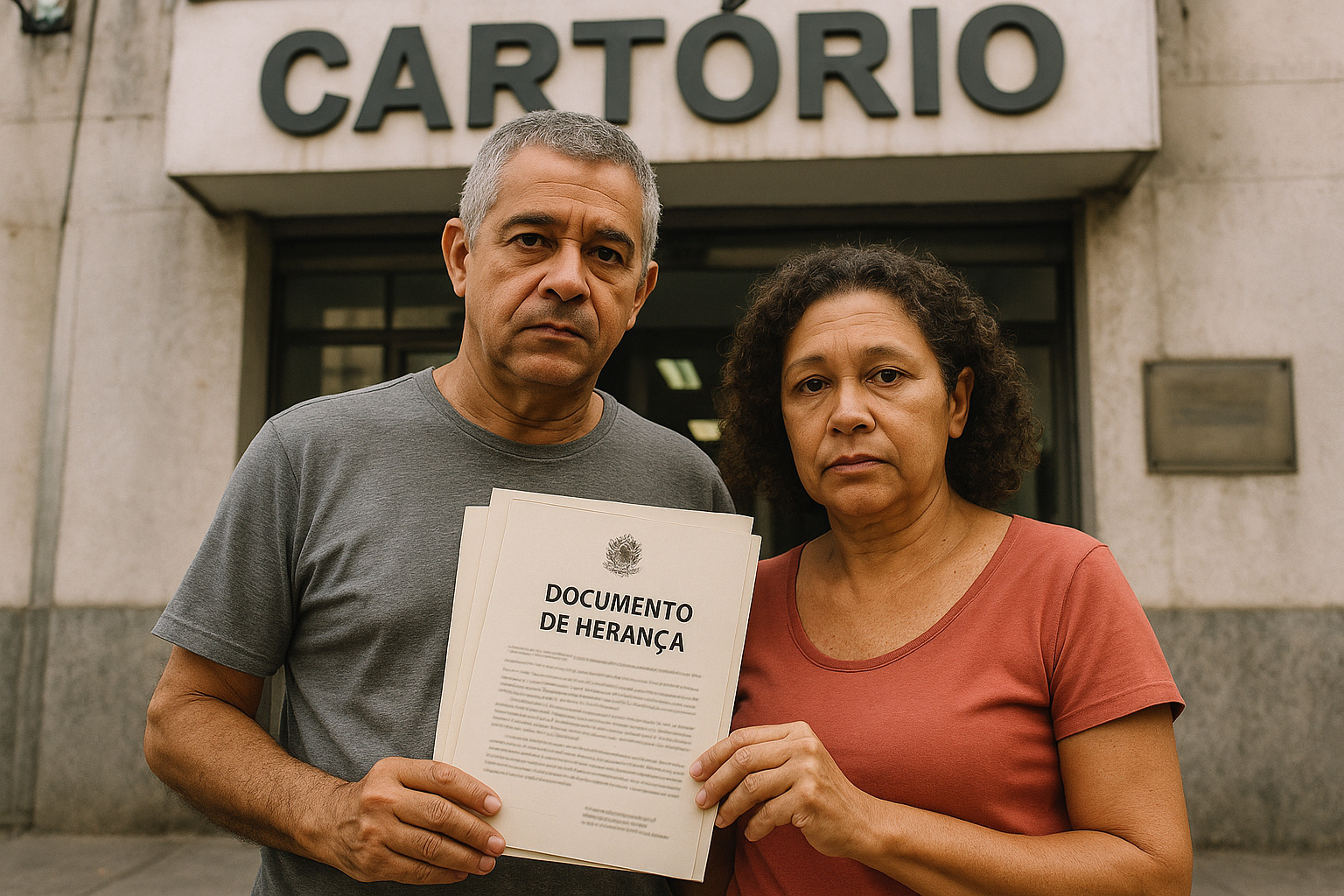
Banco do Brasil sues famous influencer for million-dollar debt and intensifies debate on delinquency, risks of seizure, and direct impact on Gkay’s credibility.

-
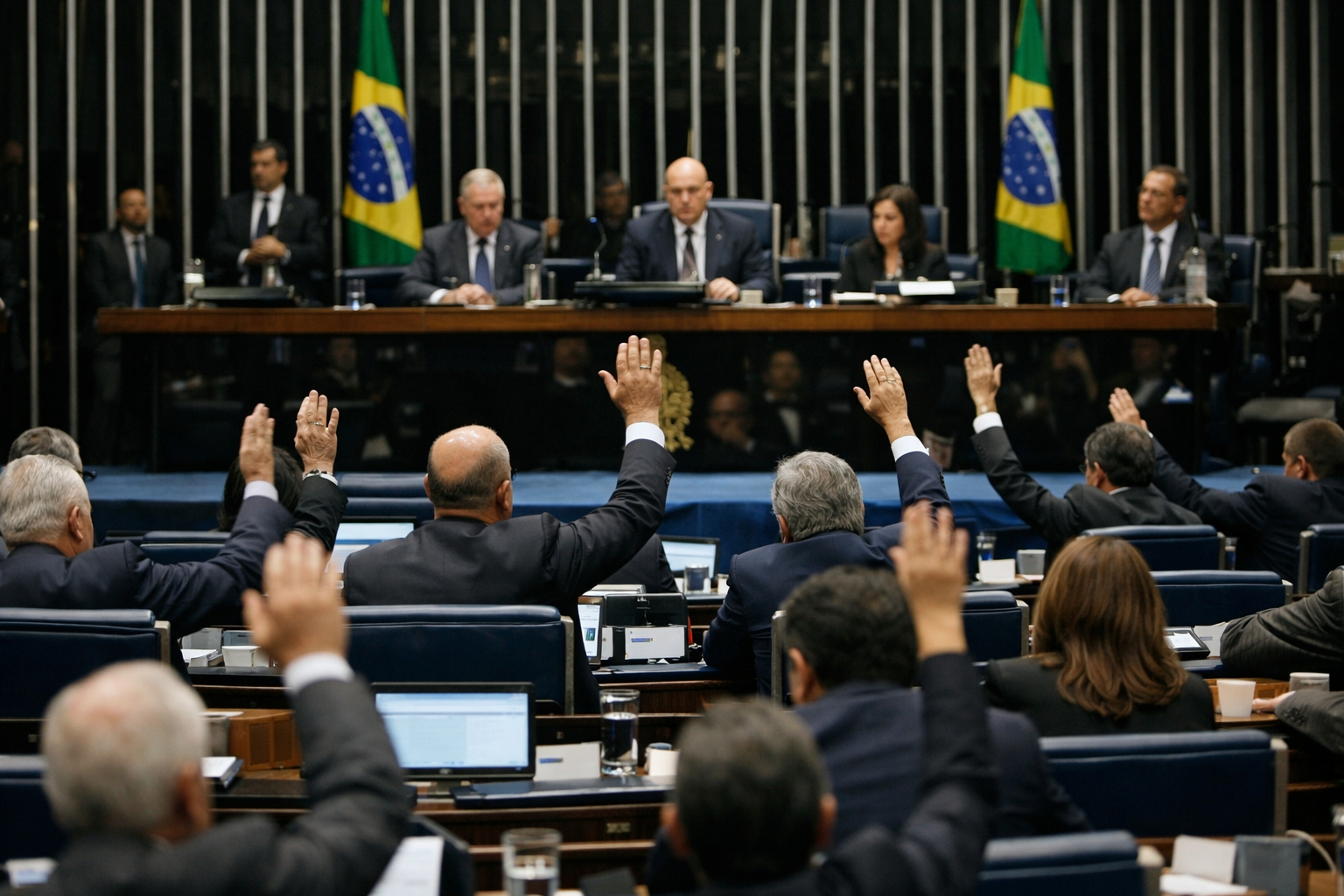
The Senate approves a bill that criminalizes misogyny, hatred, or aversion towards women, and includes the crime in the Racism Law with a penalty of up to 5 years.

Extrajudicial Usucaption Gains Strength with Updates Proposed by CNJ
Since the creation of Provision 65, the extrajudicial process has become a faster and less bureaucratic alternative for the regularization of urban properties. In 2021, CNJ expanded the possibilities with Provision 121, which adjusted steps and relaxed some requirements.
Now, with a new round of discussions, registrars argue that:
• incomplete documents should not be an absolute barrier
• the property registration can be updated throughout the process
• notifications should be simpler and less rigid
• maps and plans can be replaced by technical declarations
The proposal aims to reduce obstacles and increase the number of regularized properties, especially in large cities where a significant portion of residences lack complete documents.
But the measure directly affects properties rented without contracts, which become vulnerable to usucaption claims by occupants who assert long-term possession.
Informally Rented Properties May Become Targets for Prolonged Possession Disputes
A large portion of rental contracts in Brazil is verbal, especially in outskirts, areas of old housing, or regions where municipal registration and property registration do not communicate with each other. In these cases, tenants occupy homes for ten, fifteen, or twenty years without formal contracts, paying rent in cash or through informal agreements.
The Civil Code states that:
• possession for usucaption must be with intent of ownership
• rental characterizes a obligational relationship, not possession ad usucapionem
• payment of rent, as a rule, prevents usucaption
However, the lack of documentation creates a recurring problem: how to prove that there was a rental relationship, and not possession with intent of ownership?
With the new interpretation desired by notaries, this line may become even more tenuous. If an occupant claims to have lived in the property for many years, makes improvements, maintains the land, and there is no documentary proof of the rental, the conflict may end up in the notary’s office and then escalate to the Judiciary.
Incomplete Documentation and Confusing History: The Most Sensitive Point
Brazilians know that in large cities, it is common to find properties with:
• outdated registrations
• incorrectly registered areas
• physical changes without annotations
• outdated municipal registrations
• inheritances informally divided
• subdivisions without deeds
This combination means that many properties “exist” in practice, but not on paper. Extrajudicial usucaption emerges as a solution for this, but also as a gateway to disputes involving:
• decade-long tenants
• irregular occupants
• former owners without registration
• heirs who never formalized the division
With incomplete documents, the narrative of possession gains weight — and the line between legitimate occupation and encroachment on someone else’s property becomes more controversial.
Tenancy Law and the Risk of Mass Judicialization
The Tenancy Law (Law No. 8,245/1991) requires that rental contracts be formal when there is a guarantee fee charged, but does not invalidate verbal contracts. Thus, thousands of rental relationships depend solely on trust or flimsy receipts.


With the expansion of extrajudicial usucaption, lawyers fear:
• an increase in actions contesting usucaption requests
• difficulties in proving that the occupant paid rent
• owners losing property due to lack of documents
• longtime tenants being pressured to leave without legal protection
For registrars, the goal is to expedite the system. For urban law specialists, the risk is turning notaries into arenas of land conflicts.
Impacts in Large Cities and the Pressure on Formal Contracts
Cities like São Paulo, Rio de Janeiro, Recife, Belém, Manaus, and Salvador have vast urban areas where informal contracts and prolonged possession coexist. The proposal to update Provision 65 is likely to create a rush for formalization:
• more written contracts
• review of registrations
• regularization of old properties
• increased demand for lawyers and engineers
• pressure on property registry offices
For longtime tenants who have never formalized anything, the risk of losing the right to housing is real. For property owners, the fear increases that long-accepted possession may turn into a usucaption claim.
What to Expect Going Forward
CNJ is still discussing the scope of the update. The debate involves magistrates, notaries, urban planners, lawyers, and housing entities. The consensus is that land regularization is necessary but must come with safeguards to avoid injustices.
If the provision is relaxed as desired by notaries, Brazil may witness:
• an increase in usucaption requests in urban areas
• disputes involving old rentals
• litigation among heirs, tenants, and property owners
• pressure for a review of the Tenancy Law
In a country where informality dominates real estate relationships, any change in the possession rules directly impacts the housing of millions of people.
Final Reflection to the Reader
The possible update of Provision 65 represents more than a technical adjustment: it exposes the documentary fragility of thousands of urban properties and puts two fundamental pillars of real estate law in tension: the protection of property and the social function of housing.
By relaxing requirements and speeding up extrajudicial usucaption, the country may advance in land regularization, but also broaden disputes involving longtime tenants, informal contracts, and areas historically marked by continuous occupation.
The debate reveals that, without clear contracts, updated registrations, and consistent records, even seemingly stable relationships can turn into complex litigation.
The central question remains open: should speed in regularization prevail over the risk of possession conflicts?
And you, reader: do you believe that the relaxation of extrajudicial usucaption is a necessary advancement to organize the urban chaos or a danger for those living in rental properties without formal protection?










Mas o Provimento 65 foi revogado em 2023
Que pena uma matéria muito boa, mas atrasada, além de que os cartórios se julgam dono da demanda, eles deveriam destravar a burocracia, entanto, são movidos a vapor ainda. Lamentável
A perda da propriedade privada, de modo tão facil, como está admitida na legislação da hora, é exemplo de socialismo.