






 Portuguese
  Spanish


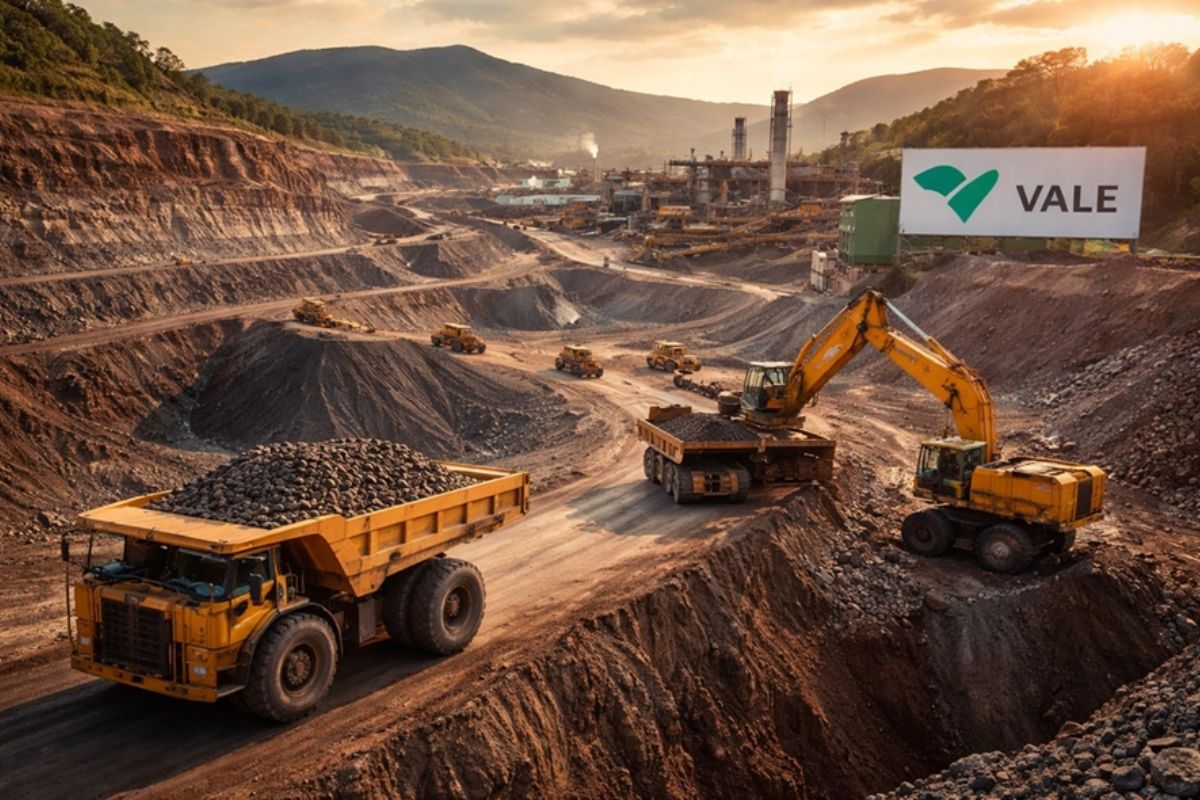

In Brazil, Vale Announced Results with a Loss of US$ 3.8 Billion in 4Q25 to Adjust for Asset Impairments, Directly Impacting Net Income and Attracting Attention from Investors and the Financial Market
Vale surprised the market by announcing its results for the fourth quarter of 2025 after the stock market closed. Despite a strong operational performance, the balance sheet showed a net loss of US$ 3.8 billion attributable to shareholders.
The figure stands out because a year earlier the mining company had reported a much lower loss of US$ 694 million. The contrast was significant.
Nonetheless, behind the negative result, there are numbers that show a different operational reality, especially when considering the adjusted data and production performance.
-
Financial Worries Surpass Health, Family, and Work Concerns in Brazil, as Credit Cards, Debt, and Lack of Savings Cause Sleepless Nights

-
Without Scalable Industrial Capacity, Brazil Risks Falling Behind, Warns Avibras Aeroco CEO as Company Resumes Missile and Drone Production and Prepares New Tactical Cruise Missile Launch
-
As 9,215 Brazilians Join Millionaire Ranks by 2025, 69% of Adults Still Have Less Than $10,000, Keeping Brazil Among World’s Most Unequal Nations
-
Entrepreneur Sells Car to Launch Healthy Meal Business, Now Runs Mr. Fit with 880 Stores in 3 Countries and $40 Million Annual Revenue


Billions in Asset Impairments Explain Loss in the Fourth Quarter of 2025
The main reason for the loss was the recording of impairments that totaled US$ 3.5 billion in Vale Base Metals’ nickel assets in Canada. The revision of long-term price assumptions for nickel directly impacted the assets.
Additionally, there was a decline of US$ 2.8 billion related to deferred tax from subsidiaries.
The result also reflected additional provisions related to Samarco and lower gains from non-recurring assets.
When excluding the effects related to Brumadinho, the decharacterization of dams, and other non-recurring items, the scenario changes. In a proforma basis, the net income would have been US$ 1.4 billion.
Still, the number fell short of the projection by analysts surveyed by LSEG, who estimated a profit of US$ 2.457 billion.
EBITDA of US$ 4.5 Billion Shows Operational Strength Despite Accounting Loss
Even with the loss, EBITDA in the quarter reached US$ 4.5 billion.
On a proforma basis, the indicator would reach US$ 4.8 billion, with a proforma EBITDA margin of 44 percent. The result was boosted by higher sales volumes and increased copper and iron ore prices.
The proforma EBITDA calculation excludes effects related to Brumadinho, decharacterization of dams, and non-recurring items. Meanwhile, adjusted EBITDA is used for dividend calculations.
The mining company’s net revenue totaled US$ 11 billion, an increase of 9 percent year-over-year and a growth of 6 percent compared to the previous quarter.
The operational impact was immediate and demonstrated that, despite the accounting loss, operational generation remains strong.
Production and Sales Increase, Reaching Highest Levels Since 2018
Vale achieved the highest levels of iron ore and copper production in the fourth quarter of 2025 since 2018.
Sales increased by 5 percent in iron ore, with an additional 4 million tons. In copper, the increase was 8 percent, equivalent to 8 thousand tons. Nickel also rose by 5 percent, with an increase of 3 thousand tons.
The average realized price of iron ore rose by 3 percent year-over-year, reaching US$ 95.4 per ton.
Copper showed even more significant appreciation. The realized price grew by 20 percent year-over-year and 12 percent compared to the previous quarter.
All-in costs for copper totaled US$ 881 less per ton during the period.
Projects such as Capanema, Vargem Grande, VBME, and Onça Puma helped sustain performance, with successful ramp-ups and greater asset reliability.
Net Debt of US$ 15.5 Billion Reduces Room for Extraordinary Dividends
Expanded net debt stood at US$ 15.5 billion, a reduction of 5 percent year-over-year and a decline of US$ 1 billion compared to the previous quarter.
The company’s target remains between US$ 10 billion and US$ 20 billion.
However, the closer it is to the upper limit, the lower the possibility of paying extraordinary dividends. With debt above US$ 15 billion, the market is already dismissing this possibility at the moment.
The detail that stood out the most was precisely this combination of strong operational generation and financial constraints for additional dividends.
Free Cash Flow Grows 107 Percent and CAPEX Totals US$ 2 Billion
Recurring Free Cash Flow generation reached US$ 1.6 billion in the third quarter of 2025, up 107 percent compared to the same period in 2024.
The increase was driven by stronger proforma EBITDA performance and lower net expenses.
The CAPEX during the period was US$ 2 billion.
Positive working capital was influenced by cash inflows from iron ore sales from the previous quarter and lower accumulated volumes at the end of the period.
For the year, the miner’s profit was R$ 13.8 billion. The company reported that it fully achieved the guidance established for the year, in addition to reinforcing advancements in operational safety, including the absence of dams at level 3 of emergency.
Even with a billion-dollar accounting loss in the fourth quarter, Vale demonstrated operational strength, production growth, and financial discipline, in a scenario that mixes significant accounting impact and consistent production performance.
What do you think of Vale’s results in 2025? Do you believe the company should prioritize debt reduction or dividends next year? Share your opinion in the comments.


