





 Portuguese
  English
  Spanish
  4 min of reading
  0 comments


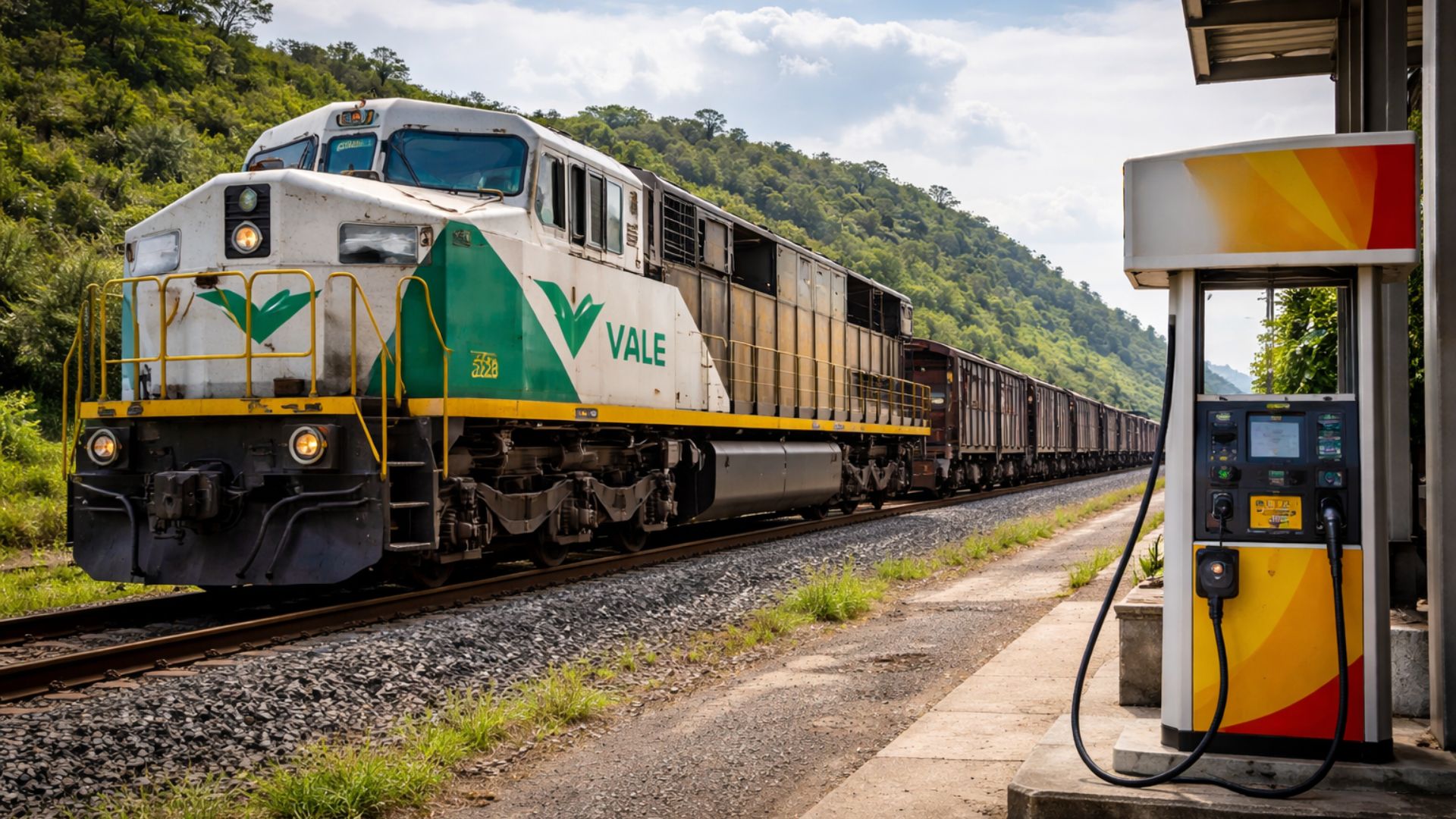
Historical Result In Railways Reduces Emissions And Diesel Consumption, Strengthens Climate Goals Until 2050 And Expands Logistical Efficiency In Strategic Brazilian Mining Corridors.
The Vale reported achieving, in 2025, the best energy efficiency results in its railways in the last decade, with 11 million liters less diesel in the projected annual consumption, in addition to 28 thousand tons of CO₂ avoided.
According to the company, the saving would be equivalent to enough fuel to supply 245 thousand popular cars for a year, in performance concentrated on the operations of the Carajás Railway and the Vitória a Minas Railway.
The two networks, according to the mining company, account for about 14% of the company’s emissions, which gives weight to the indicator in a sector that relies on heavy logistics and operates with long-term environmental goals.
-
The government requests the Federal Revenue Service for a new system to automate the income tax declaration, reducing errors, time, and bureaucracy for millions of Brazilians.

-
Pix in installments, international Pix, and contactless payment without internet: the Central Bank revealed the new features coming to the tool that is already used by almost every adult in Brazil.

-
Mercado Livre has just started selling medications with delivery in up to three hours to your door, and this move could completely change the way Brazilians buy medicines on a daily basis.

-
In Dubai, rising tensions from the war in the Middle East are causing super-rich individuals to leave the Gulf and direct their fortunes to a new financial refuge in Asia.


Vale states that it aims to reduce CO₂ emissions from its railways by 33% by 2030 and reach zero emissions by 2050, a goal that depends on continuous operational gains and gradual changes in the type of energy used.
Energy Efficiency And Diesel Consumption Reduction
Energy efficiency, in the railway context, is not limited to an isolated action, but to a set of practices capable of transporting the same load with less fuel, maintaining regularity, safety, and predictability of circulation on the routes.
By reducing diesel consumption, the operation decreases direct costs and also cuts emissions associated with fuel combustion, two effects that go hand in hand when measurement considers transported volume, distance traveled, and fuel effectively spent.

The company describes the indicator as a relationship between diesel consumed and transportation work measured in ton-kilometers, a methodology that allows for comparing different periods and identifying points where the operation spends more energy to deliver the same service.
When this consumption per ton-kilometer decreases, it indicates that the railway is doing more with less, which can reflect traffic planning, more efficient driving, fewer maneuvers, and more rational use of locomotives along the route.
Strategic Role Of The Carajás And Vitória A Minas Railways
The operations of the EFC and EFVM concentrate the presented results because they are high-demand corridors with significant cargo movement, making any unit gain relevant when multiplied by daily trips, long distances, and extensive trains.
The participation of these railways in the company’s total emissions, estimated by Vale itself at 14%, helps explain why the topic is linked to climate goals, as improvements in this segment can reduce a significant portion of operational emissions.
The structural advantage of rail transportation compared to road transportation is also taken into account, a point mentioned by the company when stating that the mode can emit up to 85% less carbon than truck transport under equivalent movement conditions.
Still, the reduction of emissions does not happen automatically just by being a railway, because performance depends on the fuel used, the profile of the route, and the manner of driving, which makes energy efficiency a central element of the promised results.
Operational Adjustments And Traffic Planning
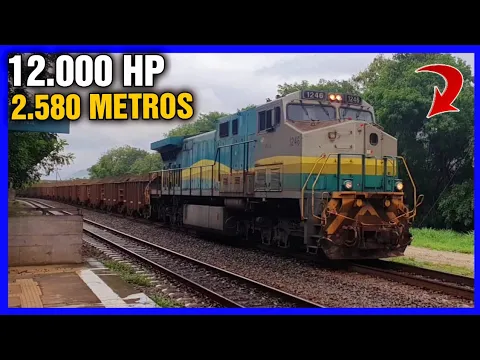

Vale attributes the advancement of 2025 to objective operational changes, with priority circulation for loaded trains and reduction of situations that increase energy expenditure, such as frequent stops and acceleration that require more effort from locomotives.
Another area described by the company was the mapping of critical sections, used to identify points where the operation tends to waste energy due to ramp conditions, traffic restrictions, or need for maneuvers, allowing adjustments in circulation planning.
In descents, the company reports having adopted the practice of operating in slow gear with shut-down locomotives, maintaining the train’s movement without additional consumption on that stretch, a strategy dependent on operational control and the profile of each segment of the railway.
By combining fewer interruptions, more stable driving, and traffic decisions that favor loaded trains, the operation reduces diesel consumed per trip and improves the ton-kilometer indicator, which is the basis used to classify the disclosed energy performance.
Tests With Biodiesel, Flex Engine And Electrification Alternatives
In addition to routine changes, the company claims it is testing biodiesel and evaluating technologies that may reduce the reliance on diesel over time, a step linked to the goal of lowering emissions before 2030 and sustaining the pathway to 2050.
In the development field, Vale says it is conducting studies with Wabtec Corporation for an engine capable of operating with diesel and also with a mixture of diesel and ethanol, an alternative presented as part of the effort to decarbonize railway operations.
The company also states that it is analyzing alternatives such as electrification, a topic that often depends on technical and infrastructure evaluations, as it requires changes in the system and equipment, in addition to compatibility with continuous operation and demand of the corridor.
With these parallel projects, the miner is attempting to advance on two fronts simultaneously, improving the efficiency of what already exists and preparing gradual replacements of fuel, without claiming that a single solution will be responsible for achieving the final goal.
By presenting the 2025 balance as the best of the decade, the company places energy efficiency at the center of the railway strategy, connecting the indicator to cost reduction, emission cuts, and compliance with the goals of 2030 and 2050.
What type of change is likely to weigh more moving forward in Vale’s railways: fine operational adjustments, partial fuel replacement, or a deeper transformation in the energy matrix of locomotives?








Seja o primeiro a reagir!