





 Portuguese
  English
  Spanish
  4 min of reading
  0 comments


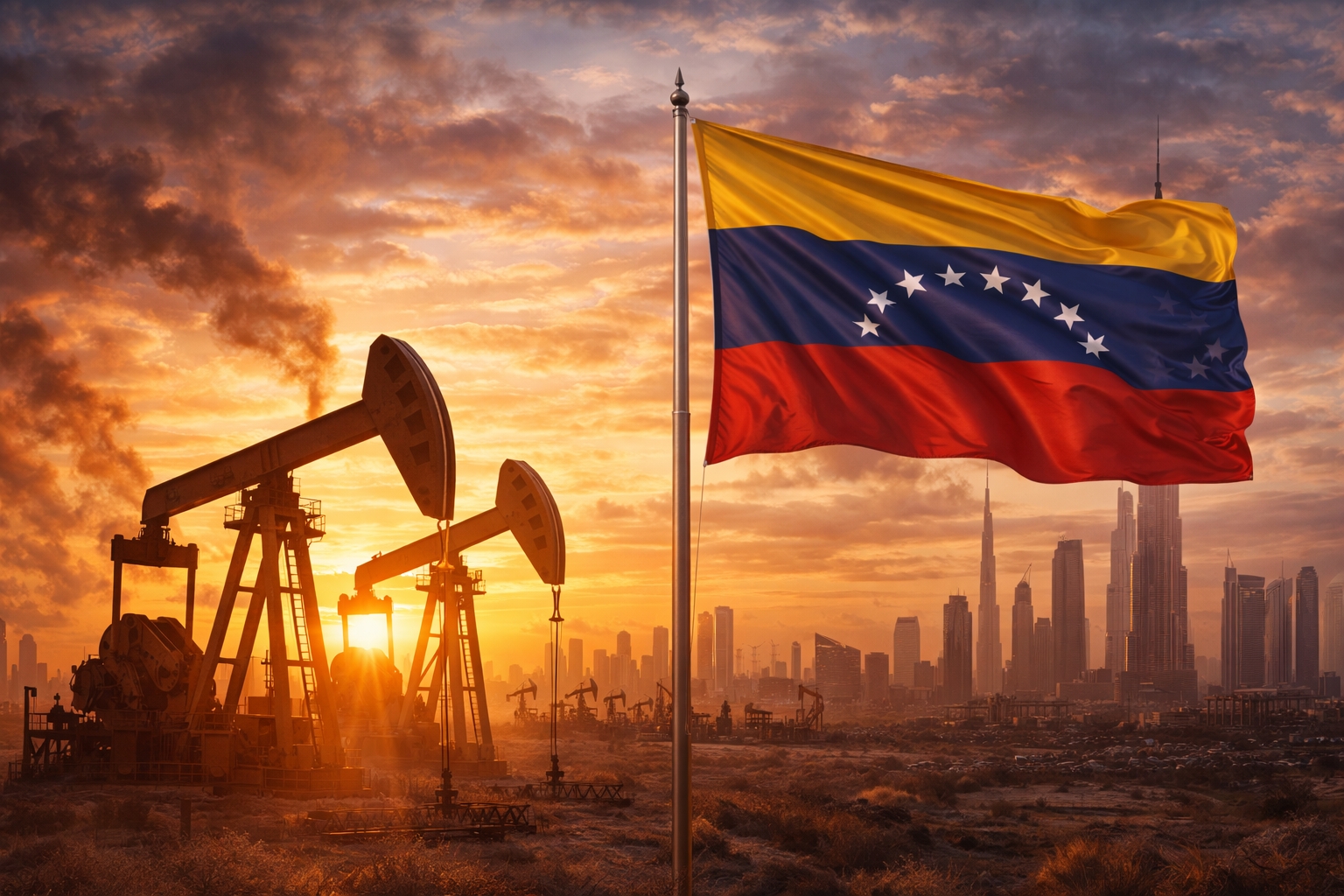
In a Speech at the World Governments Summit, Calixto Ortega Said That the Goal Now Is to Increase Production and Attract Investment to Venezuela, at a Time When the Venezuelan Industry Is Trying to Move Away From the Role of Promise and Recover Space in the Market.
Venezuela has always been treated as that oil powerhouse residing in a curious showcase. Everyone points to the giant reserves, everyone repeats the number, everyone calculates how much that would be worth, and then the conversation stalls in the same place: if there’s so much wealth under the ground, why doesn’t production keep up?
It was on top of this wound that the new Venezuelan economic vice-president, Calixto Ortega, decided to speak frankly in Dubai.
The ambition, according to him, is simple to understand and difficult to execute: to stop being recognized only for the size of its reserves and to be remembered for what comes out of the well.
-
The government requests the Federal Revenue Service for a new system to automate the income tax declaration, reducing errors, time, and bureaucracy for millions of Brazilians.

-
Pix in installments, international Pix, and contactless payment without internet: the Central Bank revealed the new features coming to the tool that is already used by almost every adult in Brazil.

-
Mercado Livre has just started selling medications with delivery in up to three hours to your door, and this move could completely change the way Brazilians buy medicines on a daily basis.

-
In Dubai, rising tensions from the war in the Middle East are causing super-rich individuals to leave the Gulf and direct their fortunes to a new financial refuge in Asia.


This kind of statement is not just marketing. It seeks to address what many in the market consider to be the true problem of Venezuela in recent years: operational reputation. Reserves are potential. Production is reality. And those who live from exports know that the world buys flow, not just promise.
Ortega also brought up an argument that is usually well received at international events: using oil revenue to diversify the economy, citing the model that the United Arab Emirates have pursued over time.
It’s a way of saying that oil, alone, is not enough, but it is still the fastest lever to finance the rest.
The Numbers That Make the Conversation Uncomfortable
The math is the part that takes the story off the ground of phrases and puts it on solid ground. Venezuela is currently averaging production that is much lower than it once had, while the past recalls a peak of over 3 million barrels per day in the 1990s.
In the same package, the contradiction that always fuels headlines appears: the country carries reserves estimated in hundreds of billions of barrels, but delivers a volume that seems small compared to this potential.
It is precisely for this reason that the discourse of “I want to be recognized for production” sounds provocative. It assumes that there is an abyss between what Venezuela could be and what it has been able to achieve.
And here comes the part that the market scrutinizes: how to turn intention into barrels. To produce more, it’s not enough to announce goals.
It requires capital, technology, operational stability, supply chain, maintenance, security, trucking, and contractual predictability. Each of these items costs money and trust.
In the midst of this repositioning attempt, El Periódico de la Energía reported that Ortega stated he is ready to receive investments and compete in the international market, citing sanctions as the main bottleneck that still holds back the broader entry of companies.
The Political Background and the Message for Investors
The speech in Dubai did not come in a vacuum. Ortega assumed the economic role a short time ago, in a scenario where Venezuela is trying to redesign its oil industry and signal to the market that it wants to return to negotiating as a normal player.
He directly mentioned that companies are waiting for the easing or removal of sanctions to unlock investments.
Here the detail is important: when sanctions enter the equation, the discussion is not just about the willingness to produce. It becomes a discussion about risk.
Contract risk, payment risk, logistics risk, risk of sudden rule changes. The investor may accept risk, but they want to know what risk it is, how much it costs, and how to protect themselves.
That’s why the announcement of legal changes in the sector tends to become the most scrutinized aspect of this story. Reforming hydrocarbon rules, opening up space for private and foreign participation, and creating clearer mechanisms to operate may be the type of news that changes perception.
But the market usually expects two signals at the same time: text and practice. Without practice, the text becomes paper. Without text, the practice becomes improvised.
Producing More Oil Is a Goal, but It Is Also a Test of Strength for Venezuela
When a country with huge reserves says it wants to be recognized for production, it is taking on a public test.
From then on, everyone starts measuring the discourse by monthly volume, by delivered projects, by recovered fields, by efficiency, and by the ability to maintain stability.
And there is a side effect that few people mention: if production grows, economic policy gains momentum.
The government gains more room for maneuver, local industry breathes, services and logistics move, and the country can negotiate with more weight. However, the path to get there is usually slow, expensive, and full of negotiation.
In the end, the message from Dubai seems to have been designed to stick in the minds of listeners: Venezuela wants to stop being a story about reserves and return to being a story about barrels. Now comes the part that separates desire from reality.









Seja o primeiro a reagir!