





 Portuguese
  English
  Spanish
  6 min of reading
  0 comments


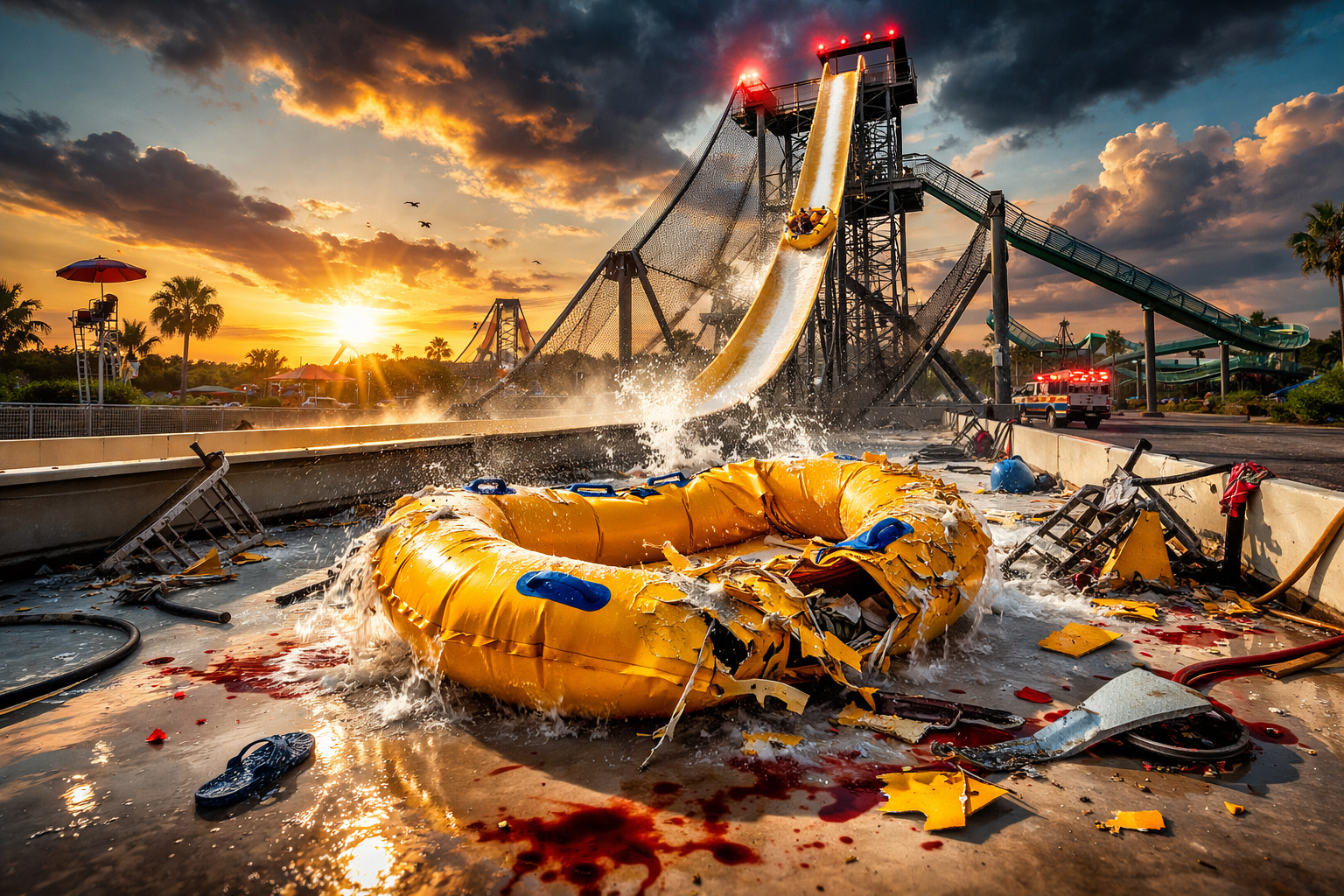
The Tallest Water Slide in the World: A Project Sold as an Engineering Landmark, with 51 Meters in Height and a World Record Ambition, Ended in Tragedy on August 7, 2016 and Raised Hard Questions About Testing, Regulation, and the Limits of Extreme Design
The water slide dominated the park as if it were an infrastructure project, not a ride. At about 51 meters, close to 17 stories, the Verrückt was presented as proof that engineering could still push fun beyond the obvious.
The promise was a nearly vertical drop, absurd speed, followed by a second elevation capable of delivering a zero-gravity feeling. For those who love records, this was a big name. For those who live by safety, it was a project that required a generous margin of error and strict technical control.
On August 7, 2016, that margin seems to have disappeared. The attraction closed on the same day.
-
Friends have been building a small “town” for 30 years to grow old together, with compact houses, a common area, nature surrounding it, and a collective life project designed for friendship, coexistence, and simplicity.

-
This small town in Germany created its own currency 24 years ago, today it circulates millions per year, is accepted in over 300 stores, and the German government allowed all of this to happen under one condition.

-
Curitiba is shrinking and is expected to lose 97,000 residents by 2050, while inland cities in Paraná such as Sarandi, Araucária, and Toledo are experiencing accelerated growth that is changing the entire state’s map.

-
Tourists were poisoned on Everest in a million-dollar fraud scheme involving helicopters that diverted over $19 million and shocked international authorities.


And what emerged afterwards, in reports and case documents, put a magnifying glass on something that much of the industry knows well: when haste and marketing dictate, engineering pays the price.
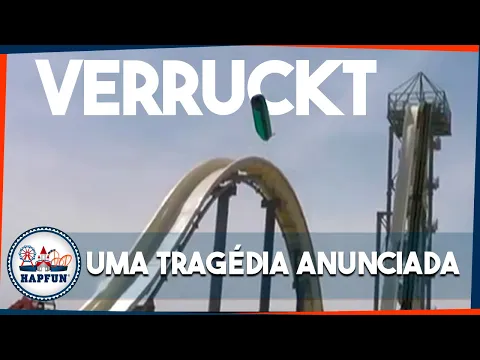

The Giant That Wanted to Be the Tallest on the Planet, and Why World Records Tend to Function as Dangerous Fuel
The Verrückt was born with a goal that would make any marketing team smile. To be the tallest water slide in the world. The very name, which in German means crazy, was already a warning as well as an invitation.
In the logic of amusement parks, the record becomes a headline, attracts tourists, heats up the queue, goes viral in cell phone videos. And this race doesn’t happen just out of vanity. It affects revenue, reputation, and competitive advantage.
The problem is that record doesn’t go well with improvisation. When an attraction becomes a megaproject, the validation standards should rise accordingly.
And that’s precisely where the case began to concern people, because, according to documents and testimonies gathered in the case, the project’s validation did not follow the rigor that would be expected for a structure of this size and dynamics.
The Descent That Seemed Only Adrenaline, Until the Moment When the Second Elevation Showed the Most Delicate Part of the Project
The visitor was placed in inflatable rafts designed for up to three people. The first drop was almost vertical. Then came the section that sold the ride’s trademark: a hill-shaped elevation, designed to create the feeling of zero gravity.
It was at this point that the tragedy occurred.
Caleb Schwab, aged 10 years, was descending accompanied by two adult women when the raft gained excessive speed. Upon reaching the second elevation, the raft was forcefully ejected against metal structures and safety nets installed above the track.
The impact was devastating.
The shock across the country was immediate. And, along with the closure of the attraction, came the question that drives all technical investigations: what exactly failed before the accident, not just at the moment of the accident?
Inadequate Testing, Reactive Corrections, and the Weight in the Raft That Could Change Everything
Subsequent investigations centered on a series of failures reported in documents and court testimonies. The picture that emerges is of a project that tried to tame difficult behavior with solutions that did not address the root of the risk.
Among the points cited in the case material are questions about the absence of adequate engineering tests prior to opening to the public, considering the magnitude and speed involved.
There is also mention of the use of sandbags to simulate occupants, in different weight combinations, instead of appropriate dummies to replicate the behavior of human bodies in motion.
Another point is the existence of adjustments after initial problems, as reports indicate that, prior to the fatal accident, there were episodes where rafts partially detached from the track.
The response reportedly included metal nets and upper reinforcements, measures that contain the effect but do not guarantee that the dynamic problem is resolved.
The unstable mass distribution in the rafts, since small variations in weight and positioning could drastically alter the behavior of the ensemble on the second elevation.
This last point changes the risk perspective. When a system relies on nearly perfect distribution to function, it approaches a limit that real operation does not respect. People are not fixed numbers. Posture changes. The center of mass shifts. And physics demands its due.
The Technical Secret of the Verrückt Is That the Top of the Second Elevation Is Where the Force Disappears and the Engineering Must Be Perfect

Designing an extreme water slide requires more than creativity. It requires advanced calculation, simulation, testing, and safety redundancy. Experts explained throughout the case that fluid dynamics, energy transfer, and center of mass stability come into play.
In conventional attractions, progressive deceleration is a central part of the design. It creates important leeway. In the Verrückt, the concept was different. After the first steep drop, the raft was supposed to rise again propelled by the accumulated energy.
This design creates a critical zone at the top of the second elevation. It is there that the normal force can drop significantly. When this happens, the raft can lose contact with the track.
If the kinetic energy exceeds what was predicted, or if the center of gravity becomes shifted, the chances of the ensemble being projected increase. And, according to experts, this is the kind of scenario that needs to be treated as the main risk, not as a distant exception.
In extreme projects, the margin of error becomes minimal. And when the human factor comes into play, especially with children, the level of precaution needs to be even more conservative.
The Domino Effect That Hit the Park and the Debate on National Inspection Standards
After the accident, the Verrückt was definitively demolished. Schlitterbahn faced lawsuits and intense criminal investigation. There were accusations against executives and those responsible for the project, and the case went through legal twists over the years.
The impact reached beyond the park. The incident also spurred regulatory changes in the state of Kansas, where, until then, amusement park oversight was considered less stringent than in other regions of the United States.
The tragedy fueled a larger debate: if the industry operates on a national and international scale, does it make sense to rely on inspection standards that vary greatly from place to place? There is no single standard, but the case reinforced the discussion on the need for more uniform rules for radical rides.
Universities then began to use the incident in courses related to mechanical engineering and risk management, because it illustrates something that applies to any critical sector: innovation without validation turns into a gamble.
The Verrückt ceased to exist physically but continued to serve as a warning. A record may last a short time. A mistake can last forever.
What detail of this case stands out to you the most: the pressure for records, the improvised tests, or the dependency on weight distribution in the raft? Share your opinion in the comments, as this type of debate helps demand stricter standards.










-

2 pessoas reagiram a isso.