





 Portuguese
  English
  Spanish
  4 min of reading
  0 comments


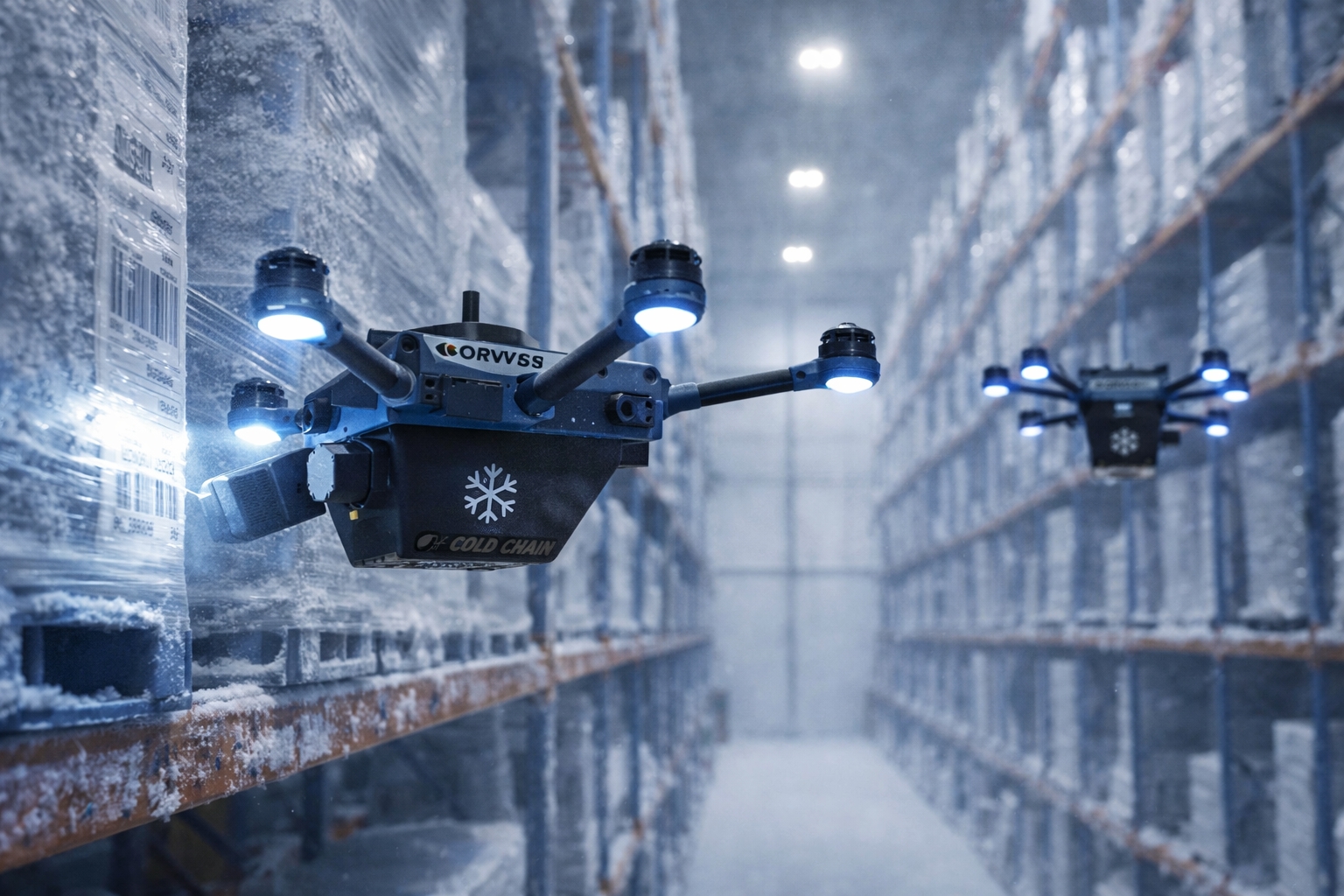
In Cold Warehouses, Corvus Robotics Launched the Corvus One for Cold Chain, a Drone System That Operates at Less Than 29 °C to Scan Inventory Frequently, Show Where Each Pallet Is and Reduce Human Exposure to Cold.
Cold storage is a place where everything costs more. Protective clothing is heavier. The time spent needs to be short. And counting inventory becomes a tough, repetitive, and costly task. Now, the idea is to take people out of the cold aisle and put drones in their place. Corvus Robotics launched the Corvus One for Cold Chain, an autonomous drone system designed to work inside industrial freezers with a minimum temperature of less than 20 degrees Fahrenheit, which is about less than 29 degrees Celsius.
The goal is simple to understand: to perform frequent inventory scans and deliver to the operator almost in real-time where the pallets are and how long they have been stationary there.
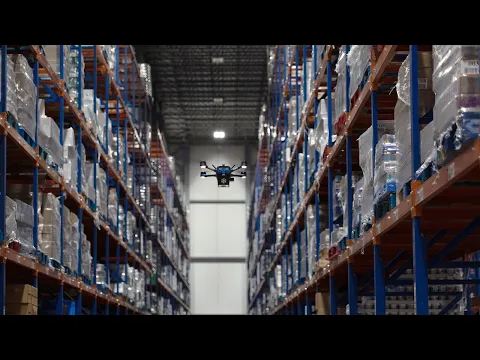

Why Inventory Control in Freezers Has Become an Expensive and Complex Issue
In the world of frozen goods, it’s not enough to know that the product exists. You need to know where it is, how long it has been stationary, and whether the turnover is following the first in, first out logic.
-
Motorola launched the Signature with a gold seal from DxOMark, tying with the iPhone 17 Pro in camera performance, Snapdragon 8 Gen 5 that surpassed 3 million in benchmarks, and a zoom that impresses even at night.

-
Satellites reveal beneath the Sahara a giant river buried for thousands of kilometers: study shows that the largest hot desert on the planet was once traversed by a river system comparable to the largest on Earth.

-
Scientists have captured something never seen in space: newly born stars are creating gigantic rings of light a thousand times larger than the distance between the Earth and the Sun, and this changes everything we knew about stellar birth.

-
Geologists find traces of a continent that disappeared 155 million years ago after separating from Australia and reveal that it did not sink, but broke into fragments scattered across Southeast Asia.
Additionally, the number of different items in stock keeps growing. And the more different codes there are, the higher the chance of errors in manual counting.
As frozen inventory also has strict limits on shelf life and time, any failure can result in loss, disposal, and rework.
What Hinders Automation in the Cold: Ice, Wind, Condensation, and Reflection
Many people think it’s just putting a scanner in place and that’s it. However, industrial freezers often disrupt standard readings.
Ice forms a layer. Condensation appears. The wind from the blowers disrupts the flight and stability. Reflection and glare cause image capture failures.
Therefore, for years, automation within these aisles remained in the realm of difficult, even with warehouses already full of technology in other areas.
How the Corvus One Works Without Changing the Warehouse and Without Holding Up the Shift
The system’s promise is to operate during normal shifts without interrupting the warehouse flow.
And it does this without requiring changes to the environment. The proposal is not to depend on Wi-Fi, ground markers, special lighting, or modified barcodes. Doors and blowers continue to operate normally while the drone works.
The idea is for the drone to perform frequent scans and provide almost real-time visibility of pallet locations and duration, which helps to identify bottlenecks and invisible queues.
The Trick to Read Codes Even With Ice and Low Definition
The system uses industrial-standard barcode readers, with precise control over focus and exposure.
This allows capturing labels even when they are iced over, damaged, or have low contrast.
The drone also automatically adjusts how it scans according to environmental conditions and stabilizes flight to compensate for wind within the freezer aisles.
According to Corvus Robotics, to make the system operate with autonomy and precision in extreme cold, it was necessary to redesign aspects such as thermal control, sensors, flight stability, and onboard perception, because most platforms were not created for this scenario.
Where It Is Already Operating and How It Affects Labor Costs
The system is already operating in real commercial environments. One cited example is Kroger, which is using the Corvus One for Cold Chain in active freezer facilities, reducing dependence on manual counts and improving inventory accuracy in extreme cold conditions.
And it has a direct impact on costs. Operating in a freezer generally requires protective equipment, shorter shifts, and strict exposure limits, which increases labor costs.
By removing routine counting from inside the frozen aisle, the company claims it improves safety and reduces operational spending.
Robots as a Service, Automatic Battery, and Continuous Operation Without a Local Team
The product is delivered in a service model, with automatic battery management and health monitoring of the equipment to maintain continuous operation without needing an operator on-site.
The cited technological base is a world model with AI, used for autonomous navigation and perception without human intervention.
In the larger scenario, the target is large-scale operations that want tighter inventory control, less waste, less disposal, and better space utilization.
If industrial freezers are already expensive by nature, the question remains direct: do drones flying at less than 29 °C become the new standard in the frozen goods supply chain or is it still technology for the few?








-

-

5 pessoas reagiram a isso.