





 Portuguese
  English
  Spanish
  5 min of reading
  11 comments


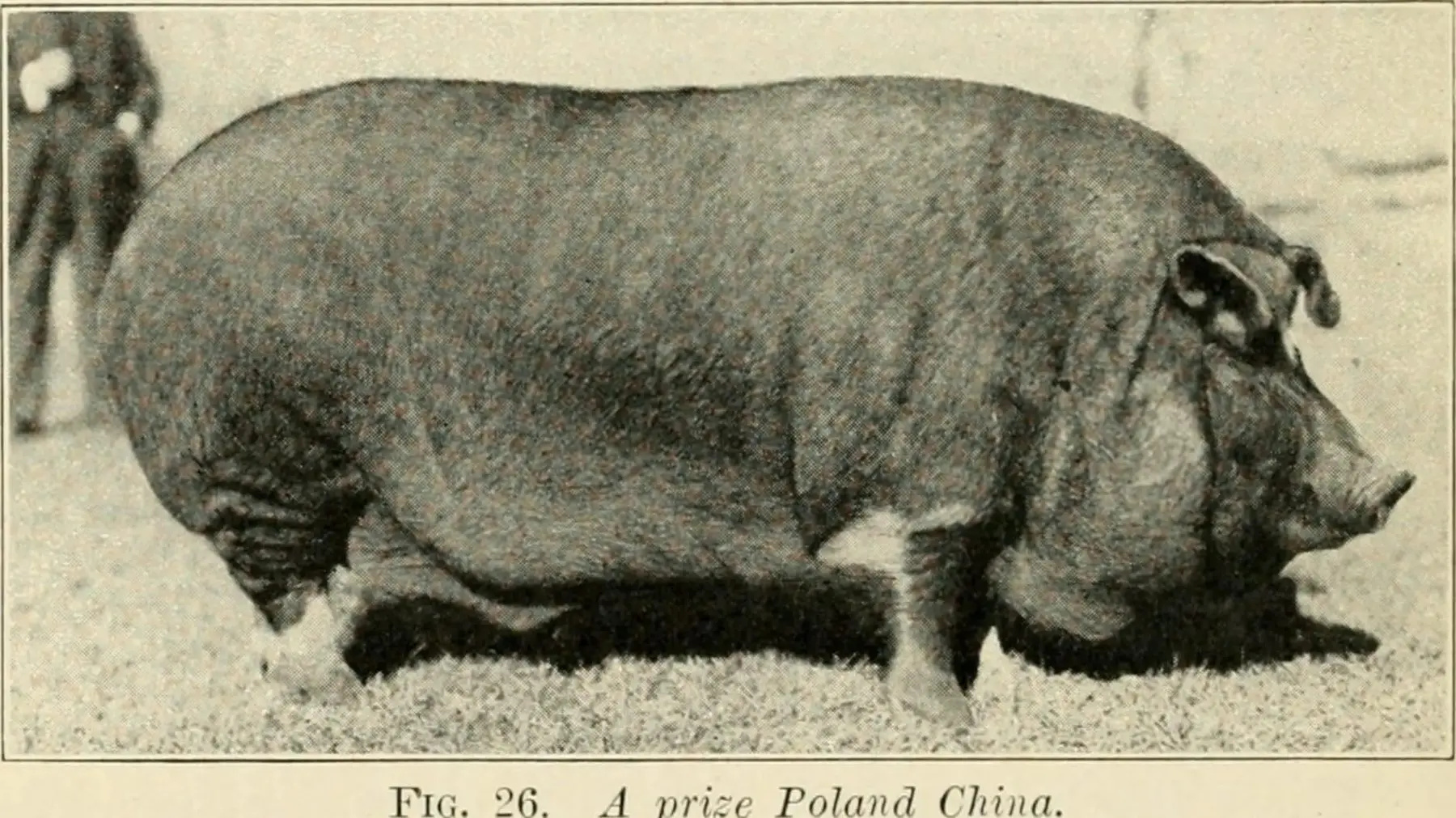


Largest Pig in History, Big Bill Weighed Over 1.1 Tons, Measured Almost 3 Meters, and Entered the Record Books as a Colossus of Animal Husbandry.
Among all domestic animals that have ever drawn attention for growing beyond any imaginable limit, Big Bill holds a unique place. Raised in the United States in the early 20th century, this swine entered history as the largest pig ever reliably recorded, an animal so large that it challenged not only the standards of pig farming but also the very logic of the animal body.
Big Bill lived in Jackson, Tennessee, and reached his peak around 1933, a time when he was weighed, measured, and extensively documented. The numbers impress even today: approximately 1,157 kilograms of weight, about 2.7 meters in length, and a body structure comparable to that of a compact car. For comparison, an average adult pig rarely exceeds 250 to 300 kilograms. Big Bill weighed almost four times more.
The Historical Context That Allowed the Emergence of Big Bill
Big Bill’s story can only be understood within the context of the time. In the 1920s and 1930s, there were no modern animal welfare standards, strict sanitary limits, or nutritional controls as we have today. Pig farming was much more empirical, and the focus was almost exclusively on maximum fattening.
-
The water that almost everyone throws away after cooking potatoes carries nutrients released during the preparation and can be reused to help in the development of plants when used correctly at the base of gardens and pots, at no additional cost and without changing the routine.

-
The sea water temperature rose from 28 to 34 degrees in Santa Catarina and killed up to 90% of the oysters: producers who planted over 1 million seeds lost practically everything and say that if it happens again, production is doomed to end.

-
An Indian tree that grows in the Brazilian Northeast produces an oil capable of acting against more than 200 species of pests and interrupting the insect cycle, gaining ground as a natural alternative in soybean, cotton, and vegetable crops.

-
The rise in oil prices in the Middle East is already affecting Brazilian sugar: mills in the Central-South are seeing their margins shrink just as ethanol gains strength.




Big Bill was a direct result of this model. He received an extremely high-calorie diet, rich in grains and agricultural waste, with no concern for longevity, mobility, or joint health. The goal was simple: to produce the largest animal possible — something that today would be considered unfeasible under modern technical and ethical criteria.
Extreme Weight and Physical Collapse of His Own Body
Big Bill’s growth reached a critical point. In the last months of his life, his body could no longer support its own weight. Historical reports indicate that the animal had severe locomotion difficulties and, at one point, could no longer stand up on his own.
This extreme physical limitation is one of the factors that makes Big Bill a unique and, at the same time, unrepeatable case. His extraordinary size came with huge physiological costs. Unlike modern record-holders, Big Bill was not an example of genetic efficiency but rather of absolute excess.
Historical Record and Recognition of the Record
Big Bill’s record appears in historical records and has been cited for decades in publications related to Guinness World Records, which recognized the pig as the largest ever documented with consistent measurements.
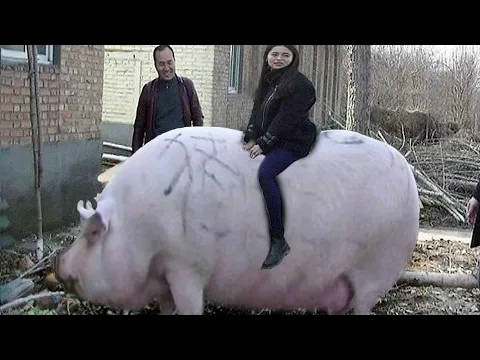
Since then, numerous reports of “giant pigs” have emerged around the world, many of them going viral on social media. However, no other pig has had a verified weight exceeding Big Bill’s, keeping the record intact to this day.
The crucial difference lies in the documentation. Big Bill was weighed, measured, and monitored during a time when his size drew public and institutional attention, something that does not happen in most modern cases.
Why Big Bill Has Never Been Officially Surpassed
There are clear reasons why this record remains unbeatable for almost a century. First, modern pig farming has changed completely.
Today, genetic selection prioritizes feed conversion, health, reproduction, and meat quality — not unlimited growth. Animals that reach extreme weights tend to exhibit metabolic, joint, and cardiovascular issues, which halt their development long before reaching numbers like those of Big Bill.
Second, animal welfare standards prevent practices that would lead a pig to a physical state similar to what Big Bill reached. What was acceptable in the 1930s would today be considered abuse.
Finally, there is a real biological limitation. A pig’s body, even with favorable genetics, was not made to sustain over a ton of body mass in a functional way.
Big Bill as a Symbol of an Era in Animal Husbandry
More than a curious record-holder, Big Bill became a historical symbol of a phase in animal production marked by excess and the absence of technical limits. He represents the extreme of a model that prioritized quantity above any other factor.
At the same time, his story helps explain why animal husbandry has evolved toward more balanced standards. Absolute gigantism has proven unsustainable, both from an economic and biological standpoint.
Comparison with Modern Pigs and Public Perception
Today, the largest living pigs hardly exceed 500 to 600 kilograms, and even these are considered exceptional animals. Big Bill, at over 1.1 tons, remains beyond any modern scale.
It is precisely this discrepancy that keeps his story alive. He is not just “the largest pig,” but an animal that completely escaped the normal limits of the species, something that is unlikely to happen again.
Legacy of an Unlikely Colossus
Decades after his death, Big Bill continues to be cited in books, reports, and historical rankings. His name has become an absolute reference when it comes to animal gigantism in domestic species.
No other pig has come close to repeating his numbers with technical verification. And, by all indications, this is not a failure of modern genetics, but a conscious choice not to repeat an experiment that pushed an animal to the extreme limits of its own body.
The story of Big Bill reveals how far human intervention can take a common animal when there are no respected technical, ethical, or biological limits. He was, at the same time, an impressive feat and a silent warning about the excesses of animal husbandry in the past.
And you, reader: should records like Big Bill’s be viewed as historical curiosities or as clear examples of a path that animal production should never follow again?










Mas naquele época o ‘mercado’ não tinha limite ou exigência quanto a criação destes animais. Portanto, até neste tipo
de prática era realizada com a maior naturalidade. Totalmente diferente com o atual.
Aposto que estão doidos pra comer esse porco 🐷😋 no natal 😹
Difícil imaginar quanto bacon, costela, lombo e pernil este porco produziu!