





 Portuguese
  English
  Spanish
  7 min of reading
  0 comments


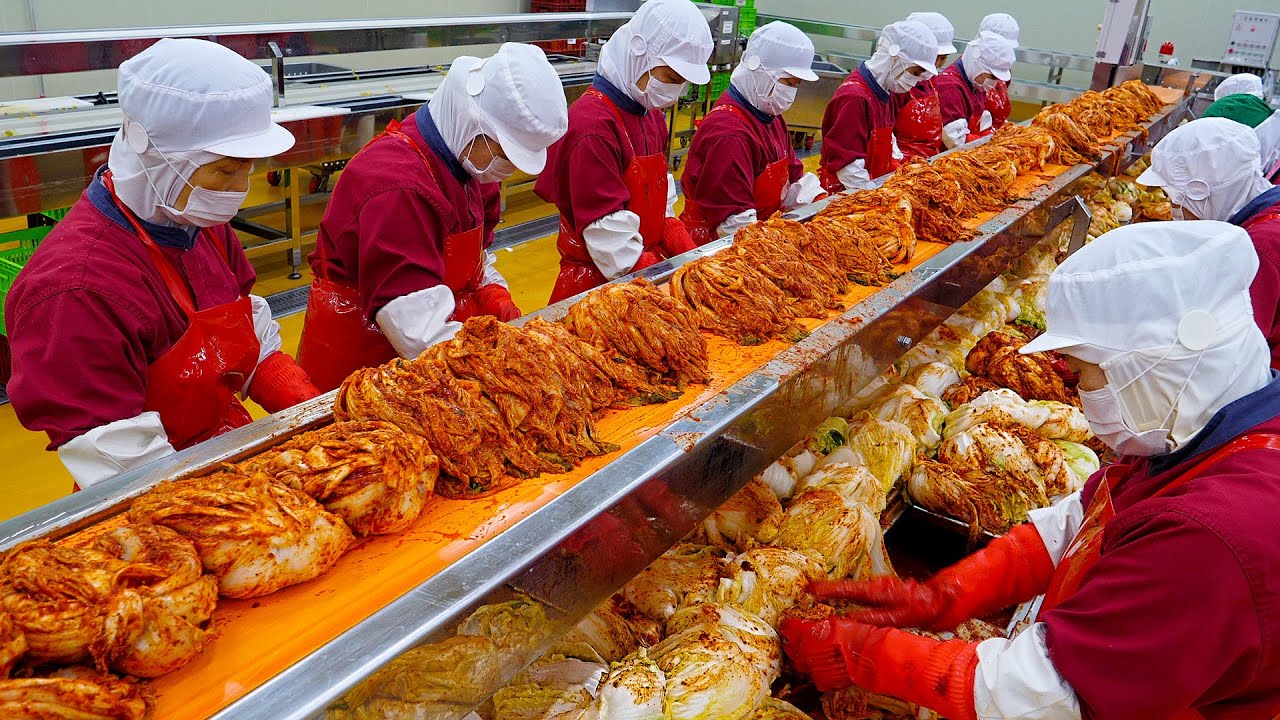
Korean Kimchi Industry Produces About 550 Thousand Tons Per Year With pH Control, Climate Chambers, and Advanced Digital Traceability.
In 2024, data released by the Ministry of Agriculture, Food and Rural Affairs of South Korea (MAFRA) and consolidated by reports from the Korea Agro-Fisheries & Food Trade Corporation (aT) indicated that national kimchi production is around 500 thousand to 600 thousand tons per year. This volume refers to total South Korean production, combining various industrial plants across the country, and not a single factory. Within this scenario, large companies like Pulmuone, CJ CheilJedang and Daesang Corporation operate highly automated units that combine traditional fermentation with precision industrial control.
Kimchi, an intangible cultural heritage recognized by UNESCO in 2013, has evolved from being merely a handmade food prepared in small communities during the seasonal kimjang to being integrated into sophisticated industrial chains. The transition from domestic production to automated lines required the incorporation of thermal engineering, applied microbiology, chemical sensors, statistical process control, and digital traceability systems that allow tracking each batch from the napa cabbage source to export.
Historical Context and Evolution of Kimchi Industrialization
Historically, kimchi was prepared in large clay pots called onggi, partially buried in the ground to maintain stable temperature during winter. Fermentation depended on natural climatic conditions and the microbiota present in the vegetables and environment. Industrialization began to gain momentum from the 1970s and 1980s when rapid urbanization reduced domestic space for traditional production.
-
Friends have been building a small “town” for 30 years to grow old together, with compact houses, a common area, nature surrounding it, and a collective life project designed for friendship, coexistence, and simplicity.

-
This small town in Germany created its own currency 24 years ago, today it circulates millions per year, is accepted in over 300 stores, and the German government allowed all of this to happen under one condition.

-
Curitiba is shrinking and is expected to lose 97,000 residents by 2050, while inland cities in Paraná such as Sarandi, Araucária, and Toledo are experiencing accelerated growth that is changing the entire state’s map.

-
Tourists were poisoned on Everest in a million-dollar fraud scheme involving helicopters that diverted over $19 million and shocked international authorities.


With the growth of exports to Japan, the United States, and Southeast Asia in the 2000s, standardizing flavor, texture, acidity, and microbiological stability became necessary. Spontaneous fermentation, typical of the traditional method, began to be replaced by controlled processes using selected strains of lactic acid bacteria, especially species from the Lactobacillus and Leuconostoc genera.
The sector evolved into a hybrid model: it preserves classic ingredients such as napa cabbage, gochugaru pepper, garlic, ginger, and fish sauce, but incorporates industrial systems capable of ensuring repeatability batch after batch. This change was driven not only by domestic demand but also by international sanitary requirements, including HACCP standards and ISO certifications.
Detailed Industrial Process of Controlled Kimchi Fermentation
Within the largest South Korean factories, the process begins with receiving the napa cabbage. The raw material undergoes automated visual inspection and weighing on industrial scales connected to the central system. Each batch receives a digital code that will track the product until final packaging.
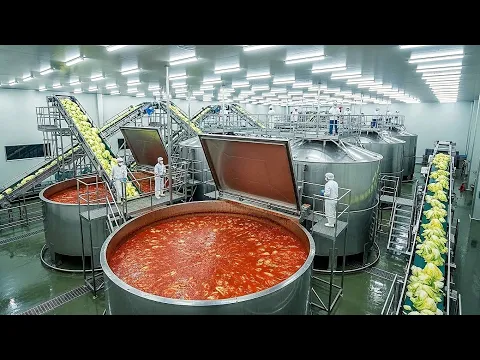

The next step is salting, essential for osmosis and creating a selective environment that favors lactic acid bacteria. The control of salt concentration is managed by automated systems that monitor salinity through electrical conductivity. Small variations can significantly alter the final acidity profile.
After washing to remove excess salt, the mixing with the seasoning paste occurs. In modern plants, industrial mixers with screw blades operate under programmed control of torque and time, avoiding structural damage to the cabbage leaves and ensuring homogeneity.
Fermentation takes place in climate-controlled chambers. Unlike the traditional method, which relied on the Korean winter to stabilize temperatures close to 0–5 °C, factories utilize rooms with digital thermal control capable of maintaining specific ranges between 2 °C and 10 °C according to the stage of the process. Temperature directly influences bacterial growth kinetics and the rate of lactic acid production.
Sensors installed in the tanks monitor pH in real time. Kimchi typically reaches a pH between 4.2 and 4.5 during the ideal consumption phase. Continuous control allows for stopping fermentation at the exact point, avoiding excessive acidification that would compromise texture and flavor. These sensors send data to SCADA systems that log acidification curves batch by batch.
Fermentation is, essentially, a biochemical reaction driven by bacteria that metabolize natural sugars from the cabbage and produce lactic acid. The pH reduction inhibits pathogenic microorganisms, making the product safe. In an industrial environment, the predictability of this reaction is vital for meeting logistics schedules.
Applied Technology, Microbiological Control, and Digital Traceability
The transformation of tradition into precision food engineering mainly occurs in the field of control and digitalization. Large plants use ERP systems integrated with the agricultural supply chain. Each batch of cabbage can be traced back to the farm of origin.
Digital traceability meets both regulatory requirements and export demands. In the case of microbiological non-compliance, it is possible to quickly identify the specific batch and its origin. This reduces the risk of a broad recall and protects brand reputation.
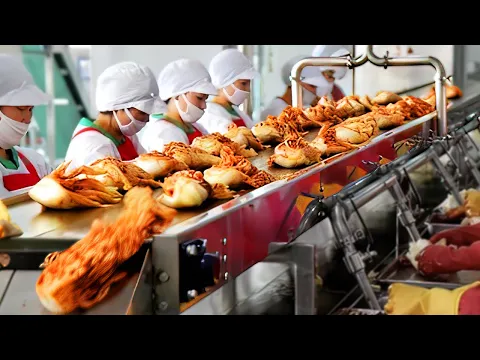
Microbiological control involves periodic sampling to analyze lactic acid bacteria counts and check for the absence of pathogens such as Salmonella and Listeria monocytogenes. Internal laboratories use PCR techniques and selective culture to validate food safety.
Automation also extends to packaging. Robotic lines seal packages with modified atmosphere, reducing residual oxygen to prolong stability. Sensors detect sealing failures, and computer vision systems check the integrity of labels and batch codes.
Additionally, statistical process analysis allows for monitoring variability. Control charts identify deviations before they become failures. This approach brings kimchi production closer to the standards of high-complexity pharmaceutical and dairy industries.
Production Scale, Exports, and Economic Impact
The approximately 550 thousand tons per year refers to the estimated national production, adding up all industrial plants and commercial South Korean production. This is not the capacity of a single factory. Large companies may operate units with capacities of tens of thousands of tons per year each, but the national total results from the sum of various facilities.
According to data from the Korea Agro-Fisheries & Food Trade Corporation, kimchi exports have been consistently growing, exceeding 40 thousand tons annually in recent years. Japan remains the main destination, followed by the United States and Hong Kong.

The economic impact goes beyond the direct food industry. The sector sustains agricultural supply chains specialized in cultivating napa cabbage, producing gochugaru pepper, and fermenting fish sauce. There are also indirect effects in refrigerated logistics, packaging, and international certifications.
In terms of infrastructure, modern factories require robust industrial refrigeration systems, significant electricity consumption for thermal control, and treatment of effluents rich in salt and organic matter. Internal treatment stations use biological processes to reduce organic load before disposal.
The consolidation of the sector also has geopolitical implications. The historical dispute between South Korea and China over kimchi and pao cai standardization highlighted the cultural and economic importance of the product. Industrial standardization strengthens South Korea’s position in global markets by ensuring consistency and certification.
Technical Challenges, Limits of Standardization, and Industry Future
Despite advanced automation, the industrialization of kimchi faces complex challenges. Fermentation is a living biological process and, therefore, inherently variable. Changes in the composition of cabbage due to climate or soil may alter sugar content and impact the acidification curve.
The increase in exports requires greater stability during long-distance transport. This demands research on packaging with better control of internal pressure, as fermentation continues even under refrigeration, releasing gases.
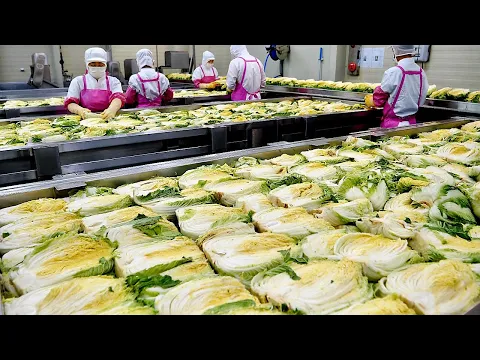
Another challenge is balancing standardization with cultural authenticity. Consumers value traditional sensory characteristics that may vary regionally. Precision engineering needs to preserve identity without compromising safety.
There are also environmental issues. Large-scale production consumes significant volumes of water for washing and generates saline effluents. Water reuse technologies and waste reduction become priorities for long-term sustainability.
The future of the sector points to greater integration of artificial intelligence in fermentation control. Predictive models may anticipate pH variations and adjust temperature automatically. Next-generation IoT sensors can monitor additional chemical parameters, such as real-time lactic acid concentration.

The trend of functional foods may also drive the development of specific strains of probiotic bacteria selected for health benefits. In this context, food engineering draws closer to applied biotechnology.
The Industrialization and Success of Kimchi Inside and Outside South Korea
The industrialization of kimchi in South Korea demonstrates how an ancestral food can be converted into a high-tech operation without losing its cultural essence.
With about 550 thousand tons annually in national production, the sector combines microbiology, thermal control, industrial automation, and digital traceability in an integrated system that transforms natural fermentation into a process monitored with nearly laboratory precision.
What once depended on winter and jars buried in the ground now operates under climate-controlled chambers, real-time pH sensors, and databases that track every leaf of cabbage. The ancient tradition remains a cultural foundation, but it is precision food engineering that sustains contemporary industrial scale and positions kimchi as one of the most technologically controlled fermented foods in the world.










-

-

-

-

-

-

103 pessoas reagiram a isso.