





 Portuguese
  English
  Spanish
  5 min of reading
  0 comments


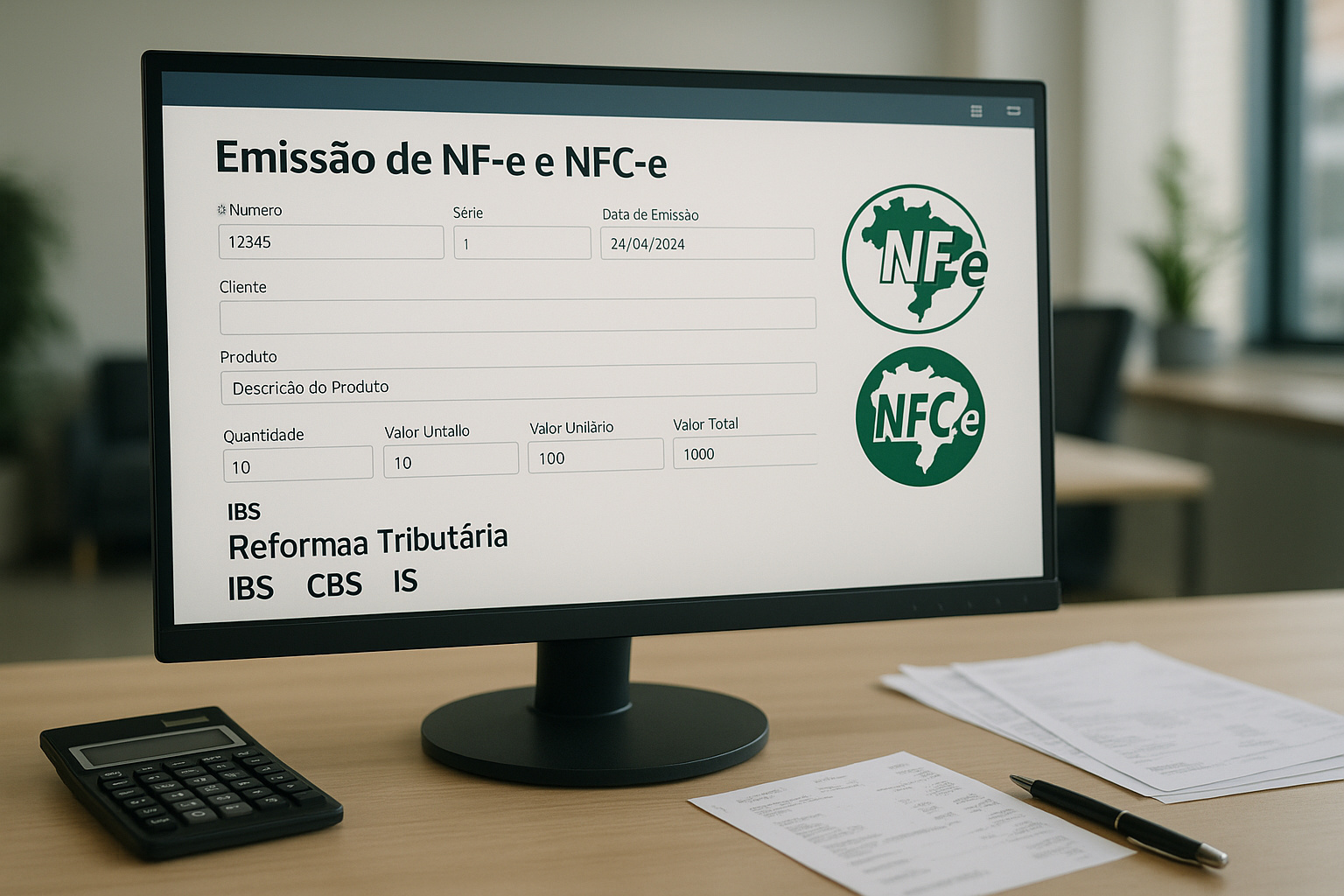
Tax Reform Redefines Issuance of NF-e and NFC-e: Check the Official Deadlines for Simples Nacional, Actual Profit, and Presumed Profit and Learn How to Prepare to Avoid Tax Errors
Many companies are still confused about what is really in effect regarding the Tax Reform when issuing the Electronic Invoice (NF-e) and the Consumer Electronic Invoice (NFC-e). With so many announced changes, doubts are inevitable. After all, which fields need to be filled out starting in 2025? When does the obligation become definitive for all tax regimes?
The information was released by IOB, which highlighted in its technical reports that, in 2025, most companies are still not required to include the new fields related to Goods and Services Tax (IBS) and Contribution on Goods and Services (CBS). But that does not mean that taxpayers can ignore the subject. On the contrary: understanding the deadlines and anticipating the changes can make the difference between a smooth tax operation and unnecessary fines.
What Is Already Valid in 2025 for NF-e and NFC-e
In 2025, all companies, regardless of the tax regime adopted, are not required to fill in the fields related to the Tax Reform at the time of issuing the NF-e and NFC-e. This means that, in this year, filling in the fields related to IBS, CBS, and IS (Selective Tax) is still considered optional.
-
The noise law will no longer be in effect at 10 PM starting in June with a new rule valid during the 2026 World Cup.

-
The Chamber opens a debate on driver’s licenses at 16 years old as part of a reform that includes around 270 proposals to change the Brazilian Traffic Code and may redesign rules for licensing, enforcement, and circulation in the country.

-
The new Civil Code could revolutionize marriages in Brazil with “express divorce” and changes that could exclude spouses from inheritance.

-
Banco do Brasil sues famous influencer for million-dollar debt and intensifies debate on delinquency, risks of seizure, and direct impact on Gkay’s credibility.

However, the Federal Revenue Service has made it clear that, starting in January 2026, new validation rules will come into effect. These rules will require Actual Profit and Presumed Profit companies to correctly fill in the new fields. Until then, the system accepts invoices with or without this information, but it is recommended that companies start testing to ensure that their billing systems are updated.
In addition, it is important to emphasize that the Technical Note 2025 002 has included since its first version a specific exception for 2026: the amounts related to IBS, CBS, and IS should not be added to the total of the invoice, according to rejection 1105. This avoids discrepancies in the final amount and ensures greater transparency in the bookkeeping process.
Simples Nacional: When the Obligation Becomes Effective
For companies classified under Simples Nacional, the deadline is even more extended. These companies will only be required to fill in the fields related to IBS and CBS starting in 2027. This gives additional time for adaptation, but it does not mean entrepreneurs can afford to relax.
However, there is an exception that may already impact taxpayers in 2026. If a company under Actual Profit or Presumed Profit issues a tax document with the fields of the Tax Reform filled out against a Simples company, and the latter needs to issue a credit note, filling in the fields related to CBS and IBS will be mandatory.
This situation shows that even small companies will need to have their systems prepared before the final deadline. After all, returning goods is something common in daily operations, and being unprepared to comply with this obligation can cause delays and problems with suppliers.


Actual Profit and Presumed Profit: Rules Starting in 2025 and Mandatory Compliance in 2026
Companies classified under Actual Profit and Presumed Profit must redouble their attention. In 2025, filling in the fields related to IBS, CBS, and IS is considered optional. This means that the NF-e system will accept both tax documents with the new fields and without them. However, it is worth noting that, when filled, these data will be validated.
The obligation comes into effect in January 2026, when the new tax validation rules are implemented. From that moment on, it will be impossible to issue invoices without the fields related to the Tax Reform properly filled. This change demands updates to fiscal software, team training, and continuous monitoring of technical notes published by the tax authority.
Therefore, companies that wait until 2026 to adapt may face operational bottlenecks, fines, and even difficulties in their relationships with customers and suppliers. Experts recommend starting tests and training as early as 2025.
How IBS, CBS, and IS Will Be Calculated on Invoices in 2026
One of the points that has generated the most questions is how the new taxes will impact the total value of the invoice. The Technical Note 2025 002 brought a clear rule: in 2026, the amounts of IBS, CBS, and IS should not be included in the final total of the tax document.
This means that, even when filled, these fields do not count towards the calculation of the total value of the invoice. This measure prevents distortions in the final price and ensures greater coherence between taxation and fiscal bookkeeping. The taxpayer must pay attention to rejection 1105, which occurs when these taxes are improperly added to the total of the item.
This decision demonstrates the Federal Revenue’s concern to prevent inconsistencies in the transition between tax models, providing more clarity and security to taxpayers.
Preparation of Companies for the Tax Reform
The arrival of the Tax Reform requires strategic planning. Whether a small business classified under Simples Nacional or a large company taxed under Actual Profit or Presumed Profit, the common point is that all will have to adapt by 2027.
In this sense, starting the testing of NF-e and NFC-e issuance as early as 2025 is the best way to avoid setbacks. Training the billing team, aligning ERP systems, and monitoring the technical notes published are fundamental steps to ensure fiscal compliance.
According to information released by IOB, tools such as the Tax Reform Guide, adaptation diagnostics, and training courses are already available for companies that do not want to be caught off guard. Preparing now is investing in future peace of mind.
Adapt Before the Obligation
Although full obligation only comes into effect in 2026 for Actual Profit and Presumed Profit and in 2027 for Simples Nacional, companies should view 2025 as the year of preparation. Anticipating changes is the safest way to avoid mistakes, ensure fiscal compliance, and not disrupt operations.
Now I want to know from you: is your company already prepared for the changes in the Tax Reform regarding the issuance of NF-e and NFC-e? Leave your comment below and share your experience.









Seja o primeiro a reagir!