





 Portuguese
  English
  Spanish
  3 min of reading


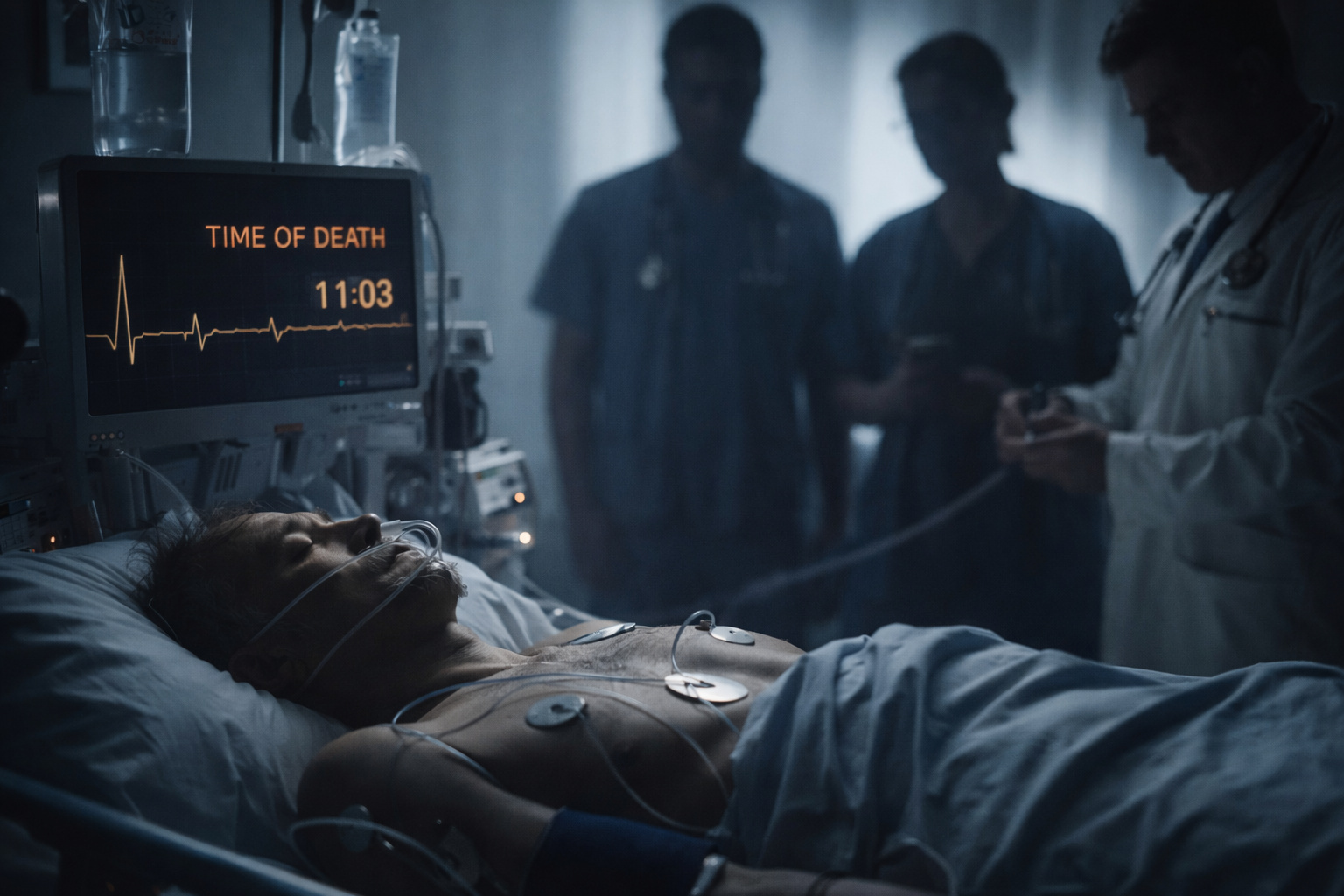
A recent study has reignited a sensitive and complex debate about the moments that follow so-called clinical death. According to researchers, even after the heart stops, the brain may remain active for several minutes. Thus, there arises the possibility that patients can still perceive sounds from the surrounding environment.
This discussion gained momentum following the release of research published in the journal Resuscitation. According to the study, neurological recordings indicate residual brain activity after cardiac arrest. Therefore, the traditional understanding of the exact moment of death is being questioned by science.
Furthermore, doctors and researchers emphasize that death does not occur instantly in all body systems. While the heart stops beating, other functions may gradually shut down.
-
Friends have been building a small “town” for 30 years to grow old together, with compact houses, a common area, nature surrounding it, and a collective life project designed for friendship, coexistence, and simplicity.

-
This small town in Germany created its own currency 24 years ago, today it circulates millions per year, is accepted in over 300 stores, and the German government allowed all of this to happen under one condition.

-
Curitiba is shrinking and is expected to lose 97,000 residents by 2050, while inland cities in Paraná such as Sarandi, Araucária, and Toledo are experiencing accelerated growth that is changing the entire state’s map.

-
Tourists were poisoned on Everest in a million-dollar fraud scheme involving helicopters that diverted over $19 million and shocked international authorities.


What Science Observed in the Final Moments
During resuscitation procedures, medical teams monitor vital signs in real time. When efforts do not produce a response, professionals declare the patient dead. However, according to the study, the brain may show electrical activity even after this moment.
The researchers analyzed electroencephalogram tests conducted on critically ill patients. They identified patterns associated with functions such as auditory perception and memory for a short period.
On the other hand, scientists make it clear that this activity does not indicate full consciousness. Still, it suggests that the brain does not turn off immediately after blood circulation ceases.
The Possibility of Auditory Perception After Clinical Death
Based on this data, specialists raise the hypothesis that sounds close to the patient may be perceived in the final moments. This includes voices from the medical team, technical instructions, and even the announcement of the time of death.
According to reports published by international outlets such as the Daily Mail and the New York Post, this possibility has caused a strong emotional impact on the public. However, doctors issue an important warning. Hearing sounds does not necessarily mean understanding the content of the words.
Additionally, the brain response varies from person to person. Therefore, it is not possible to assert that all patients have the same experience.
What This Changes in Medical Conduct
In light of these discoveries, health professionals reinforce a practice that has been discussed for years. Even in extreme situations, it is advisable to maintain a respectful environment and careful communication.
Thus, doctors and nurses are encouraged to speak with calmness and empathy during emergency procedures. This way, patient care extends until the final moments.
At the same time, specialists emphasize that there is no evidence of prolonged conscious suffering after clinical death. Therefore, the focus should not be on fear, but rather on the humanization of care.
Limitations of the Study and Caution in Interpretations
Although the results are relevant, the authors of the study themselves acknowledge limitations. The analyzed samples are still small. Additionally, the clinical contexts vary considerably.
For this reason, researchers state that it is not possible to establish definitive conclusions. Still, the data paves the way for further investigations into consciousness and perception at the end of life.
In the meantime, science continues to try to better understand how the brain reacts in the final moments. At the same time, doctors emphasize that empathy and respect should guide every decision.
What Science Seeks to Understand Moving Forward
The discovery raises new questions. Researchers want to know how long this brain activity can last. Additionally, they seek to understand if there is any degree of conscious perception during these moments.
Finally, specialists stress that the main lesson does not lie in sensationalism, but in care. Regardless of what the brain can still capture, medical care should preserve dignity, respect, and humanity until the very last moment.









-

-

2 pessoas reagiram a isso.