





 Portuguese
  English
  Spanish
  4 min of reading
  1 comment


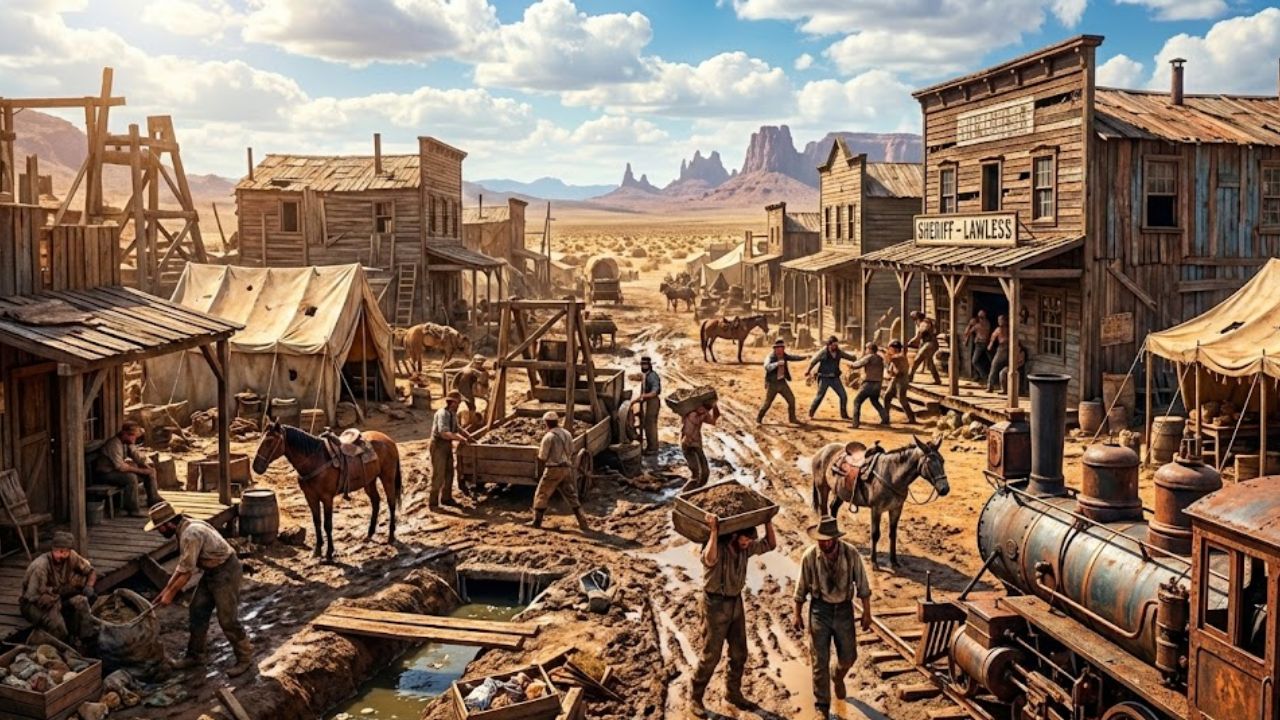


Know The Harsh Reality Of The Old West Towns, Where Violence Was Common, The Law Was Almost Nonexistent, And The Routine Was Nothing Like The Movies.
When we think of American history, our imagination almost instantly recreates the classic Hollywood scenes, with wide streets, fearless cowboys, and shootouts at high noon. However, the historical reality of the Old West towns was much rawer and far less romantic than the movies suggest. These places were, in fact, chaotic, foul-smelling, and dangerous environments, where life was worth very little and the law was not always present to protect the citizens.
The construction of this cinematic myth hides an extreme survival routine. The Old West towns were not stages of constant heroism, but rather makeshift settlements where diseases could kill much faster than any firearm. They were places full of people dreaming of wealth and freedom, willing to face poor sanitary conditions and brutal violence far removed from the honor of the organized duels we see on screen.
The Explosive Birth And The Ghost Towns

Unlike planned metropolises, the towns on that frontier did not arise from urban planning studies, but rather from explosive opportunities generated by the discovery of resources such as gold, silver, or oil. These places were called “boomtowns.” A classic example of this dynamic was Virginia City, Nevada. After the discovery of minerals in the area in 1859, the place went from a few makeshift cabins to a metropolis with 25,000 inhabitants in less than a decade.
-
Friends have been building a small “town” for 30 years to grow old together, with compact houses, a common area, nature surrounding it, and a collective life project designed for friendship, coexistence, and simplicity.

-
This small town in Germany created its own currency 24 years ago, today it circulates millions per year, is accepted in over 300 stores, and the German government allowed all of this to happen under one condition.

-
Curitiba is shrinking and is expected to lose 97,000 residents by 2050, while inland cities in Paraná such as Sarandi, Araucária, and Toledo are experiencing accelerated growth that is changing the entire state’s map.

-
Tourists were poisoned on Everest in a million-dollar fraud scheme involving helicopters that diverted over $19 million and shocked international authorities.


However, the same speed that brought progress also decreed the end of these places. As soon as the mines were depleted, the population left behind empty structures. It is estimated that today there are more than 3,800 ghost towns scattered throughout the region. At their peak, these places had no planned streets, schools, or courts; they were bundles of tents and shacks where order only arrived if the town managed to survive long enough.
The Dirt And The True Smell Of The West
Hollywood often portrays Main Street as a clean place ready for action, but in reality, it was practically impassable. During the summer, dust formed suffocating clouds, while in winter, mud could swallow boots up to the knee. The constant traffic of horses and wagons left a trail of dirt that was hard to control. In major centers of the time, such as Dodge City, hundreds of tons of horse manure accumulated each year.
This lack of basic sanitation turned the Old West towns into hotspots for rats and flies. Although residents complained in local newspapers, like the Dodge City Times, the dirt was an integral part of daily life. The prevailing smell on these streets was not of whiskey or tobacco, but rather a strong mix of dust, sweat, mud, and animal debris.
The Law Of The Strong And The Myth Of The Sheriff
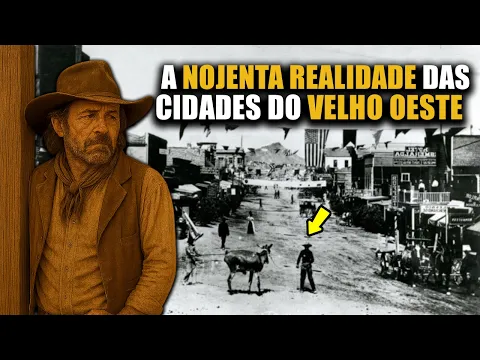

The figure of the incorruptible sheriff is another invention that did not correspond to the reality of most of these settlements. In the beginning, many towns had no police at all, and justice was left to vigilantes, groups of armed citizens who punished crimes with public hangings and summary trials. Even when there was a representative of the law, many were as corrupt as the criminals, often serving the local business owners.
Furthermore, the famous duels at high noon were extremely rare. Real violence was treacherous, occurring usually through ambushes, gunshots from behind, or bar fights. A study by historian Robert Dykstra pointed out that, although the homicide rate in places like Abilene was high, the violence was merely more visible and spectacular than in large eastern cities like New York.
Saloons, Diseases And The Constant Danger
The social heart of any of the Old West towns was the Saloon. Much more than a bar, this establishment functioned as a hotel, restaurant, gaming house, and even a post office. The writer Oscar Wilde, when visiting the region in 1882, described these places as stages of human greed. The routine outside involved exhausting work in mines or railroads, while women, with few professional options, often ended up working in these hostile environments.
However, the danger did not come only from weapons. The lack of drinkable water and the trash in the streets facilitated epidemics of cholera, smallpox, and tuberculosis. In Deadwood, the cemeteries grew faster than the town itself. The risk of fire was also imminent, as wooden buildings could be consumed in a matter of hours by a poorly extinguished candle. Still, the hope of getting rich or starting life anew kept the flow of people seeking, above all, the freedom of a place without rigid control systems.
Would You Have The Courage To Leave Today’s Comforts To Try Your Luck Living In A Real Old West Town?









Assunto relevante para nós, kkkkk
Temos cidades e bairros piores do que os do Velho Oeste, mas cadê você, jornalista, pra falar alguma coisa. Posso fazer uma lista de coisas que seriam mais interessantes, desde a colonização do NOSSO país, onde os imigrantes encontraram péssimas condições de sobrevivência, até os dias atuais, com uma enorme carga tributária sobre todos os trabalhadores, independente da classe salarial (alta, média, média baixa, baixa), e a concentração de terras e riqueza na mão de uma ínfima parte da população, que praticamente não paga impostos, e o que seria necessário para resolver isto.