





 Portuguese
  English
  Spanish
 4 min of reading
  0 comments


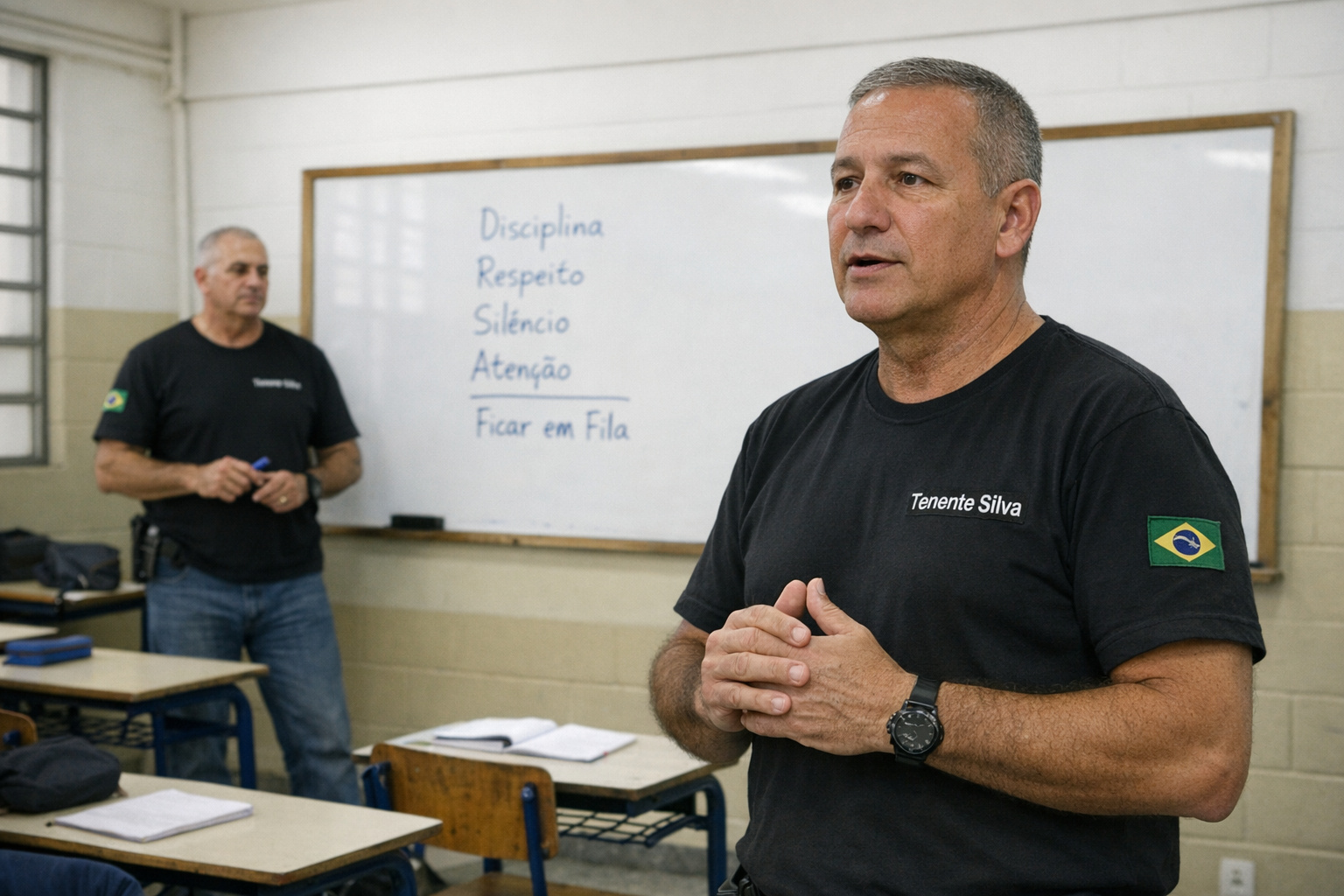
Civic-Military Model Implemented in One Hundred Schools in São Paulo Exposes Differences in Salaries Between Reserve Military Police Hired on a Daily Basis and Tenured Teachers in the State Network, Reigniting Debate About Career, Stability, and Valorization of Teaching
In São Paulo, the implementation of the civic-military school model has brought to light a sensitive discussion about compensation, career, and priorities in public education. While teachers enter the state network through a competitive exam and build a long-term professional career, reserve military police hired as civic-military monitors may, in certain months, receive amounts exceeding the initial teacher salary. The difference can reach around R$ 1,000, depending on the number of days worked.
This information was disclosed by ICL Notícias, based on the most recent notice from the São Paulo State Department of Education, published in June 2025. According to the official document, reserve military police acting as monitors in civic-military schools receive R$ 301.70 per daily shift of eight hours. Thus, in a standard month with 21 working days, the total amount reaches R$ 6,335.70, not including any additional payments.
Salary Difference Draws Attention at the Start of the Career
Currently, the initial salary of a teacher in the São Paulo state network is around R$ 5,300 for a 40-hour workweek. This amount is slightly above the national teaching floor expected for 2026, estimated at approximately R$ 5,100. Even so, when compared to the sum of the daily payments made to civic-military monitors, the beginning of a teaching career ends up at a disadvantage in the short term.
-
The government requests the Federal Revenue Service for a new system to automate the income tax declaration, reducing errors, time, and bureaucracy for millions of Brazilians.

-
Pix in installments, international Pix, and contactless payment without internet: the Central Bank revealed the new features coming to the tool that is already used by almost every adult in Brazil.

-
Mercado Livre has just started selling medications with delivery in up to three hours to your door, and this move could completely change the way Brazilians buy medicines on a daily basis.

-
In Dubai, rising tensions from the war in the Middle East are causing super-rich individuals to leave the Gulf and direct their fortunes to a new financial refuge in Asia.


Furthermore, the notice itself provides for a 10% increase in the daily rate for so-called chief monitors. If this additional payment is applied, the monthly income can exceed even more the initial salary of competitive exam teachers. This scenario reinforces the perception of imbalance, especially among professionals who have gone through a public competition and assume direct pedagogical responsibilities.
On the other hand, it is important to note that the hiring regimes are distinct. The civic-military monitor works on a task basis, in temporary contracts without a permanent connection to the State. Meanwhile, the teacher enters through a public competition, achieves stability after the probationary period, and has a structured career plan that provides for salary progression over the years.
Temporary Contracts, No Career, and No Pedagogical Function
According to the Department of Education, the role of monitors is not considered a teaching function. They do not conduct regular classes or develop pedagogical content, remaining responsible for activities related to discipline, civics, and support for the school routine. Therefore, the national teaching floor does not apply to these professionals.
The notice also clarifies that the payment for the daily rate is not of an indemnity nature. The amount is subject to Income Tax and does not include benefits such as meal allowances, expense reimbursements, or additional payments provided for active employees. Nonetheless, the sum of the daily rates in a full month draws attention when compared to the base salary of beginning teachers.
In the long run, however, the logic tends to reverse. Salary progression, additional payments for length of service, and stability make the teaching career financially more advantageous over the years. In contrast, civic-military monitors do not accumulate service time or advance in salary bands, remaining tied to temporary contracts.
Classroom Case Exposes Fragilities of the Model
The debate gained even more traction after an incident at a civic-military school in Caçapava, in the interior of São Paulo. During the inaugural class, a monitor wrote the words “descançar” and “continêcia” on the board, errors that were recorded on video by TV Vanguarda, a Globo affiliate in the Vale do Paraíba. The footage shows the moment when the monitor is alerted and corrects the spellings to “descansar” and “continência”.

The monitors involved are retired military police officers. The case reignited criticisms regarding the qualifications of these professionals to act in the school environment, even if they do not perform pedagogical functions. When approached, the government of Tarcísio de Freitas stated that the monitors undergo biannual evaluations that assess their adaptation and permanence in each unit.
The Department of Education emphasized, in a statement, that all pedagogical content continues to be developed and applied exclusively by the school’s teachers. According to the department, reserve military police officers receive specific guidance regarding their responsibilities, limited to disciplinary and organizational support.
The state civic-military model began this week in one hundred schools in São Paulo, following a vote from the school community. According to the government, in addition to supporting daily school activities, the military will also offer a subject during the reverse shift, while pedagogical management remains under the responsibility of traditional leadership.
Does this temporary hiring model, which allows civic-military monitors to earn more in the short term than tenured teachers, contribute to improving public education or deepen the devaluation of the teaching career?








-

Uma pessoa reagiu a isso.