





 Portuguese
  English
  Spanish
  6 min of reading
  0 comments


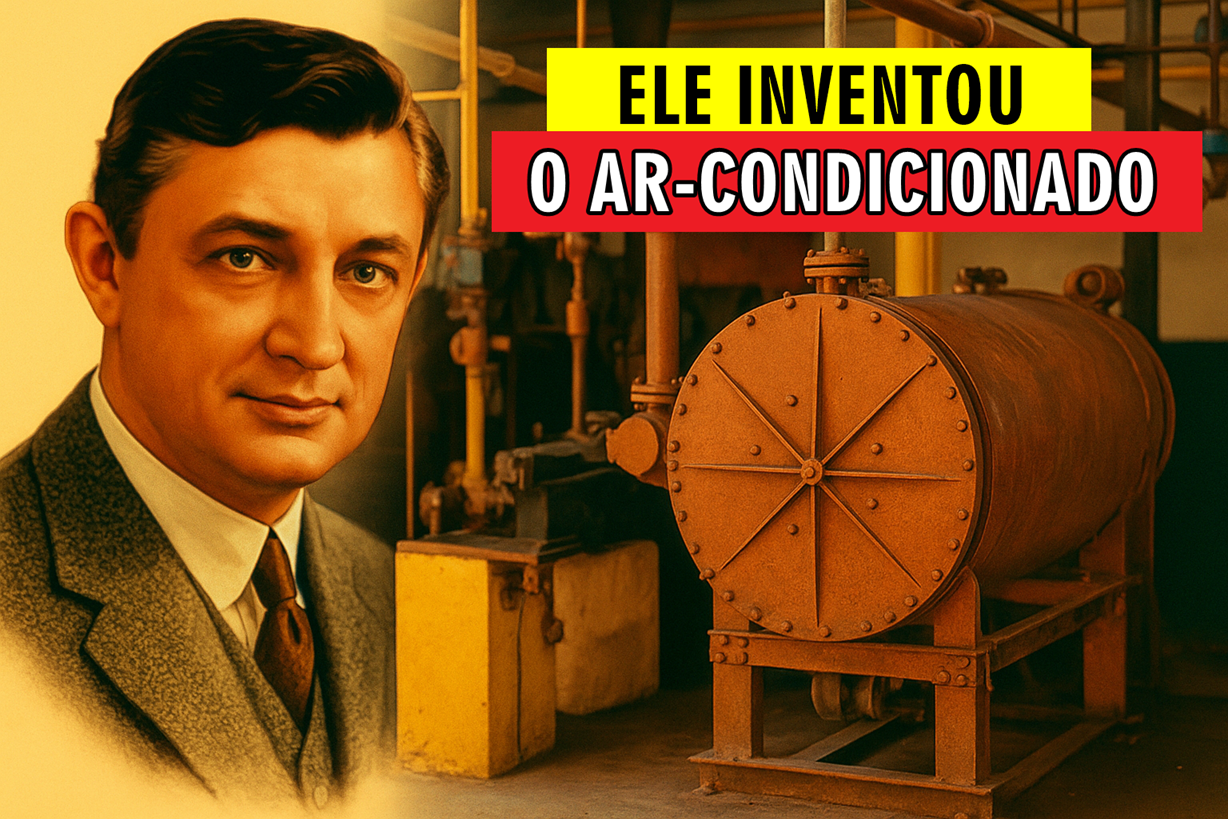
Even During Wars and Crises, Who Invented Air Conditioning Believed That the Technology That Would Change the World — and Lives On Today in His Name.
Who Invented Air Conditioning may not have imagined the impact his creation would have on the modern world.
The invention of air conditioning is one of those ideas that seems to have arisen from a daily need, but actually emerged from a technical problem.
And the name behind this creation is not as well-known as it should be: the inventor of air conditioning was the American engineer Willis Carrier.
-
Motorola launched the Signature with a gold seal from DxOMark, tying with the iPhone 17 Pro in camera performance, Snapdragon 8 Gen 5 that surpassed 3 million in benchmarks, and a zoom that impresses even at night.

-
Satellites reveal beneath the Sahara a giant river buried for thousands of kilometers: study shows that the largest hot desert on the planet was once traversed by a river system comparable to the largest on Earth.

-
Scientists have captured something never seen in space: newly born stars are creating gigantic rings of light a thousand times larger than the distance between the Earth and the Sun, and this changes everything we knew about stellar birth.

-
Geologists find traces of a continent that disappeared 155 million years ago after separating from Australia and reveal that it did not sink, but broke into fragments scattered across Southeast Asia.

Today, air conditioning can be found in offices, homes, cars, stores, hospitals, and virtually everywhere. But at the beginning of the 20th century, everything started very differently: with ink smudging paper in a printing house in Brooklyn.
The Origin of the Idea: More Industry Than Comfort
Willis Carrier was born in 1876 in New York State. In 1897, he entered Cornell University with a scholarship in Mechanical Engineering.
As soon as he graduated, he was hired by Buffalo Forge Company, where he began working on the development of boiler fans.
Carrier quickly stood out and was called to solve a problem at a printing house in Brooklyn. The humidity in the air caused the paper to expand and the ink to smudge.
The young engineer then had the idea of creating a device that could control not only the temperature but also the humidity of the air.
The First Equipment: Total Environment Control
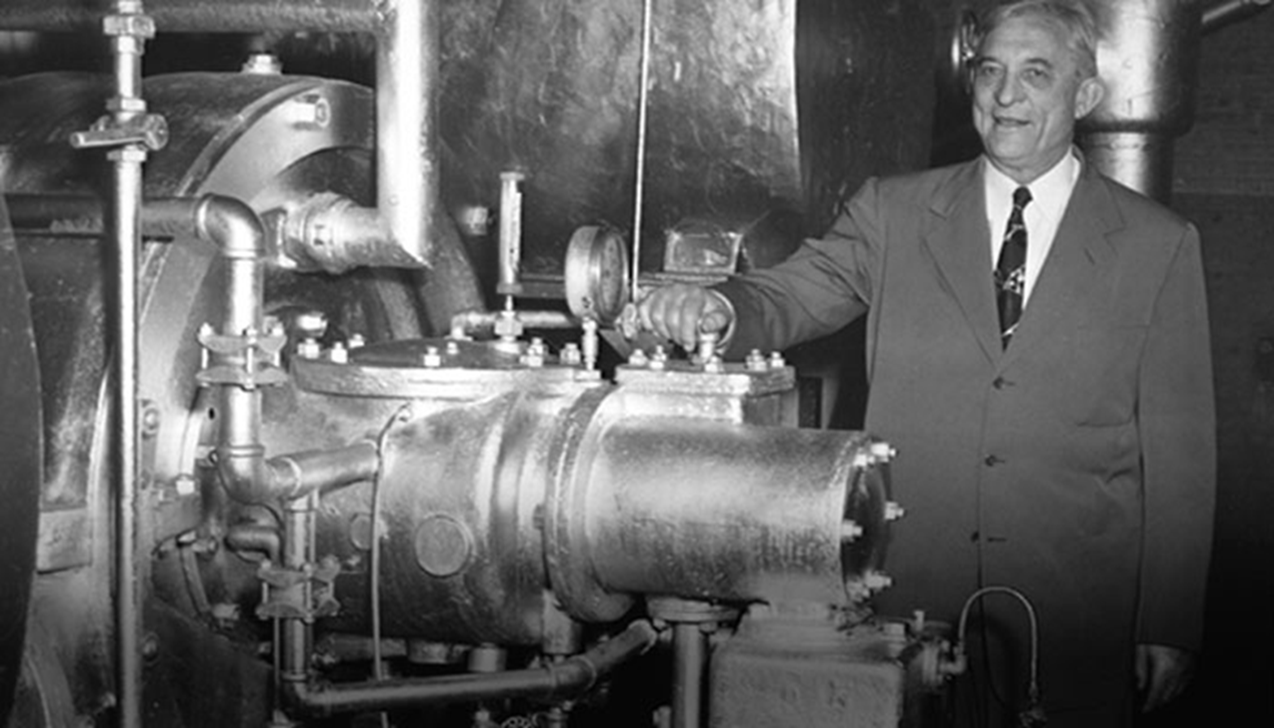
In 1902, at just 26 years old, Willis Carrier created the first functional climate control equipment, called the “Air Treatment Device.” The invention involved circulating air over cold water to cool it and control humidity.
Four years later, in 1906, the device was already capable of regulating temperature, humidity, circulation, and even cleaning the air. The invention was patented by Carrier, who took the lead of a division at Buffalo Forge dedicated to the new technology.
Advancement and Decline: Wars and Recession
In 1907, Buffalo Forge officially created a division to work with the new product, but World War I affected business. The company decided to dissolve the unit that worked on air conditioning, focusing on commercial priorities.
Carrier did not give up. In 1915, he founded Carrier Engineering Corporation, along with other partners. The company resumed the development and refinement of the climate control system, but the market was still limited. Use was almost exclusively industrial, as the equipment was large and expensive.
The Cinema Changes Everything
The turning point came in the 1920s. In 1924, the devices began to be used in cinemas. At the time, enclosed rooms that gathered thousands of people needed some system to maintain a comfortable environment. Carrier saw an opportunity.
With the growing demand, Carrier installed over 330 air conditioning systems in cinemas across the United States. The invention finally reached a broader audience and became associated with comfort, rather than just industrial efficiency.
Between Crises and Innovation
In the 1930s, the Great Depression again affected the advancement of technology. Air conditioning, still restricted to locations with greater purchasing power, ceased to be a priority in times of economic crisis.
Nevertheless, Carrier continued to innovate. Between 1940 and 1944, he developed a wind tunnel capable of simulating freezing at high altitudes. The invention was used for testing aircraft, primarily during World War II.
After the conflict, in 1949, climate control systems were already more advanced. Carrier managed to apply his technology in large buildings in the United States, and the idea of using air conditioning on a large scale was solidified.
A Legacy That Crossed Generations
Willis Carrier died in 1950 at the age of 74. Even after his death, the technology he created continued to evolve. Other companies began to manufacture similar devices, but his name remained marked as the father of air conditioning.
Even with questions about whether he was the only one responsible for the invention, his contribution is undeniable. Other names such as William Cullen, who developed a method of compressing fluids in the 18th century, and John Gorrie, who patented a machine to produce ice, were also fundamental. But it was Carrier who shaped the modern system we use today.
A Billion-Dollar Market
According to recent estimates cited by The Guardian in April 2025, the global air conditioning market could reach US$ 331 billion by 2030. The projection is based on studies from Morgan Stanley and JPMorgan, which highlight the global increase in temperatures and the greater frequency of heat waves.
In other words, what started as a solution for smudged ink has turned into a global necessity in the face of climate change.
How Does Air Conditioning Work?
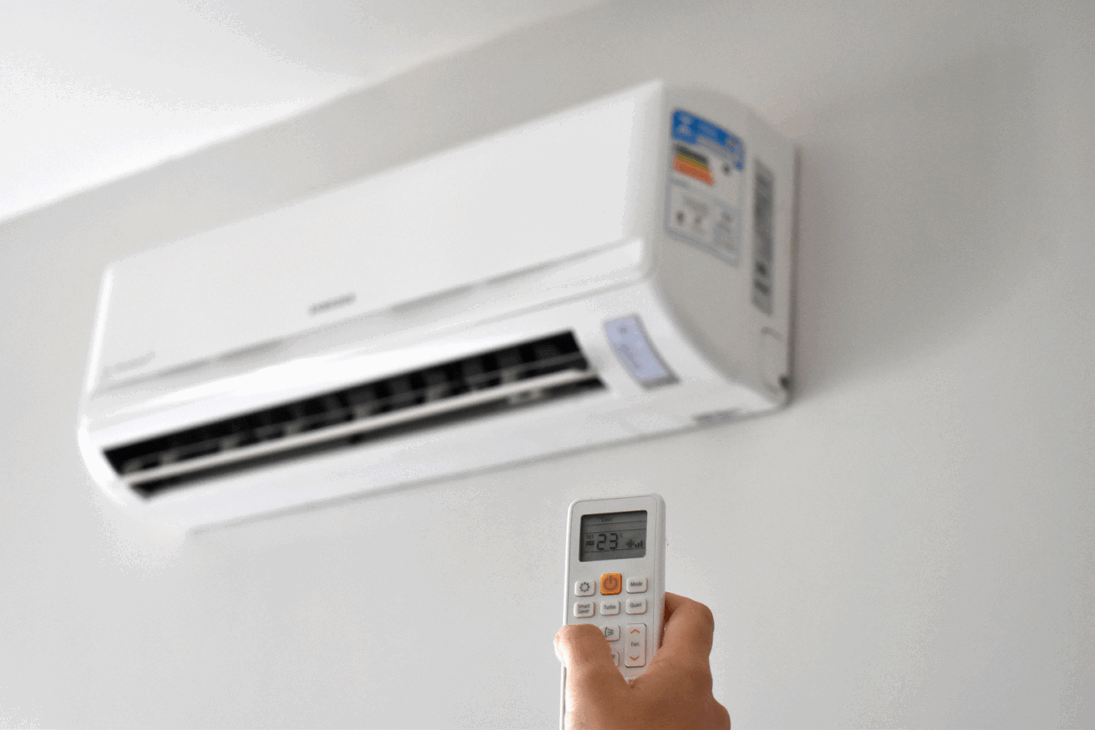
Despite the sensation of “cold wind,” air conditioning does not create cold. It removes heat and humidity from the environment and returns drier air at a reduced temperature. To do this, it uses a refrigerant gas and three main components: compressor, condenser, and evaporator.
These three pieces work together in a constant cycle:
- The refrigerant gas R-22 absorbs heat from the environment and changes from liquid to gas.
- The compressor increases its pressure and temperature.
- The hot gas goes to the condenser, which cools it and transforms it back into liquid.
- The liquid returns to the evaporator, evaporates again, and cools the internal coil.
- A fan blows air through the cooled coil, sending cold air into the environment.
The cycle automatically restarts, maintaining the climate-controlled space constantly.
Function of Each Part
Compressor: is the “heart” of the system. It compresses the refrigerant gas, increasing its pressure and temperature for the next process.
Condenser: responsible for expelling the heat from the compressed gas and turning it back into liquid.
Evaporator: here the liquid is evaporated, and the air that passes through its coils is cooled before being released into the environment.
Most Common Types of Air Conditioning
Today, there are several categories of devices. All use the same principle but differ in shape and features:
Split: the most common. Has indoor and outdoor units. Quiet, efficient, and with Inverter technology, which saves energy by adjusting the compressor’s speed.
Window: has all components in a single block. It is bulkier, takes up more space, and has manual controls. Ideal for locations that cannot accommodate a Split.
Central: used in large environments. More expensive, requires air ducts, but controls temperature, humidity, and air quality in wide areas.
Benefits of Air Conditioning
Modern air conditioning offers more than thermal comfort. It also contributes to health in several aspects:
- Air Purification: filters that eliminate dust, pollen, and allergens.
- Humidity Reduction: fights mold and mildew in humid environments.
- Prevention of Sunstroke: ideal in locations with high temperatures.
- Lower Risk of Dehydration: less sweating, less loss of water from the body.
- Improved Sleep: cool environments favor more restful nights.
- Helps Against Asthma: improves air quality and can reduce respiratory crises.
Of course, to maintain these benefits, it is necessary to clean and replace filters regularly.
From Technical Solution to Symbol of Modern Comfort
The invention of Willis Carrier spanned decades, wars, and crises. What began as an attempt to save a printing company’s production became one of the pillars of modern life. Air conditioning ceased to be a luxury item and became an essential tool in times of extreme heat, productivity, and well-being.
With a global market in rapid expansion and growing demand for climate-controlled environments, Carrier’s legacy remains present — in homes, offices, and even in the cinema, where it all began.








Seja o primeiro a reagir!