





 Portuguese
  English
  Spanish
  4 min of reading
  0 comments



Since 1992, Singapore Restricts the Sale of Gum and Imposes Strict Fines to Maintain Urban Cleanliness. Understand the Law, the Exceptions, and the Real Impacts.
On January 3, 1992, the government of Singapore, a city-state located in Southeast Asia, officially implemented a ban on the sale and importation of regular gum. The measure was adopted under the leadership of then-Prime Minister Goh Chok Tong, continuing the urban discipline policy initiated by Lee Kuan Yew, the founder of modern Singapore.
The justification was straightforward: improper disposal of gum was causing ongoing damage to public infrastructure, especially to the recently inaugurated MRT (Mass Rapid Transit) system. Gum was being stuck to automatic door sensors, causing operational failures and delays.
The legal basis was incorporated into the Regulation of Imports and Exports Regulations, within Singapore’s legal system, restricting the commercial importation of the product.
-
Friends have been building a small “town” for 30 years to grow old together, with compact houses, a common area, nature surrounding it, and a collective life project designed for friendship, coexistence, and simplicity.

-
This small town in Germany created its own currency 24 years ago, today it circulates millions per year, is accepted in over 300 stores, and the German government allowed all of this to happen under one condition.

-
Curitiba is shrinking and is expected to lose 97,000 residents by 2050, while inland cities in Paraná such as Sarandi, Araucária, and Toledo are experiencing accelerated growth that is changing the entire state’s map.

-
Tourists were poisoned on Everest in a million-dollar fraud scheme involving helicopters that diverted over $19 million and shocked international authorities.


The measure has been widely documented by the National Library Board of Singapore, as well as historical reports on public policies of the country.
Strict Fines and Active Enforcement


Singapore already had one of the strictest urban litter laws in the world even before the ban. The Environmental Public Health Act establishes penalties for improper disposal. Fines can exceed SGD 2,000 for repeat offenses and can include:
- Progressive financial fines
- Mandatory community service
- Public exposure in urban cleaning uniforms
The gum ban became part of a broader “zero tolerance” policy against urban dirt, which includes punishments for:
- Littering
- Spitting in public places
- Smoking outside designated areas
These measures are enforced with active monitoring, surveillance cameras, and a constant presence of public agents.
The 2004 Flexibility: Therapeutic Gum Allowed

In 2004, following a trade agreement between Singapore and the United States (U.S.-Singapore Free Trade Agreement), the rule was partially relaxed. The sale of therapeutic or medicinal gums was allowed, such as:
- Nicotine gums for smoking cessation
- Prescribed dental gums
The sale, however, occurs only in pharmacies, with buyer registration. Free sale in supermarkets remains prohibited.
This adjustment was confirmed by the Ministry of Health of Singapore and widely reported by international media outlets such as BBC and The New York Times at the time.
Cleanliness as State Policy and National Identity
Singapore built its global reputation as one of the cleanest cities on the planet not only because of gum but due to an integrated strategy that includes:
- Civic education from childhood
- National cleaning campaigns started in the 1960s
- Highly planned urban infrastructure
- Strict environmental laws
The cleaning policy is linked to the vision of economic development. The government has always associated urban order with attracting foreign investment.
The result is measurable: Singapore consistently ranks among the cities with the best urban quality and the lowest incidence of public litter in international rankings.
International Criticism and the Debate on Social Control
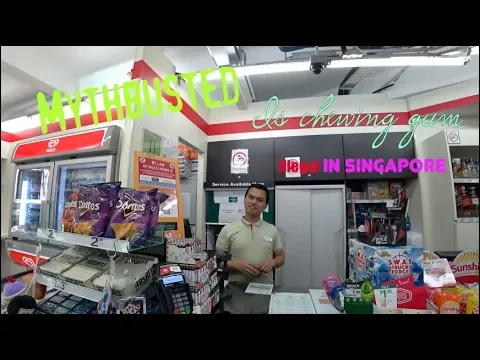
The gum ban generated global criticism in the 1990s. Many Western media outlets labeled the measure as a symbol of an excessively controlling state.
However, internal research indicates that a large part of the population supports the strict rules, associating them with safety and urban organization.
Singapore maintains a hybrid model: a highly liberal and competitive economy combined with strict social legislation.
Infrastructure, Metro, and the Real Impact of the Measure
The MRT subway system, inaugurated in 1987, was one of the practical reasons for the ban. Door sensors were sabotaged by gum being stuck, causing technical failures.
After the ban, authorities reported a significant reduction in incidents related to gum vandalism.
Although the government has never released exact public comparative figures, historical reports indicate a substantial drop in maintenance costs related to this specific problem.
Singapore Today: The Global Symbol of Urban Discipline
Decades after the implementation of the law, Singapore has established itself as a world reference in:
- Urban Planning
- Environmental Control
- Social Discipline
- Efficient Infrastructure
The gum policy has become a cultural icon associated with the country, frequently cited in tourist guides and international analyses. More than a simple ban, the measure symbolizes a governance strategy based on prevention, enforcement, and clear punishment.
What This Story Reveals About the Singaporean Model
The gum ban was not an isolated action but part of a larger national construction project. Singapore transformed:
- Small individual behaviors
- Seemingly trivial urban infractions
- Cultural habits
into strategic public policy issues.
The country shows how seemingly simple decisions can have lasting impacts on urban organization and the global perception of efficiency.










-

-

-

-

-

16 pessoas reagiram a isso.