





 Portuguese
  English
  Spanish
  3 min of reading
  0 comments


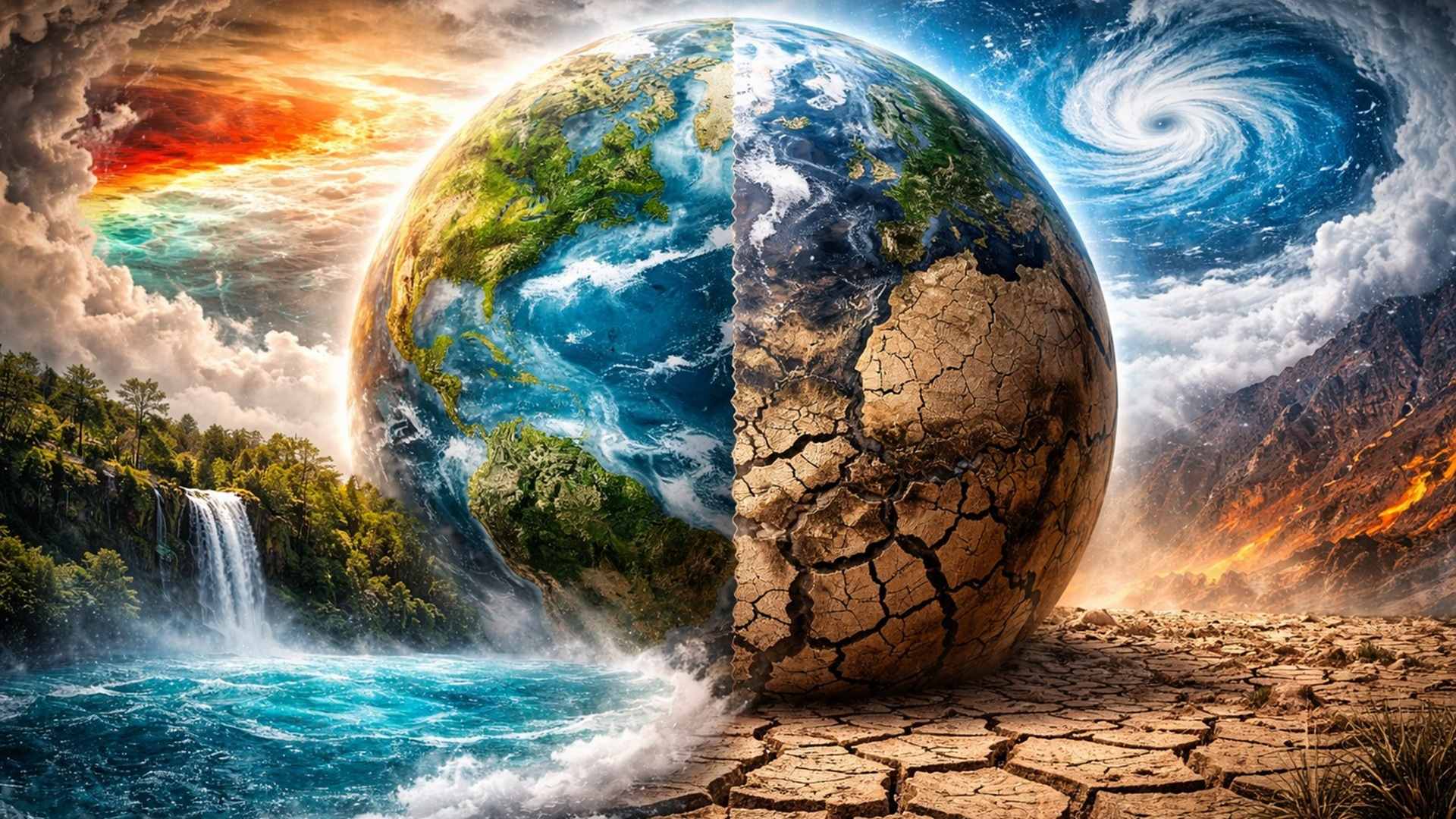
Global Climate Data Analysis Between 1901 and 2020 Shows That Synchronized Droughts Reached 1.8% to 6.5% of the Earth’s Surface, and That Ocean Temperature Fluctuations, Such as El Niño-Southern Oscillation, Limit the Simultaneous Propagation of Water Crises in Several Continents
For decades, climate projections have warned of the risk of simultaneous droughts affecting multiple continents at the same time. However, a new study led by researchers at the Indian Institute of Technology Gandhinagar indicates that the scenario is more complex than previously estimated.
Published in the journal Communications Earth & Environment, the work analyzed global climate records from 1901 to 2020.
The conclusion is that synchronized droughts affected between 1.8% and 6.5% of the Earth’s surface over the period – a lower proportion than previous estimates which suggested that up to one-sixth of the planet could experience simultaneous drought.
-
Friends have been building a small “town” for 30 years to grow old together, with compact houses, a common area, nature surrounding it, and a collective life project designed for friendship, coexistence, and simplicity.

-
This small town in Germany created its own currency 24 years ago, today it circulates millions per year, is accepted in over 300 stores, and the German government allowed all of this to happen under one condition.

-
Curitiba is shrinking and is expected to lose 97,000 residents by 2050, while inland cities in Paraná such as Sarandi, Araucária, and Toledo are experiencing accelerated growth that is changing the entire state’s map.

-
Tourists were poisoned on Everest in a million-dollar fraud scheme involving helicopters that diverted over $19 million and shocked international authorities.


The Role of Oceans in Limiting Global Droughts
The researchers identified that sea surface temperatures play a decisive role in how droughts are distributed across the planet.
Oceanic fluctuations create distinct regional responses, preventing a single drought pattern from spreading uniformly across multiple continents.
One of the main mechanisms involved is the El Niño-Southern Oscillation (ENSO). During El Niño events, Australia tends to stand out as a drought pole, while other regions may experience different impacts. During La Niña periods, drought patterns reorganize and tend to become more geographically dispersed.
The team treated the onset of drought as interlinked events in a global network. When two distant regions entered drought within a short time frame, they were considered synchronized. Nonetheless, the occurrence of a truly global drought proved to be rare.
Impacts on Strategic Agricultural Crops
The study also examined historical data on wheat, rice, corn, and soybean production. In several relevant agricultural regions, moderate drought can raise the probability of harvest losses above 25%, reaching up to 40% or 50% in the case of corn and soybeans.
Recurring “drought poles” were identified, including Australia, South America, southern Africa, and parts of North America. These areas have a higher propensity for the temporal coincidence of events, but still within regional limits.
Precipitation Still Predominates, but Temperature Gains Weight
About two-thirds of long-term changes in drought severity are associated with variations in precipitation. The remaining third is related to rising temperatures, which intensify evaporation and atmospheric demand for moisture.
Although rainfall remains the main determining factor on a global scale, the influence of temperature has increased in various mid-latitude regions, such as Europe and Asia.
The main conclusion of the study is that the climate system operates as an interconnected network. Oceanic oscillations create regional patterns that limit the simultaneous propagation of droughts, reducing the likelihood of a uniform event affecting the entire planet at the same time.










-

-

-

-

10 pessoas reagiram a isso.