





 Portuguese
  English
  Spanish
 6 min of reading
  0 comments


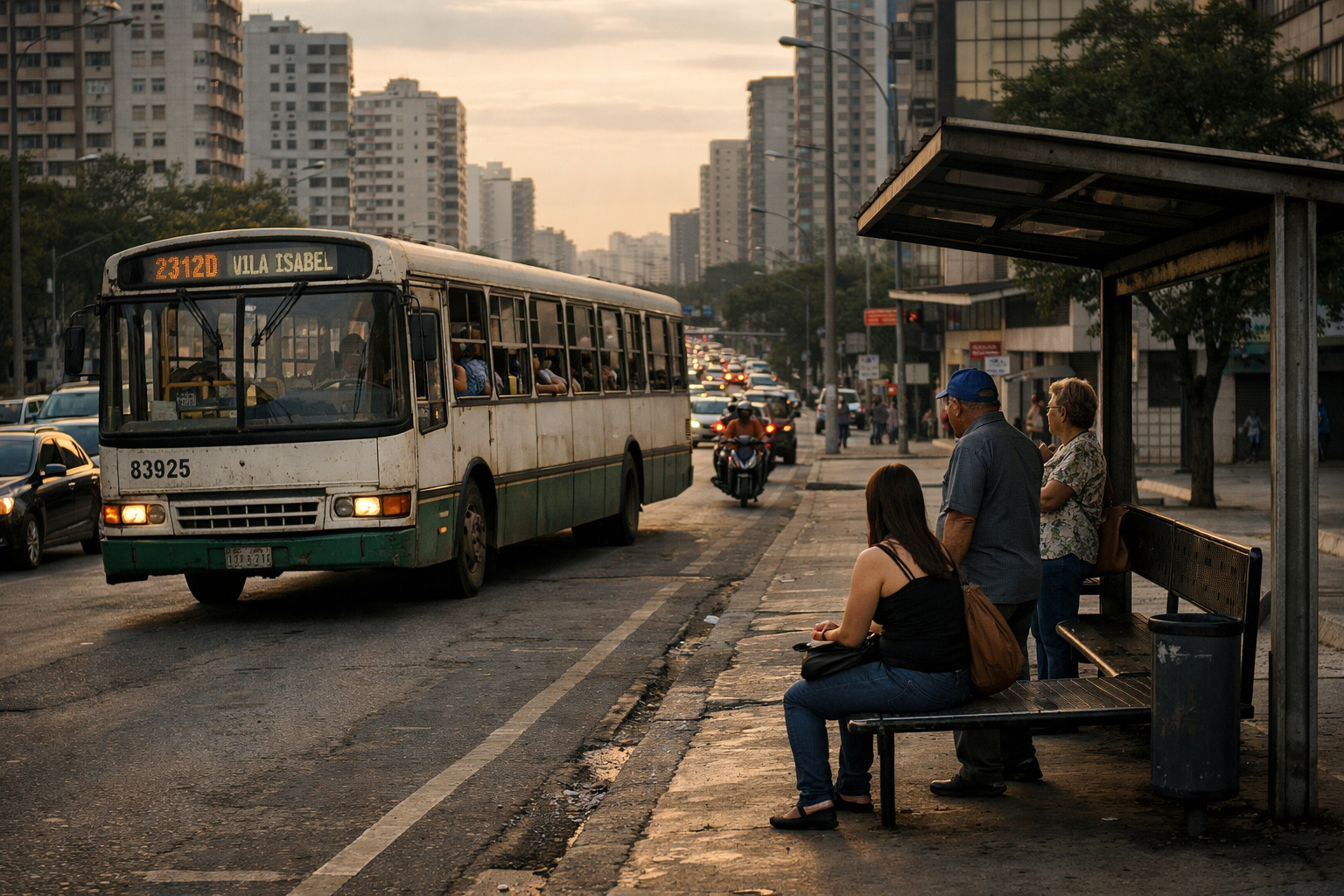
In Just One Decade, The Main Urban Transportation Mode In The Country Lost Almost Half Of Its Passengers, While Cars, Motorcycles, And Apps Dominated The Streets And Redefined Brazilian Mobility
For decades, the bus was the true engine of Brazilian cities. It was the one connecting home, work, and school, ensuring that millions of people traveled daily. However, this scenario changed rapidly. In just ten years, Brazil lost almost half of its public transport passengers, transforming once-crowded buses into vehicles that now run almost empty outside peak hours. At the same time, congested streets, idle stations, and increasingly expensive fares became part of the urban routine.
This information was released through surveys by the National Association of Urban Transport Companies (NTU), supplemented by data from the National Transportation Confederation (CNT) and recent mobility research. According to these studies, the Brazilian public transport not only lost users but also failed to keep up with city transformations, creating a mismatch between supply, quality, and new demands of the population.
This process did not happen suddenly. On the contrary, it was the result of structural decisions, lack of investment, changes in social behavior, and a financial model that proved unsustainable over time.
-
The Argentine government celebrates the lowest poverty rate in 7 years, but experts warn that the methodology has changed, real wages have fallen, unemployment has risen, and the number of people on the streets of Buenos Aires has increased by 57% since Milei took office.

-
7.8 magnitude earthquake in Indonesia frightens the population, triggers tsunami alert, and hits an island with over 200,000 inhabitants this Thursday.

-
Google will finally let you change that embarrassing Gmail address you created in your teenage years without losing any accounts, logins, or old emails: the feature is already available in the United States.

-
Heading to Brazil in a Bonanza F33 single-engine aircraft: a couple departs from Florida on a visual flight, makes technical stops in the Caribbean to refuel and organize paperwork, and begins the staged crossing until they reach the country.
The Bus Lost Efficiency, Infrastructure, And Passengers Over The Years
Historically, Brazil prioritized the construction of roads and highways, leaving urban public transport almost exclusively dependent on buses. According to the NTU, it still accounts for about 85.7% of urban public transport trips and, until 2017, was used by 45.2% of the population. Despite this, the expansion of cities did not come with the creation of exclusive corridors, dedicated lanes, or structural improvements capable of maintaining the system’s efficiency.
With unplanned urban growth and increasing congestion, the average speed of buses dropped, travel times increased, and the user experience worsened. This scenario directly impacted the system’s productivity. The number of passengers per kilometer traveled plummeted from 2.52 in 1993 to 1.53 in 2023, a decrease of 40%.
The effects of this decline are visible in major metropolitan areas. In São Paulo, the number of bus trips fell by about 30% between 2013 and 2022. In the Greater Porto Alegre area, the loss was even more drastic: 65% in just 20 years, with the annual volume of passengers dropping from 144 million in 2006 to only 51 million in 2024.
Furthermore, as demand decreased, the fleet aged. In 2023, urban buses reached an average age of 6.42 years, the highest in nearly three decades. Since 2011, there has been no significant reduction in this average, when the ideal would be a fleet of up to five years of use. With less renewal, comfort declined, maintenance costs increased, and the negative perception of the service solidified.

Financial Crisis, High Fares, And A Model That Penalizes The User
If the infrastructure was already showing signs of exhaustion, the financial model of public transport worsened the crisis even further. In Brazil, the system relies almost entirely on the fare paid by the passenger. Without consistent subsidies, any increase in costs — whether fuel, wages, or maintenance — is passed directly to the user.
For Francisco Christovam, executive director of the NTU, the absence of a national financing policy made bus transport “unattractive, inflexible, and very uncompetitive compared to other existing modes in cities.” When the COVID-19 pandemic arrived, the system was already operating at its limit.
Although many associate the crisis with the pandemic period, the data shows that the problem predates it. In 2013, buses transported 390 million passengers per month. Ten years later, that number fell to 214 million, a loss of 45%. In the same period, monthly mileage plummeted from 230 million to 138 million kilometers traveled.
In March 2020, the situation turned into a collapse. According to the NTU, demand fell by as much as 80% that month. Even after cities reopened, the recovery was partial: currently, the number of users remains 15% below pre-pandemic levels. Companies lost revenue, reduced fleets, and increased fares, creating a difficult-to-break vicious cycle.
Costs continued to rise. Labor alone accounts for 42.7% of operational costs and increased by 11.8% between 2022 and 2023, more than double the inflation for the period. In 2023, fares rose by 6.6%, reaching R$ 6.50 in some capitals, pushing passengers away even further.
Apps, Insecurity, And Habit Changes Accelerated The Abandonment
At the same time that public transport was losing efficiency, new alternatives gained ground. The rise of remote work, online classes, and e-commerce reduced the need for daily commuting. Simultaneously, transportation apps transitioned from occasional options to integral parts of urban life.
According to the CNT Mobility Survey 2024, app usage jumped from 1% in 2017 to 11.1% in 2024, becoming the fourth most used transportation mode in the country. This phenomenon isn’t restricted to higher classes: 68.4% of app users belong to classes C, D, and E, which are the most dependent on public transport. Uber itself estimates that 80% of the Brazilian population has used the service at least once.
In overall terms, the bus lost ground to almost all competitors. Between 2017 and 2024, its share of travel dropped from 45% to 30.9%. In the same period, car usage rose from 22.2% to 29.6%, while motorcycle usage more than doubled, rising from 5.1% to 10.9%.
Despite still being the cheapest mode — about R$ 9.75 per day, compared to R$ 27 in apps and R$ 30 with a private car — the cost-benefit no longer offsets. Lack of comfort, inflexible schedules, long trips, high fares, and insecurity are the main reasons cited for abandonment.
The issue of safety weighs particularly heavily for women. A national survey by the Patrícia Galvão and Locomotiva Institutes, in partnership with Uber, reveals that 71% of Brazilian women have experienced some form of violence during their travels, including harassment, sexual coercion, theft, and assault. In 2024, 97% of women reported feeling afraid while commuting, leading them to change routes, times, or abandon public transport altogether.
Attempts At Solutions, Zero Fare, And An Uncertain Future
In light of this scenario, some of the lost demand is unlikely to return. The NTU itself admits that a significant portion of users who migrated to other modes will not come back to buses. To curb the negative spiral, municipalities have begun adopting public subsidies more frequently.
Between 2019 and 2024, the number of cities subsidizing public transport more than doubled, from 120 to 241 municipalities. Currently, 154 cities are adopting some form of Zero Fare, with 127 providing complete free rides. This movement has resulted in a 9.8% increase in the total number of passengers and 4.7% in paying passengers in 2024. Still, the average coverage of subsidies in Brazil is around 30% of costs, well below the European standard of nearly 50%, and without a permanent funding source.
In the political arena, the Legal Framework for Public Collective Transport (PL 3.278/2021) aims to reformulate the national model. The proposal separates the technical fare from the public fare, creates stable funding sources, and seeks to provide legal security to contracts. Incorporated by the Ministry of Cities in 2024, the project has already passed the Senate and is currently in progress in the Chamber of Deputies.
Meanwhile, the economic impacts continue to accumulate. According to the platform Endered, urban congestion costs about 1.5% of the national GDP per year, a direct reflection of the prioritization of individual transport. The final picture of the crisis is clear: aged buses, fewer trips, high fares, and increasingly stagnant cities.
Public transport, which once symbolized social integration and access to opportunities, now struggles merely to avoid coming to a complete stop. The country loses productivity, cities lose time, and passengers lose quality of life. And the inevitable question remains: how long can Brazil operate without efficient and accessible public transport?









Seja o primeiro a reagir!