





 Portuguese
  English
  Spanish
  8 min of reading
  0 comments


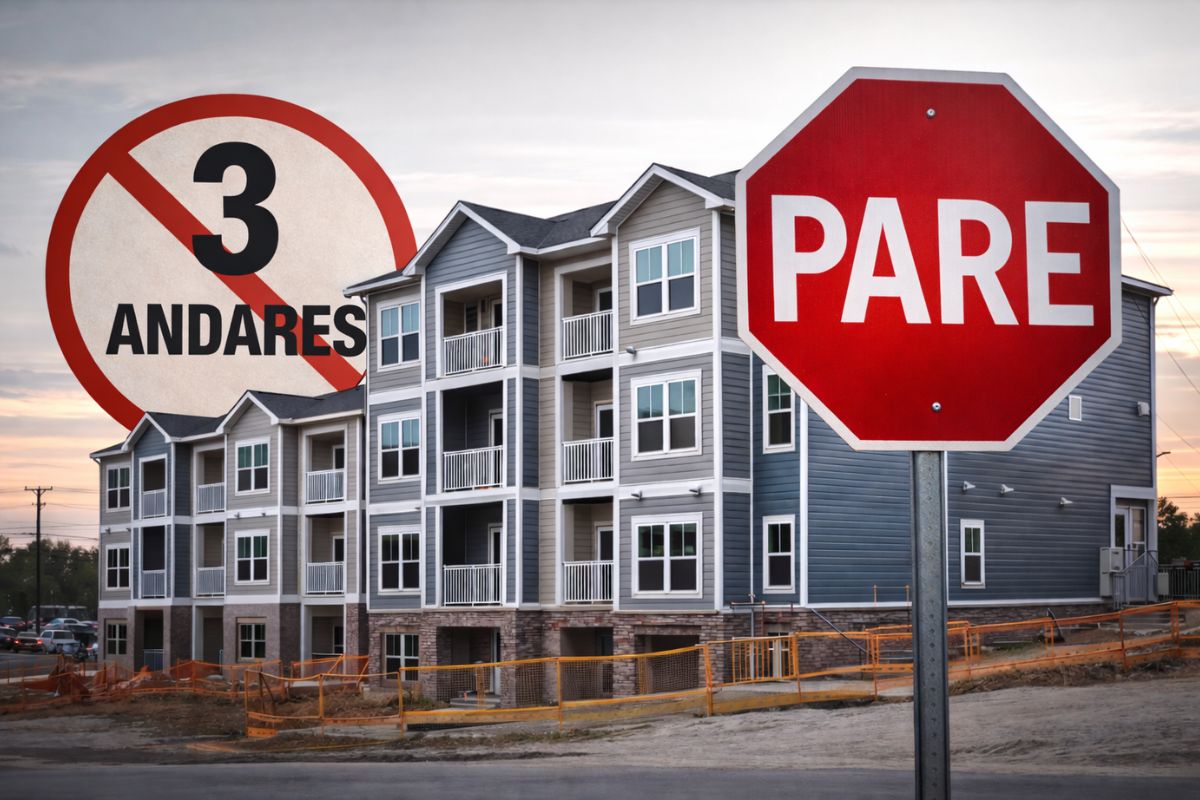
Between Chicago, Boston and San Francisco, the simple 3-story building appears as a solution for housing, wealth and rent, but also as a target for demolitions and conversions. Zoning rules, post-1930 prohibition, mandatory parking and slow processes help inflate lots and displace entire middle-income families.
The simple 3-story building did not become a problem for being ugly, old or unsafe by definition. It became a problem because it affects a sensitive calculation: how many families can fit into a neighborhood without the land costs and the rules of the game making housing disappear from the reach of those who work nearby.
When this type of construction disappears or becomes a luxury item, it’s not just a facade that changes. The math of who can stay changes, who needs to move away and how the entire city begins to price every corner.
The Common Building That Became Rare Without Anyone Announcing It

What stands out in this debate is that the simple 3-story building is not a “modern invention” trying to force density.
-
Friends have been building a small “town” for 30 years to grow old together, with compact houses, a common area, nature surrounding it, and a collective life project designed for friendship, coexistence, and simplicity.

-
This small town in Germany created its own currency 24 years ago, today it circulates millions per year, is accepted in over 300 stores, and the German government allowed all of this to happen under one condition.

-
Curitiba is shrinking and is expected to lose 97,000 residents by 2050, while inland cities in Paraná such as Sarandi, Araucária, and Toledo are experiencing accelerated growth that is changing the entire state’s map.

-
Tourists were poisoned on Everest in a million-dollar fraud scheme involving helicopters that diverted over $19 million and shocked international authorities.


In several cities, it was born as a direct response to practical needs: to place more people near the streetcar, jobs, and stores, without turning the street into a canyon of towers.
At the same time, the same format can produce two opposing futures. In one scenario, it functions as a bridge between rent and wealth, allowing a family to live in one unit and use the income from the others to sustain the mortgage.
In another, it becomes an easy target for conversion to a high-end single-family home, erasing affordable units all at once.
Chicago and the Logic of “Two Stacked Apartments” That Sustained a Family
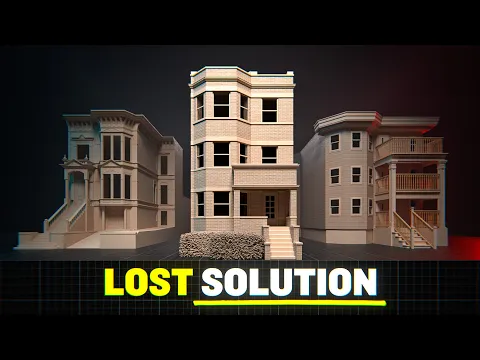
In Chicago, a classic version of this repertoire is the building with practically repeated units, stacked, and a vertical circulation that organizes access.
There is a constructive intelligence that seems trivial, but it is not: bathrooms and kitchens are positioned close together to facilitate plumbing, structural walls support the floors, and the layout separates public and private spaces with almost industrial clarity.
Even details like the relationship with the ground carry technical and political decisions.
The basement floor appears lower than the street level, with ground-level windows bringing light and serving as an emergency exit.
However, in many cases, the rules do not allow that space to become another residence, not for physical impossibility, but to prevent density increases in the neighborhood.
The very aesthetic also tells a story of cost and intention. Different bricks on the facade and sides, horizontal stone lines that “visually settle” the volume, elevated balcony for privacy for the first floor, a garage in the back that often came later, when the car became standard.
And there’s a fact that helps to understand why this made sense: a Scandinavian family bought a lot for US$ 4,500 in the early 20th century and used the property as collateral to enable construction. The multiplicity of units was part of the financing, not an urban whim.
When the Building Becomes a Commodity, It Also Becomes a Target
The simple 3-story building in Chicago also became a target for a reason that is not mysterious: where the land has become expensive, tearing down and replacing may yield more than maintaining and renting.
The conversion to a high-end single-family home quickly erases two or three units that previously kept common people in the neighborhood.
There is also a silent dynamic: families tend to hold onto these properties for longer, and many have not undergone updates for decades. This can facilitate the demolition argument when the market is starving for land.
In some neighborhoods, the loss reached up to 15 percent of these buildings between 2013 and 2019. This is not an abstract decline: it is the sum of decisions lot by lot, each pushing the region’s price up.
Boston and the Triple Decker That Became Illegal After 1930
In Boston, the simple 3-story building appears in the “triple decker,” a type that gained strength when the streetcar expanded urban reach.
The number often cited for this wave is significant: about 15,000 buildings of this type were constructed in an area after transportation facilitated access, concentrating families of different backgrounds in the same neighborhood.
The shape also responds to the place. Lots with varied shapes, absence of a strict pattern of streets, and an intense proximity to the sidewalk. Many of these constructions were made of wood, something that in certain contexts was allowed by local rules and construction traditions.
However, in dense concentrations, this choice became a liability. After 1930, many of these typologies became illegal to build, creating a paradox: what exists becomes valuable and contested, but what is lacking cannot be replaced with the same simplicity.
Inside, there are similarities with what is seen in Chicago, with kitchens and bathrooms connected to a “wet” wall and divisions that save infrastructure.
But there are relevant differences: living rooms and kitchens can be separated by corridors, the facade usually has stacked balconies, and the ensemble tends to be wider and lower.
And one point weighs in modern daily life: without alleys and with buildings attached, fitting in parking becomes a costly puzzle, which directly relates to contemporary parking requirements.
San Francisco and the Conversion That Seems a Solution, But Also Creates Inequality
On the West Coast, especially in San Francisco, many examples linked to the simple 3-story building arise from conversion.
The city is marked by homes designed as single-family units, and the pressure to densify appears later. This opens space for entrepreneurs to buy properties, subdivide interiors, and create units that were not born standardized like those in Chicago.
This origin matters because the consequence is inequality within the same envelope. There are cases where the ground floor becomes a garage and, next to or behind it, a compact unit appears, while the owner occupies a larger and more luxurious unit above.
Separate entries for each unit, layouts that vary from house to house, and a significant difference in finishing between neighboring walls. The result may even increase the number of units, but it does not guarantee the “democratic housing” that other formats attempted to deliver.
The city also faces the conflict between preservation and necessity. Elaborate facades, Italian and Victorian styles, and the effort to maintain the neighborhood’s “character” enter the political calculation.
At the same time, the extreme price of properties places the problem at the center: how to build density without erasing what already exists and without transforming each new unit into a product only viable for high income.
Zoning, Parking and Bureaucracy as Invisible Weapons
When someone asks why the simple 3-story building has become “forbidden” in so many cities, the answer often lies in rules that seem neutral, but are not.
Residential zoning that only allows one unit per lot, like R1 in many places, blocks the most basic logic of these buildings: dividing the same lot into more than one dwelling.
Mandatory parking is another trigger. If the rule requires parking spaces per unit, the project that previously fit with stairs, balconies, and a small yard now needs space for cars.
In older neighborhoods, this pushes construction towards expensive renovations, ramps, setbacks, demolitions of rear sections, or simply makes the project unfeasible. It’s not that there is a lack of desire to build: there is a lack of regulatory fit with the real city.
Bureaucracy closes the triangle. Licenses, reviews, cross-requirements and long waiting times drive up financial costs even before placing bricks on the street. And then the market responds predictably: if the risk and time increase, only projects with high returns survive.
What could be housing for middle-income individuals becomes above-average rent, because it needs to pay a bill that grew before the construction existed.
The Social Cost of Losing This Type of Building
There is a dimension that rarely enters the debate with the weight it deserves: everyday life. These buildings favored stable neighborhoods, with people living close to work, school, commerce and transportation.
They also allowed for long-term family arrangements, with generations sharing the same address, or with rental income serving as a financial buffer.
When the simple 3-story building disappears, the city loses an intermediate layer between the single-family house and the high-rise building. And this layer is missed because it doesn’t depend on an elevator, doesn’t require a massive construction, and doesn’t need to turn into a tower to exist.
It’s the type of construction that adds up without seeming like it’s adding, and precisely for this reason it bothers interests that prefer rigid low density or large developments as the only solution.
What Is Being Attempted and Why Is It Still So Difficult

Some fronts appear as attempts to unlock the problem: revising zoning laws that only allow one unit, reducing parking requirements in well-served transportation areas, standardizing approvals and shortening timelines.
There is also the idea of building more cheaply through repetition, including with prefabricated structures, so that the numbers work out without turning each unit into a luxury item.
However, there is a persistent obstacle, frequently cited: the current construction economy. In expensive markets, even a three-bedroom unit may cost more than a million dollars to build.
And with high interest rates, the pressure for elevated rents becomes almost automatic, which breaks the promise of “housing for the middle class” even when the project is approved.
In the end, the question is not whether the simple 3-story building is good or bad. The question is: what rules does the city choose to decide who gets in, who stays, and who leaves.
If the simple 3-story building were to become common again, it would change its city in a way that almost no one would notice in the first month, but everyone would feel in a few years. Less distance between home and work, more supply without turning into towers, less lots becoming prizes for the few.
Now I want a very personal answer, without a ready answer: in your city, what most hinders affordable housing, the zoning that limits units, the parking requirement, or the bureaucracy that makes everything take too long? And if you could change just one rule tomorrow, what would it be and why?










-

Uma pessoa reagiu a isso.