





 Portuguese
  English
  Spanish
  4 min of reading
  0 comments


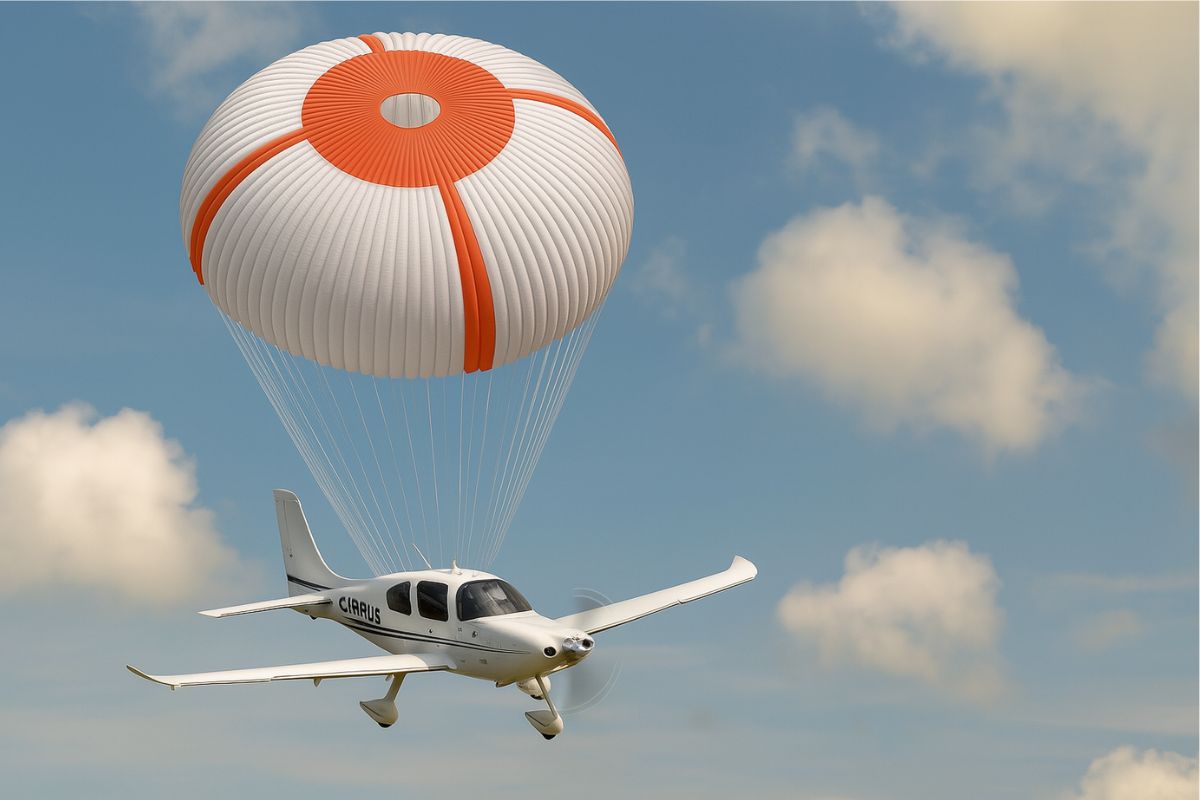
Cirrus Aircraft Stopped Questioning and Took Action: Their Planes Now Descend with a Giant Parachute That Slows Down Descent and Allows Emergency Landings
While the traditional aviation industry still views the idea of equipping airplanes with parachutes with skepticism, an American company decided to do what seemed impossible: install a ballistic system that slows down and lands an entire aircraft in the event of an emergency. The innovator behind this is Cirrus Aircraft, a manufacturer specializing in light airplanes and that has prioritized safety for over two decades.
CAPS: The Parachute That Became Part of the Fuselage
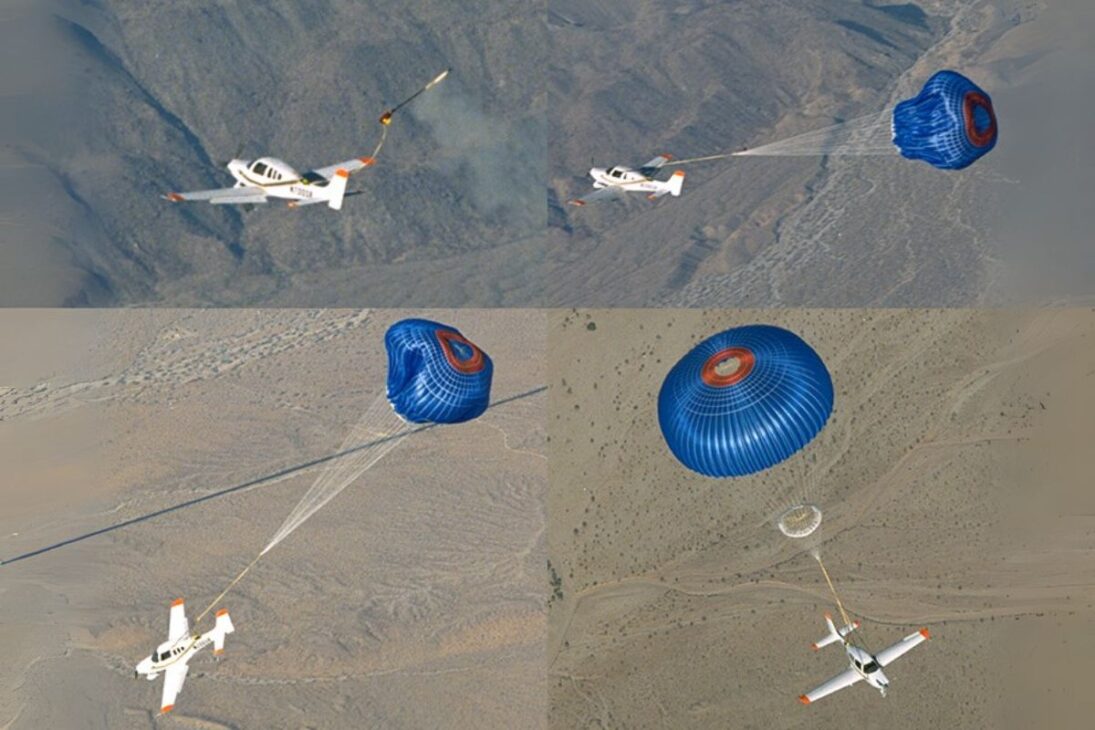
Cirrus named its innovation CAPS — Cirrus Airframe Parachute System, a technical name for a simple and disruptive concept. The system consists of a ballistic parachute integrated into the aircraft’s structure, positioned just behind the cockpit, inside a sealed compartment. In case of a serious failure — such as engine failure, loss of control, or severe weather conditions — the pilot pulls a T-shaped lever, and within seconds, a rocket propels the parachute out of the fuselage. The result? The entire airplane descends in a controlled manner, like a space module returning to Earth.
But there are limits: the CAPS works best between 600 and 2,000 feet of altitude (about 180 to 600 meters). Below this, there isn’t enough time for the system to fully operate. Above this range, it can still be activated, but the pilot usually has other alternatives.
-
Friends have been building a small “town” for 30 years to grow old together, with compact houses, a common area, nature surrounding it, and a collective life project designed for friendship, coexistence, and simplicity.

-
This small town in Germany created its own currency 24 years ago, today it circulates millions per year, is accepted in over 300 stores, and the German government allowed all of this to happen under one condition.

-
Curitiba is shrinking and is expected to lose 97,000 residents by 2050, while inland cities in Paraná such as Sarandi, Araucária, and Toledo are experiencing accelerated growth that is changing the entire state’s map.

-
Tourists were poisoned on Everest in a million-dollar fraud scheme involving helicopters that diverted over $19 million and shocked international authorities.


A Bold Idea That Started in the 90s
The story of CAPS begins in the 1990s when engineer Paul Johnston and his team decided to tackle the biggest question in civil aviation: is it possible to create a rescue system for light airplanes? Inspired by the technology of the company Ballistic Recovery Systems (BRS), which had already tested with airplanes like the Cessna 150, Cirrus went further. In 1998, in the California desert, they successfully tested the first real prototype. From then on, the system has become an essential part of their airplanes, rather than an optional accessory.
The grand debut was with the Cirrus SR20, launched at the end of the decade. Unlike anything that existed at the time, the airplane left the factory with the parachute as standard equipment — a feature that would save hundreds of lives in the following years.
Impressive Data: Over 250 Lives Saved
According to information released by Cirrus itself and the Cirrus Owners and Pilots Association (COPA), by June 2025, the CAPS had been activated in 136 real emergencies, with over 250 confirmed survivors. Cases like that of pilot Greg Huntley, who in 2014 lost the engine at 5,000 feet and managed to land his plane safely with the help of the parachute, are examples that demonstrate the practical impact of this technology.
“I had five minutes to live”, recalled Huntley in an interview with local media. “But when I pulled the lever, everything changed. It’s like having a mechanical guardian angel.”
The official Cirrus website provides stories and videos from survivors. Many talk about the feeling of helplessness in the face of failure — and the relief felt when the plane slows down while floating to the ground. The stories are emotional, real, and reinforce the value of investing in safety-oriented technology.
“This system has already saved entire families. It’s no longer theory; it’s reality,” says the Cirrus CEO in an interview published by Flying Magazine.
Vision Jet: When the Plane Lands Itself
The pinnacle of Cirrus’s philosophy came in 2016, with the certification of the Vision Jet, the first single-engine executive jet equipped with CAPS. And it didn’t stop there. The model also introduced an unprecedented feature in civil aviation: Safe Return, an autonomous landing system that can be activated by any passenger with the push of a button.
If the pilot becomes ill or loses consciousness, the system takes control of the airplane, contacts air traffic control, calculates a safe route, and performs a completely automatic landing at a nearby runway. This level of automation has raised the concept of safety to a new level, mixing AI, precision GPS, and state-of-the-art sensors.
The technology was developed in partnership with Garmin, and is already being integrated into other light jets like the Piper M600.
Why Don’t Large Aircraft Use Parachutes?
The question many ask remains valid: why don’t we see this type of system in commercial airplanes? The answer lies in physics. A Boeing 737, for example, weighs about 80 tons — a mass incompatible with parachute deceleration systems, at least with current technology. Additionally, the cost and aerodynamic impact on large aircraft would be unfeasible.
In other words, CAPS is not a universal solution, but rather an efficient response for light and executive aviation. And, in this niche, Cirrus has become a global reference.
A New Mindset for Aviation Safety
If there is one thing that the success of CAPS proves, it is that thinking outside the box can save lives. The system does not replace pilot training nor eliminate the risks of aviation, but provides an extra layer of protection that has already proven its value dozens of times.
While the aviation sector debates the implementation of autonomous technologies and artificial intelligence in the cockpit, Cirrus reminds us that safety starts with courageous decisions. And that sometimes, pulling a lever is all it takes to return home safely.










Seja o primeiro a reagir!