





 Portuguese
  English
  Spanish
  5 min of reading
  0 comments


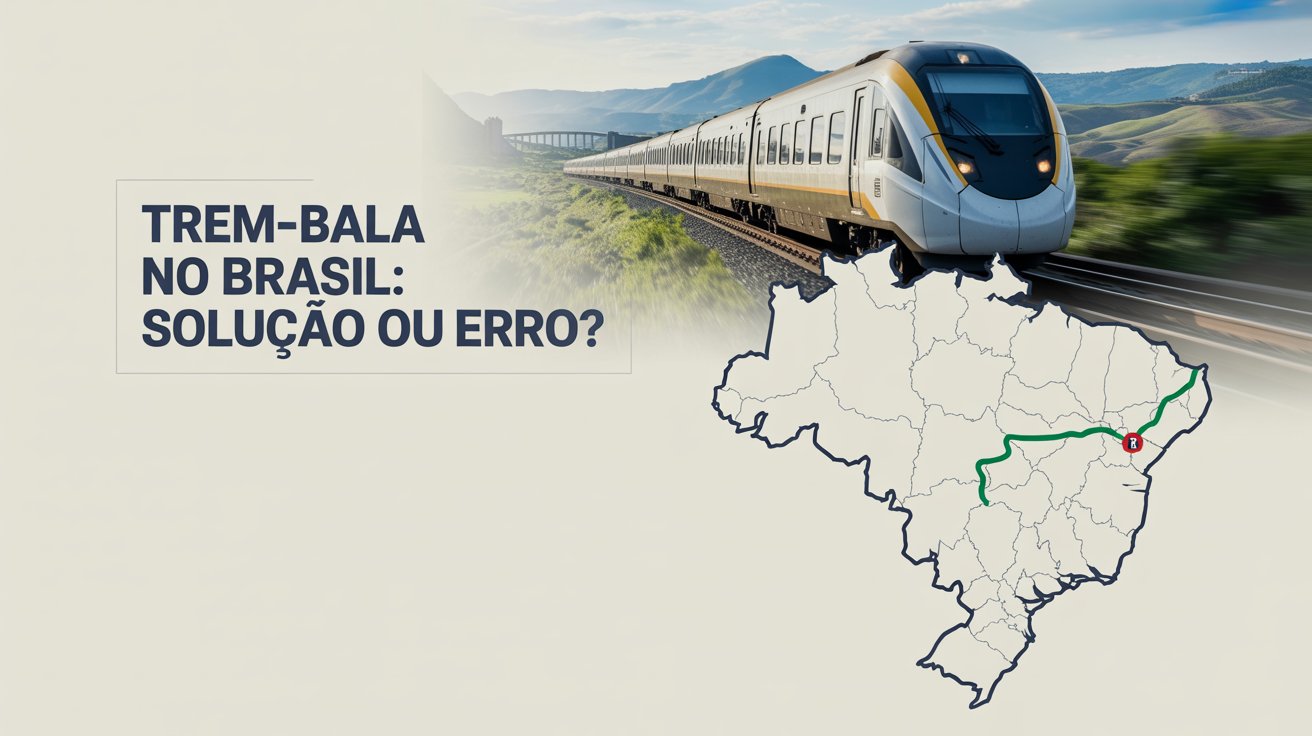
Study Indicates That High-Speed Trains, Despite Technological Advances, Face Financial Challenges Even in Benchmark Countries Like China. Experts Analyze the Risks, High Costs, and Real Benefits of This Transportation Model for Brazil.
The discussion about implementing a high-speed train between Rio de Janeiro and São Paulo is back at the center of national debate with the announcement of new Chinese investments in infrastructure.
During an official visit to China in May 2025, the Minister of Planning and Budget, Simone Tebet, stated that the Asian country is interested in expanding Brazil’s railway network, raising questions about the real feasibility of high-speed rail in Brazil.
Despite the initial enthusiasm, experts point out financial, technical, and operational challenges that cast doubt on the convenience of this project for the Brazilian scenario.
-
Friends have been building a small “town” for 30 years to grow old together, with compact houses, a common area, nature surrounding it, and a collective life project designed for friendship, coexistence, and simplicity.

-
This small town in Germany created its own currency 24 years ago, today it circulates millions per year, is accepted in over 300 stores, and the German government allowed all of this to happen under one condition.

-
Curitiba is shrinking and is expected to lose 97,000 residents by 2050, while inland cities in Paraná such as Sarandi, Araucária, and Toledo are experiencing accelerated growth that is changing the entire state’s map.

-
Tourists were poisoned on Everest in a million-dollar fraud scheme involving helicopters that diverted over $19 million and shocked international authorities.


The Chinese Model of High-Speed Train
The Chinese model, often cited as a global reference, reveals little-known aspects.
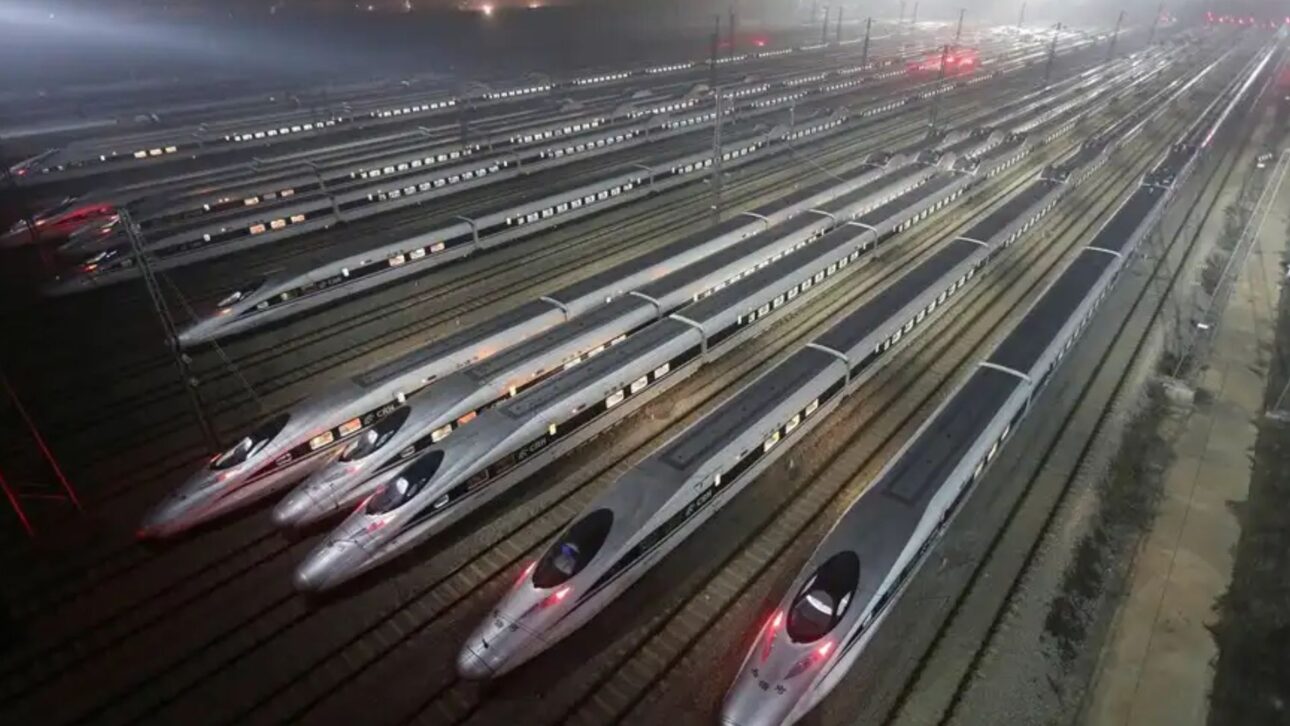
Although China has the largest network of high-speed trains in the world, with over 48,000 kilometers in operation, the sector faces recurring deficits and depends on substantial government subsidies.
Data from Peking University indicates that the revenue generated from passengers often covers only the interest on the debts accumulated during the construction of the lines.
Between 2005 and 2016, the debt of the state-owned China Railway soared from US$ 58 billion to US$ 576 billion, with about 70% of that amount related to high-speed expansion.
Profitable Routes Are the Exception
Even in developed countries, operating high-speed trains with financial balance is an exception.
According to reports from the World Bank and the Organization for Economic Cooperation and Development (OECD), only two routes in the world manage to record consistent profits: Paris–Lyon in France and Tokyo–Osaka in Japan.
In most cases, the public sector needs to inject resources regularly to ensure the sustainability of the systems.
The other routes, in different continents, struggle to meet the necessary demand and keep fares affordable for the public.
The Scenario of the High-Speed Train in Brazil
In Brazil, the initial proposal for the high-speed train envisions a line of approximately 380 kilometers between the capitals of Rio de Janeiro and São Paulo, with estimated investments of R$ 60 billion.
Minister Simone Tebet has already publicly admitted that there are no public resources available to fully finance the project, which opens up space for international consortia.
Currently, Chinese groups are negotiating partnerships with companies from Spain and the Middle East to make the project viable.
Demand and Ticket Costs Challenge Viability
The economic viability of this endeavor, however, is a topic of intense debates.
According to an analysis by the National Land Transport Agency (ANTT), a high-speed train in Brazil would need at least 6 to 9 million passengers per year just to achieve financial balance.
The Rio–São Paulo corridor, which concentrates two of the largest metropolitan regions in the country, transports about 7 million passengers annually by air bridge — one of the busiest routes in the world, with fares starting at R$ 250 when purchased in advance.
Despite these figures, projections for the high-speed train are even more ambitious.
According to Bernardo Figueiredo, CEO of TAV Brasil, official estimates indicate up to 25 million passengers per year, even with tickets expected to be around R$ 500.
This amount, significantly higher than what airlines charge, raises doubts about public acceptance and the long-term sustainability of the project.
The high cost of tickets may also restrict access to a more limited segment of the population, which limits the potential for democratizing high-speed transportation.
Technical and Geographical Obstacles
In addition to demand, Brazil’s geography presents considerable technical and financial obstacles.
The rugged terrain between Rio de Janeiro and São Paulo, filled with mountains and valleys, requires highly complex construction works, such as tunnels and viaducts, which make the project more expensive.
Studies from the Fraunhofer Institute in Germany show that in areas with rugged terrain, the construction cost per kilometer can double, reaching over US$ 66 million in the most extreme cases.
In the Brazilian scenario, this factor tends to make investment even higher and prolong the financial return time.
International Comparison and Model Limits
International comparisons indicate that high-speed trains are more viable in densely populated regions with distances between 200 and 500 kilometers.
According to the International Union of Railways (UIC), these corridors ensure greater train occupancy and higher operational efficiency.
In Brazil, only the Rio–São Paulo axis approaches these conditions; however, it still faces limitations.
Other routes of national interest, such as São Paulo–Brasília or Belo Horizonte–Salvador, exceed 1,000 kilometers and cross areas of low population density, further complicating the financial viability of the high-speed train.


Alternatives to the High-Speed Train for Brazil
In light of these challenges, experts suggest alternatives more suited to Brazilian reality.
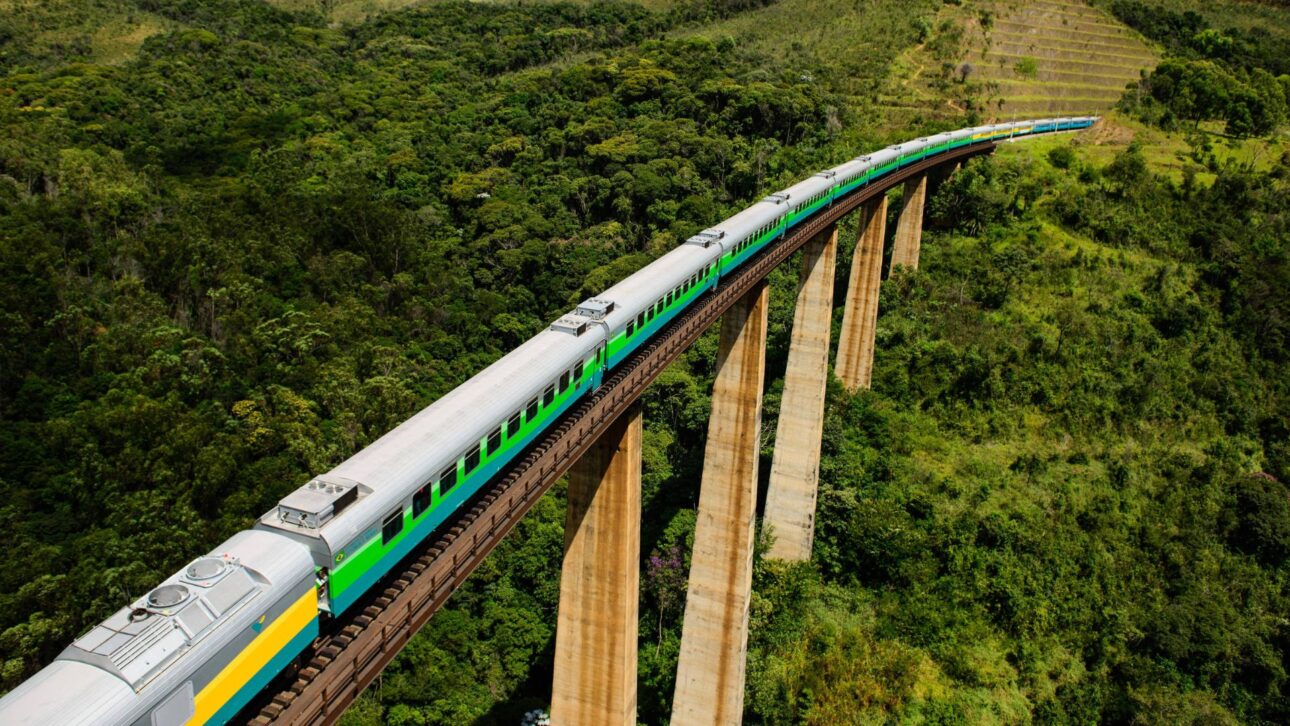
One of them is investing in conventional fast trains, which operate at speeds between 160 and 200 km/h, requiring fewer resources and able to utilize existing railway segments.
The Expresso Pequi project, planned to connect Brasília and Goiânia, is an example: its 210-kilometer extension would have an initial cost of R$ 9.5 billion, but the study indicated a need for nearly three decades of deficit operation to achieve balance.
Another path advocated by analysts is the expansion of the railway network for cargo transportation, a sector considered strategic for the national economy.
Currently, about 65% of Brazilian cargo is transported by highways, while only 15% circulates via railways.
The Chinese interest in integrating Brazil into the New Silk Road specifically prioritizes the export of commodities, connecting Brazilian infrastructure to the international flow of goods.
Cost-Benefit and Future of the High-Speed Train in the Country
As the debate progresses, the question remains about the cost-benefit of “tearing” through Brazil with the high-speed train, in light of unprofitable international experiences and a national context that presents technical, financial, and demand challenges.
Amid so many uncertainties, the question remains: should the country bet on the high-speed train or invest in alternatives that are more compatible with its needs and limitations?









Seja o primeiro a reagir!