





 Portuguese
  English
  Spanish
  4 min of reading
  1 comment


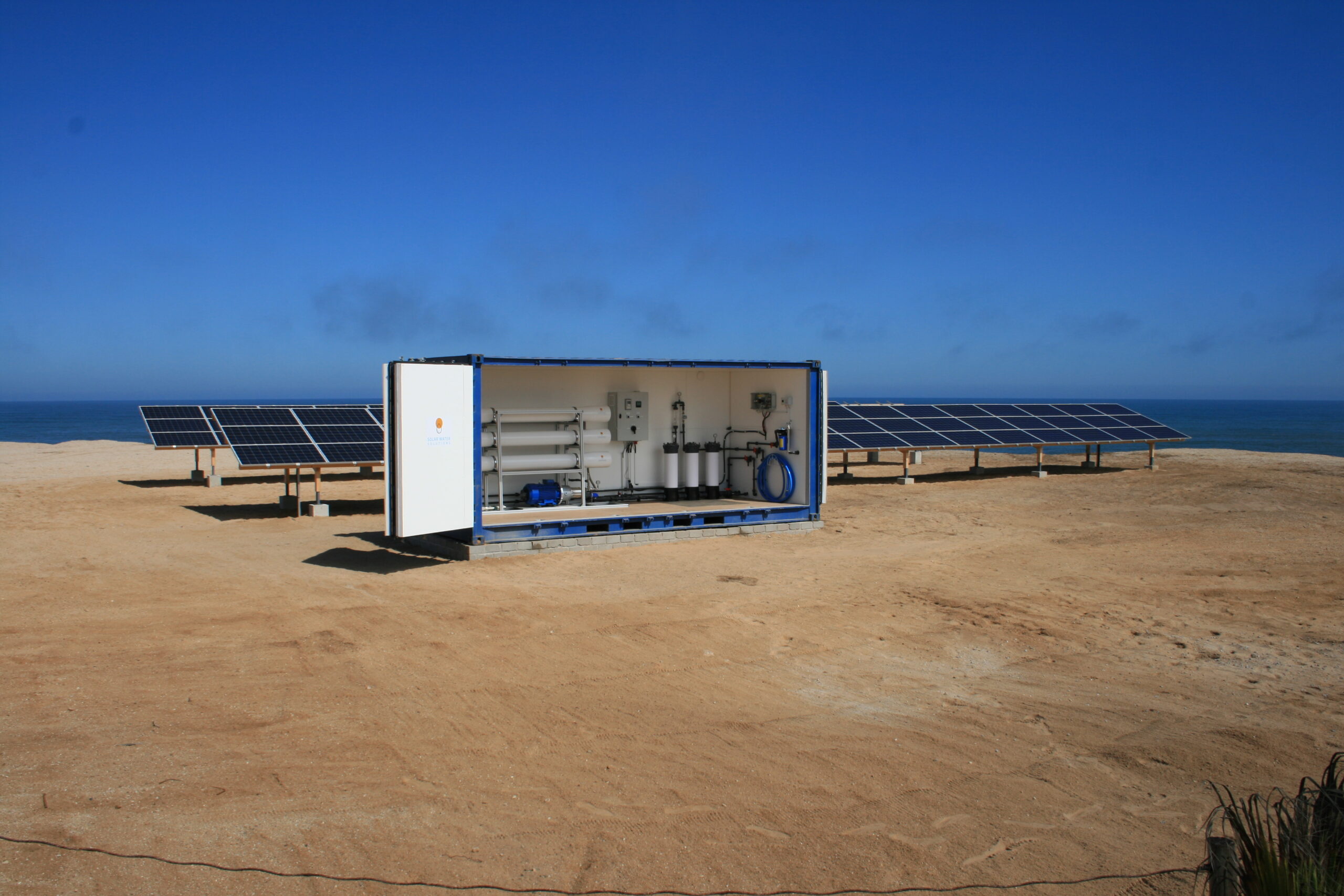


Project In Eastern Kenya Uses Solar Powered Desalination To Produce More Than 8,000 Liters Of Drinking Water Per Day In Area Without Grid Electricity.
In Kitui County, in eastern Kenya, a semi-arid region marked by long periods of drought, brackish wells, and near-total lack of infrastructure, a project implemented in 2018 has radically changed the local population’s relationship with water. In partnership with World Vision Kenya, the Finnish company Solar Water Solutions installed a solar-powered desalination unit capable of producing up to 8,000 liters of drinking water per day, without relying on grid electricity or fossil fuels.
The initiative serves rural communities that, until then, depended on contaminated or saline sources, forcing families to walk kilometers daily in search of water unfit for human consumption. The new plant not only ensures safe water but also redefines the role of solar technology in regions vulnerable to extreme water stress.
How Solar Desalination Works In Kitui
The system installed in Kitui uses SolarRO technology, designed to operate in off-grid locations. Solar panels directly power the pumps and reverse osmosis modules, eliminating the need for diesel generators or large batteries.
-
Motorola launched the Signature with a gold seal from DxOMark, tying with the iPhone 17 Pro in camera performance, Snapdragon 8 Gen 5 that surpassed 3 million in benchmarks, and a zoom that impresses even at night.

-
Satellites reveal beneath the Sahara a giant river buried for thousands of kilometers: study shows that the largest hot desert on the planet was once traversed by a river system comparable to the largest on Earth.

-
Scientists have captured something never seen in space: newly born stars are creating gigantic rings of light a thousand times larger than the distance between the Earth and the Sun, and this changes everything we knew about stellar birth.

-
Geologists find traces of a continent that disappeared 155 million years ago after separating from Australia and reveal that it did not sink, but broke into fragments scattered across Southeast Asia.


The water gathered from local wells, naturally brackish, goes through multiple filtration stages until it meets international drinking water standards. The operational capacity is around 1,200 liters per hour, allowing continuous supply throughout the day, even in communities with gradual population growth.
Unlike large industrial desalination plants, the system was designed for community scale, with simplified maintenance and operation adapted to the conditions of the African semi-arid region.
A Region Where Water Exists But Is Not Potable
Kitui County faces a common paradox in arid areas: groundwater available but unfit for consumption. The natural salinization of aquifers and mineral contamination render many wells unusable for drinking, cooking, or preparing food.
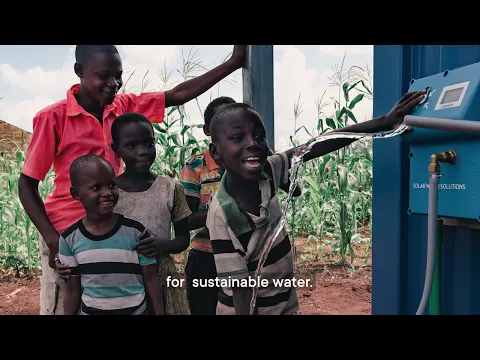

Before the installation of the solar unit, outbreaks of gastrointestinal diseases, infections, and malnutrition were directly associated with the consumption of contaminated water. The arrival of desalination immediately altered this scenario, reducing health risks and increasing water security for local schools, families, and health posts.
Solar Energy Replaces Diesel And Reduces Operational Costs
One of the central differentiators of the project is total energy independence. In regions like Kitui, the cost of diesel and supply logistics make conventional water pumping and treatment systems unfeasible.
With operations based solely on solar energy, the cost per treated liter decreases dramatically over time, making the model sustainable not only environmentally but also economically. This allows water to be distributed at affordable prices or, in some cases, free for community institutions.

Moreover, the absence of direct emissions positions the project as a solution aligned with global climate change mitigation targets.
Direct Social Impact On Served Communities
Regular access to drinking water has led to profound changes in local routines. Women and children, traditionally responsible for water collection, have started to dedicate more time to education, agriculture, and productive activities.
Schools benefiting from the system managed to maintain regular student attendance, while small farmers began using part of the treated water for controlled irrigation of community gardens, strengthening food security.
According to World Vision Kenya, the project also serves as an educational platform, teaching concepts of water management, rational water use, and basic system maintenance.
A Replicable Model For Areas Without Grid Electricity
The success in Kitui has transformed the solar desalination unit into a replicable model for other areas of Kenya and countries facing similar challenges, such as Ethiopia, Tanzania, and arid regions of the Middle East.

The proposal is clear: to bring drinking water where traditional infrastructure does not reach, using renewable sources and modular technologies. Instead of large centralized projects, the focus is on distributed, resilient, and territory-adapted solutions.
Desalination As A Response To The Advancement Of The Global Water Crisis
The Kitui project emerges in a broader context of global water crisis. With rising temperatures, irregular rainfall, and population growth, conventional supply solutions are becoming increasingly ineffective in vulnerable regions.
Solar desalination, once viewed as expensive or experimental, is starting to gain traction as a viable alternative for isolated communities. The case of Kenya shows that, when combined with renewable energy and local management, technology can move from being a promise to becoming everyday reality.
In Kitui, water that once represented scarcity and risk has come to symbolize autonomy, health, and climate adaptation. And perhaps most significantly: without wires, without fuel, and without relying on networks that never reached there.








No Brasil, desde 2012, o Programa Água Doce (PAD) do Governo Federal e Governos Estaduais já implantou mais de 1.300 sistemas de tratamento de água por dessalinização similares a este da matéria, em comunidades rurais do semiárido brasileiro nos 10 estados do Nordeste e Minas Gerais.