





 Portuguese
  English
  Spanish
  5 min of reading
  0 comments



Railway Project Advances After Regulatory Approval, Foresees Billion-Dollar Concession, Connection Between Espírito Santo and Rio de Janeiro, and Bets on Logistical Integration with Ports, Productive Areas, and Industrial Poles, While Government Structures Auction Model and Timeline for 2026.
The future EF-118 railway, also called the Southeast Railway Arc, has advanced in the concession process after the National Land Transport Agency (ANTT) approved the studies that underpin the project.
The total planned route sums 575 kilometers and connects Espírito Santo to Rio de Janeiro, focusing on logistical integration between productive areas, industrial poles, and port terminals.
With the decision, the proposal now goes to the analysis of the Federal Court of Accounts (TCU), a mandatory step before the publication of the bidding notice.
-
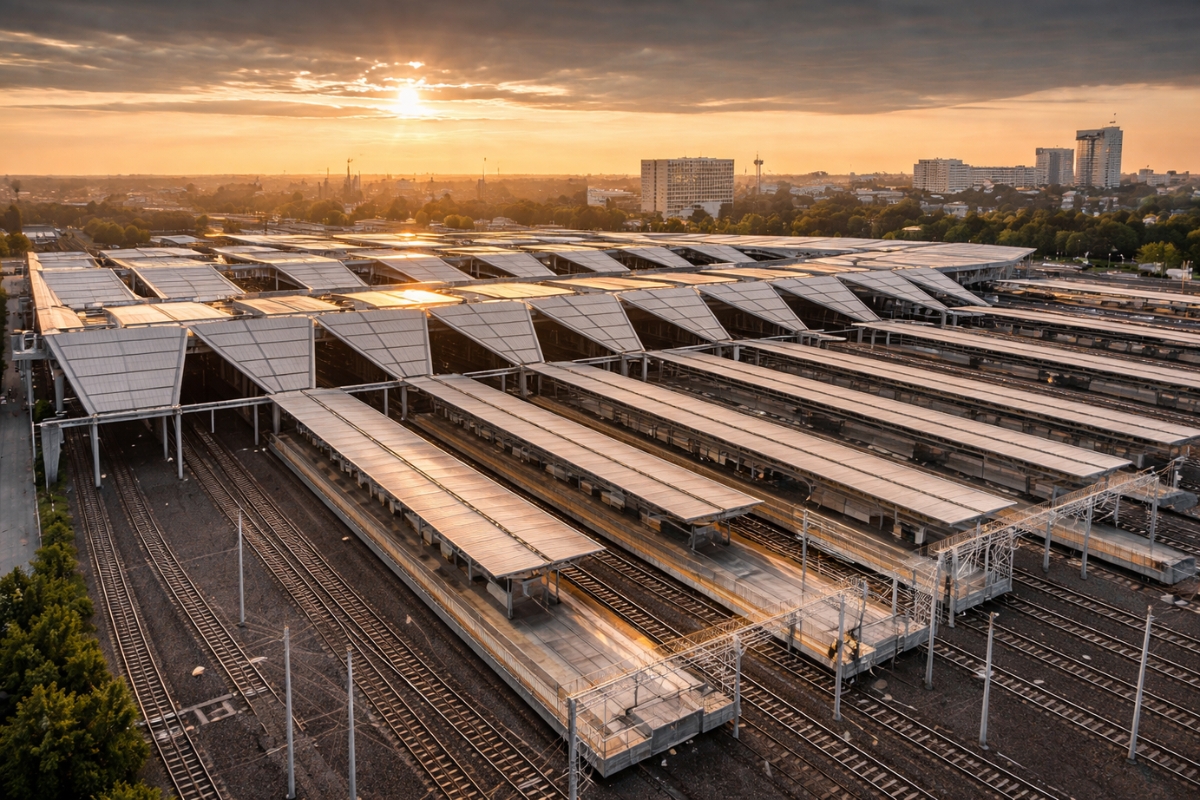
In A European City, The Country’s Largest Railway Junction Was Modernized Without Closing Its Doors, Kept Trains Running During Years Of Construction, Now Serves Up To 60,000 Passengers Per Day, And Installed Solar Panels That Generate About 30% Of Its Energy
-
Famous Brazilian Railway May Become a Parking Lot

-
The Country of “Punctual As a Train” Admits It Has Lost Control: High-Speed Trains Delay, Stop, Disappear from the Map and Turn 6-Hour Trips into 10, While Deutsche Bahn Promises Restructuring in 2026 But Faces 19th Century Infrastructure, Staff Shortages and Sections Closed for Months

-
With an Investment of R$ 700 Million in One of the Country’s Main Rail Networks, VLI Reinforces Infrastructure, Receives 8 New Locomotives, and Expands the Corridor Connecting 7 States, Boosting Jobs and the Transportation of Grains, Ore, and Oil Products to the Port of Santos


According to the timetable released by the federal government, the expectation is to launch the concession notice in March 2026, with the auction still in the same year.
The project is part of the railway portfolio planned for the period and is treated by the Ministry of Transport as one of the main initiatives in the Southeast, a region that concentrates a significant part of the country’s cargo flow.
Technical Assessment by ANTT Releases New Regulatory Phase
The ANTT approval refers to the Technical, Economic, and Environmental Viability Study and the preliminary modeling of the concession.
The deliberation took place in a meeting of the agency’s board and was unanimously agreed upon, according to public records of the process.
From this approval, the technical material is sent to the TCU, responsible for assessing the consistency of the assumptions before the bidding phase.

In the government’s assessment, this phase marks the transition of the project from structuring to external control.
The processing in the court is considered crucial to confirm the calendar and final parameters that will be presented to the market.
Route of EF-118 and Implementation in Phases
The complete design of the EF-118 foresees the connection between Santa Leopoldina (ES) and Nova Iguaçu (RJ).
For the concession, however, the implementation has been divided into phases.
The first segment, treated as mandatory, connects Santa Leopoldina to São João da Barra (RJ), in the Northern Fluminense.
This stretch has an estimated length between 246 and 250 kilometers, according to public documents and specialized reports.
The segmentation was adopted to concentrate initial investments in a stretch considered priority from a logistical point of view.
The next phase, which would advance to Nova Iguaçu, may be incorporated later, depending on decisions of the granting authority and the contractual conditions set forth.
According to technicians involved in the modeling, the division into phases aims to reduce implementation risks and allow the railway to operate gradually.
The public studies, however, do not detail specific timelines for the execution of the second phase.
Port of Açu as Logistical Axis of the Initial Segment
The initial stretch of the railway is destined for the Port of Açu, identified in studies as the main logistical pole of the initial phase.
The private port complex concentrates industrial activities and support for sectors such as mining, oil, and offshore logistics.
The rail link is presented as an alternative to expand land access to the port, which is currently served mainly by highways.

Additionally, the route was designed to cross areas with agricultural and mineral production, both in Espírito Santo and northern Rio de Janeiro.
Institutional documents also indicate the possibility of integration with existing railways, such as the Vitória a Minas Railway.
However, the consulted public materials do not specify how this interconnection would occur in practice.
There is also no detail on the estimated volumes of cargo associated with each type of product.
Estimated Investment and Railway Concession Model
The amount associated with the project appears in different official communications and reports in the range of R$ 4.5 billion.
The amount mainly considers the initial stretch of the railway.
This value is linked to the works, systems, and operational conditions set forth in the concession contract.
The proposed model foresees a public support mechanism.
As disclosed by the Ministry of Transport, the auction should adopt a criterion whereby the competitor that requests the lowest amount of public funding to make the project viable wins.
The structure is presented by the government as an alternative to attract investors to ventures with high initial costs.
In addition, part of the financial viability is associated with resources from renegotiations and contractual renewals of other railway concessions.
Industry reports indicate that these additional contributions are part of the strategy to reduce the economic imbalance pointed out in the studies, especially at the start of operations.
Analysis in TCU and Expectation for the Auction
With the submission to the TCU, the project enters a phase of analysis that may result in adjustments to the modeling before the publication of the bidding notice.
The government maintains the expectation for the notice in March 2026. The timetable, however, depends on the pace of the processing in the court and any recommendations from the oversight body.
Until the conclusion of this process, the railway remains in the planning phase, with no commencement of works.
The realization of the project will depend on market interest in the presented conditions and the signing of the contract after the auction.









Seja o primeiro a reagir!