





 Portuguese
  English
  Spanish
  5 min of reading
  0 comments


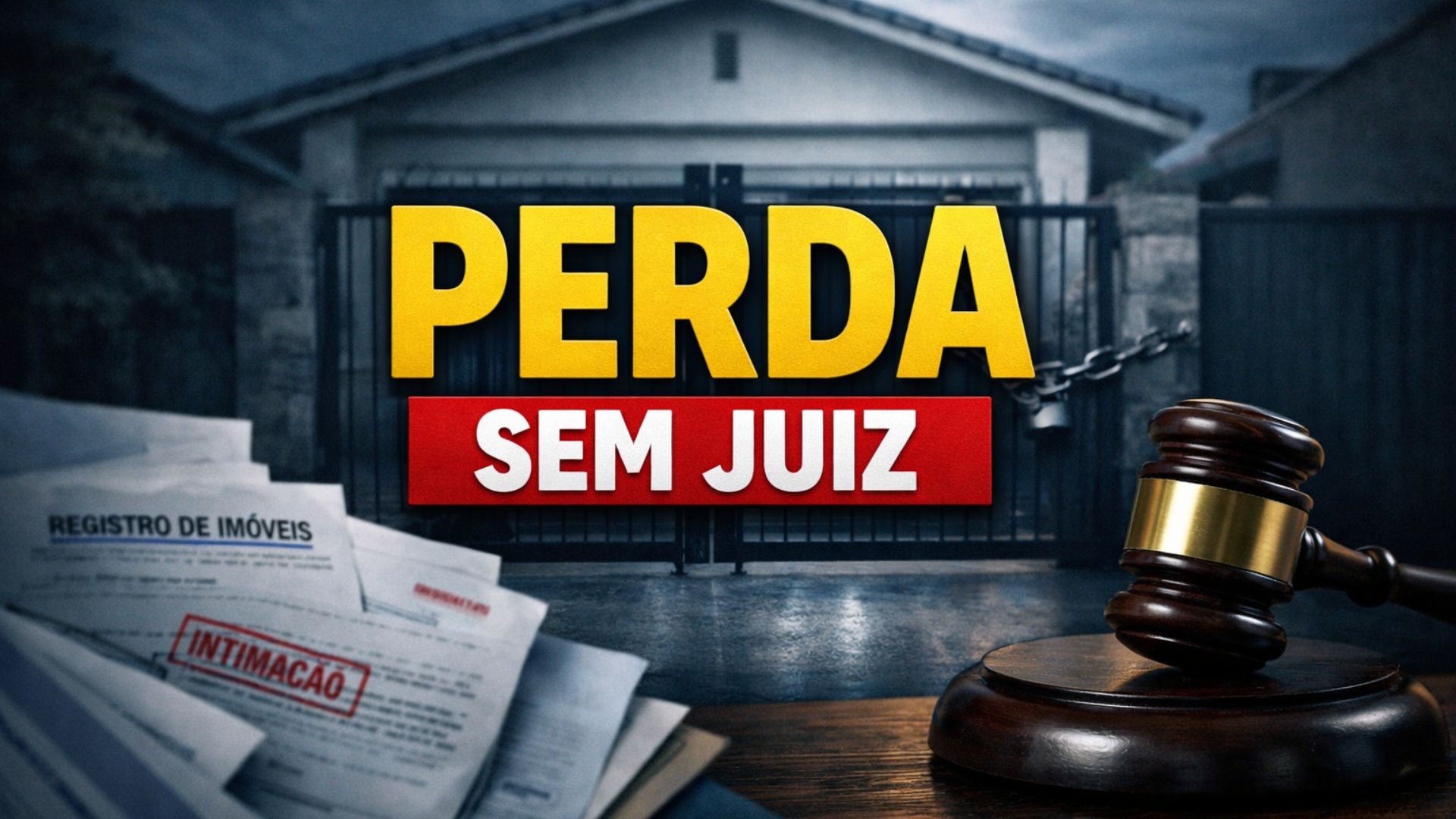
Foreclosure Allows Quick Recovery of Properties Financed by Banks, with Short Deadlines, Notarial Procedure, and Direct Impacts on Ownership and Possession of the Asset, Including in Residential Contracts, According to the Rules of Law 9.514 and Recent Judicial Decisions.
Law 9.514, in effect since 1997, created the system of foreclosure of properties in Brazil and authorized the collection and recovery of the asset to take place, largely, outside the Judiciary.
In this model, the procedure primarily unfolds within the real estate registry office and can culminate in the consolidation of ownership in the name of the creditor if the default is not regularized within the legal deadlines.
In practice, the loss of the property can occur within a few months from the first delay, depending on the sequence of notarial acts and the type of contract signed.
-
The noise law will no longer be in effect at 10 PM starting in June with a new rule valid during the 2026 World Cup.

-
The Chamber opens a debate on driver’s licenses at 16 years old as part of a reform that includes around 270 proposals to change the Brazilian Traffic Code and may redesign rules for licensing, enforcement, and circulation in the country.

-
The new Civil Code could revolutionize marriages in Brazil with “express divorce” and changes that could exclude spouses from inheritance.

-
Banco do Brasil sues famous influencer for million-dollar debt and intensifies debate on delinquency, risks of seizure, and direct impact on Gkay’s credibility.


Although it is common to assert that the entire process occurs “without a court decision,” the legislation provides that the forced removal of the occupant of the property, when there is no voluntary eviction, depends on a specific court order.
How Foreclosure Works in Brazilian Legislation
In foreclosure, the debtor remains in direct possession of the property while fulfilling the contract, but the resolutory ownership is linked to the creditor until the debt is fully paid.
Only after the payment of the last installment does the property definitively transfer to the buyer’s name.
In case of default, the law allows the creditor to initiate an extrajudicial procedure to constitute the debtor in default.
If the debt is not regularized within the legal timeframe, ownership can be consolidated in the name of the creditor, paving the way for the sale of the property at an extrajudicial public auction.
Experts in real estate law often emphasize that this legal framework seeks to provide greater security to real estate credit by reducing the time and costs of recovering the asset in case of default, compared to the old model of judicial mortgage.
Notification of the Debtor and Start of the Notarial Procedure
The formal starting point of the procedure is the notification of the debtor carried out by the real estate registry office at the creditor’s request.
Law 9.514 determines that the debtor be notified to pay the overdue installments, those that will become due until the date of payment, in addition to contractual charges and expenses, within a period of fifteen calendar days.
The manner of this notification tends to be one of the most discussed aspects later in court.
Legal scholars and court decisions emphasize that personal notification is the rule, and that the use of public notice requires proof of real and documented attempts to locate the debtor.
When these requirements are not observed, the validity of the procedure may be questioned.
Housing Financing and Residential Property

In the case of financing intended for the acquisition or construction of residential property, the legislation provides for specific treatment.
Article 26-A of Law 9.514 establishes a differentiated procedure that extends the interval between notification and consolidation of ownership, adding to the initial timeframe provided in Article 26.
In practice, this special regime can result in a longer period for debt regularization before consolidation occurs, compared to contracts that do not qualify as residential housing financing.
Still, experts warn that even in these cases, the deadlines remain short and require immediate attention from the borrower.
Once the property is consolidated in the creditor’s name, the Superior Court of Justice has established that it is no longer possible to cure the default, leaving the debtor with only the alternatives provided by law for this stage of the procedure.
Extrajudicial Auctions and Rules Provided for in Law
Once ownership is consolidated, the creditor must promote the sale of the property through extrajudicial public auction.
Law 9.514 establishes deadlines for holding the first auction and, if there are no interested parties, for conducting a second auction, with different minimum value criteria.
At this stage, attention typically focuses on the regularity of the public notice, the publicity of the auction, and compliance with the required minimum value.
The Superior Court of Justice has decided that, although the law authorizes the sale at the value of the debt in the second auction, the purchase cannot occur at undervalued prices, under penalty of disproportionate harm to the debtor.
When the Property is Not Sold at Auctions
The original text indicated the possibility of the debtor losing the property and still being responsible for the debt.
This scenario, however, does not apply when the two auctions provided for in Law 9.514 are frustrated under the legal conditions.
In this specific case, Article 27, Paragraph 5 of the law establishes that the debt is considered extinguished, and the property remains definitively with the creditor.
This understanding has been reiterated in recent STJ decisions that dismiss the possibility of collecting remaining balances when there is no purchase in the two auctions.
On the other hand, when the property is sold for a value higher than the debt and the costs of the procedure, the legislation guarantees the debtor the right to receive the difference, known as overage.
This payment is often the subject of legal dispute when the debtor claims a lack of transparency in the accounting.
Main Judicial Disputes Involving Foreclosure
In the experience reported by attorneys working in the field, disputes involving foreclosure tend to concentrate on three main fronts: the regularity of the notification and the constitution of default, the correction of the amounts required to cure the default, and the strict compliance with the rules related to the auctions.
As the procedure is heavily based on registration acts, formal errors or information failures can have a direct impact on the outcome of the process.
From the moment the consolidation is registered in the property deed, the possibilities for reversal become more restricted, and the discussion often shifts to the validity of the acts already performed.
What to Observe from the First Delay in Payment
For those facing financial difficulties, the central point is that the deadlines provided for in Law 9.514 are objective and begin to produce relevant effects from the notarial notification.
In residential housing financing contracts, the window for regularization tends to be larger, but does not eliminate the risk of consolidation in a short period of time.
When the procedure moves to the auctions, specific rules regarding minimum values, deadlines, and publicity apply, in addition to the definition of any balance to be returned to the debtor.
Amid a technical and expedited process, the question remains whether the average borrower can understand all the stages of the procedure and the consequences of each act before the property is definitively transferred?









-

-

-

-

8 pessoas reagiram a isso.