





 Portuguese
  English
  Spanish
 6 min of reading
  0 comments



Designed to Operate with 260 Thousand Barrels Per Day, the Abreu e Lima Refinery Will Have a Second Refining Train, Its Own Photovoltaic Plant, Enhanced Supply of Diesel S10, and Thousands of Temporary and Permanent Jobs in the Suape Complex Region in Pernambuco, Boosting Local Work, Services, Qualification, and Income
The expansion of the Abreu e Lima Refinery places Pernambuco back at the center of Petrobras’s strategy for fuels and energy transition. With the construction of Refining Train 2, the unit located in the Suape Port Complex is set to double petroleum derivative processing, increasing from the current 130 thousand barrels per day to 260 thousand barrels by the end of the project. In practice, the refinery will account for up to 17% of the national demand for diesel S10, a high-value fuel crucial for Brazilian road transportation.
In addition to completing the originally planned configuration, Petrobras anchors the expansion of the Abreu e Lima Refinery in a package that combines an industrial investment of R$ 12 billion, the construction of its own photovoltaic plant, and mass generation of direct and indirect jobs. The expectation is to reach up to 15 thousand workers during the peak of construction and to expand the permanent workforce from 3 thousand to around 4 thousand formal positions, with priority given to qualified local labor.
Doubling Capacity and Focusing on Diesel S10

During the project presentation, Petrobras classified the Abreu e Lima Refinery as one of the most modern units in its refining park.
-
The rise in oil prices could ensure an extra revenue of R$ 100 billion for the Federal Government, indicates a recent economic study.

-
Naturgy begins an investment of R$ 1.6 million to expand the gas network in Niterói and benefit thousands of new residences and businesses.

-
A major turn in the Justice system suspends tax increases and directly impacts oil and gas companies in Brazil by affecting costs, contracts, and financial planning, leaving uncertain what could happen to the sector if these costs had increased.

-
Brava Energia begins drilling in Papa-Terra and Atlanta and could change the game by reducing costs in oil while increasing production and strengthening competitiveness in the offshore market.

The expansion has been designed so that about 70% of the total capacity is converted into diesel S10, in line with the growing demand for a low-emission fuel and higher technical requirements for the fleet of trucks and buses.
According to the company’s presidency, the combination of Refining Train 1, already in operation, and Refining Train 2, under construction, will allow the Abreu e Lima Refinery to become one of the country’s main production hubs for diesel S10, reducing the need for imports and reinforcing supply security.
The remaining 30% of the processed load will be converted into gasoline, LPG, and naphtha, maintaining the profile of derivatives aligned with the national market.
The logic is clear: by concentrating volume in diesel S10, the Abreu e Lima Refinery starts to produce precisely the derivative of greatest economic relevance for cargo transportation, logistics, and agribusiness.
This reinforces the unit’s role as a strategic asset, both for Petrobras and for Brazil’s fuel supply matrix.
Schedule, Contracts, and Resumption of Refining Train 2
The expansion project of the Abreu e Lima Refinery was stalled for years due to the investigations of Operation Car Wash, which directly affected the original works of the unit.
The turning point came with Petrobras’s decision to resume the plan to double capacity, with a staggered schedule until 2029.
Petrobras has already tendered and signed seven contracts for the construction of Refining Train 2, totaling R$ 8 billion in services and equipment.
The processing units were initiated simultaneously, but delivery will be phased over the coming years.
The atmospheric distillation unit number 1 has been operating since 2014, while unit number 2 is expected to be completed by the end of 2026, with startup advancing into the early months of 2027.
Only the new distillation unit will add 50 thousand barrels per day in processing capacity.
From there, other conversion and treatment units will come into operation until, in 2029, the Abreu e Lima Refinery reaches the projected level of 260 thousand barrels per day.
The difference compared to the first cycle of works is the declared focus on planning, governance, and cost predictability, under direct oversight from Petrobras’s management.
Photovoltaic Plant and Energy for the Abreu e Lima Refinery
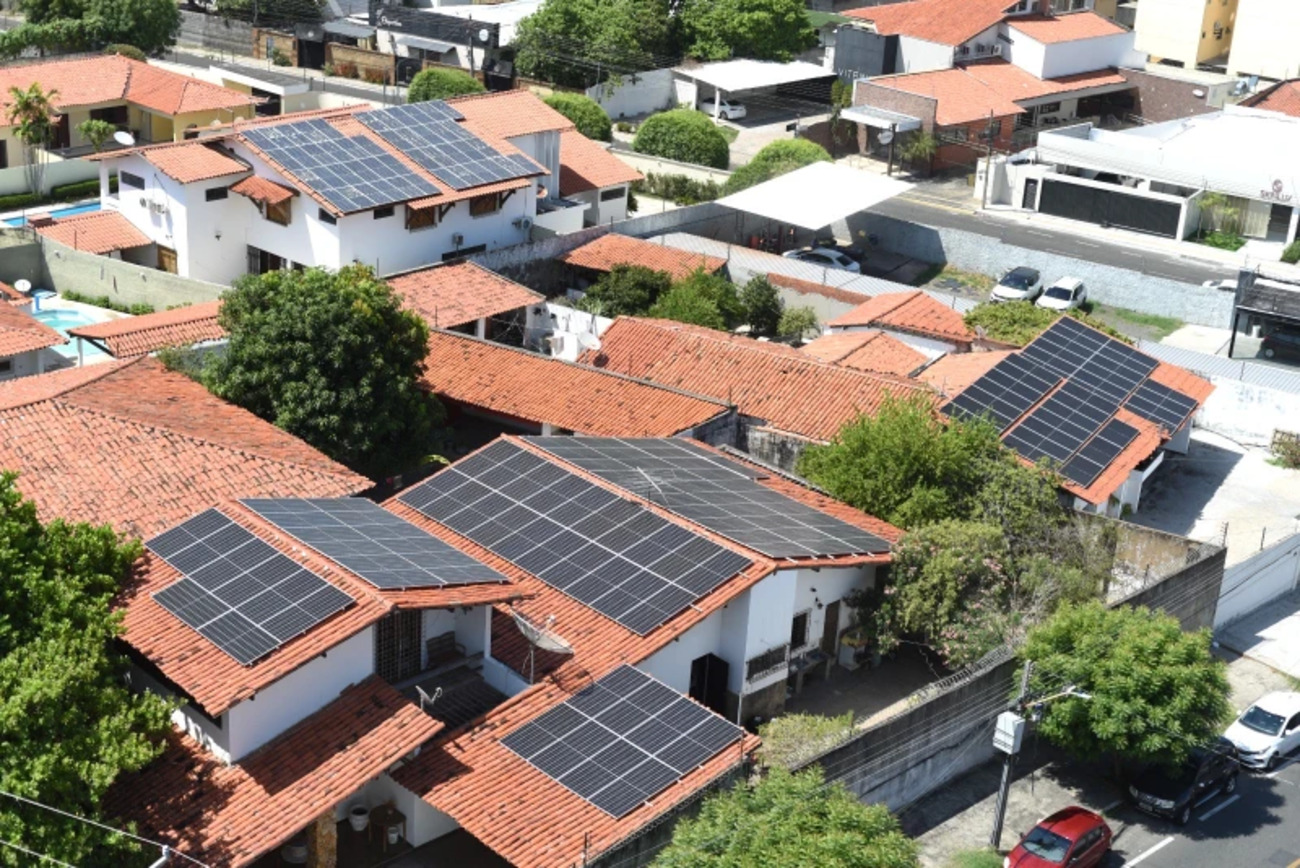
One of the central elements of the new investment package is the photovoltaic plant that will be built to meet part of the electricity consumption of the Abreu e Lima Refinery.
The project foresees a solar plant with an installed capacity of 12 megawatts, equivalent to approximately 10% of the energy required to operate the unit in a typical month.
In practice, the integration between the photovoltaic plant and the Abreu e Lima Refinery addresses two fronts: it reduces the operational cost of the refinery over time and contributes to Petrobras’s decarbonization agenda.
By producing part of the energy within the complex itself, the company reduces dependence on the grid and incorporates photovoltaic plant as a structural component of industrial expansion.
In a scenario of gradual energy transition, the investment in a large hub for diesel S10 associated with its own photovoltaic plant signals that Petrobras is trying to combine lower sulfur fossil fuels with renewable generation at the same facility.
The Abreu e Lima Refinery ends up serving as a showcase for this hybrid model of expansion, which can be replicated in other units of the refining system in the future.
Jobs, Qualification, and Regional Impact in Pernambuco
The R$ 12 billion package linked to the Abreu e Lima Refinery has a direct impact on the economy of Pernambuco.
Petrobras estimates that, at the peak phase of the construction of Refining Train 2, the workforce at the expansion site could reach 15 thousand jobs, combining direct positions, service providers, and roles associated with construction. Today, 5.7 thousand people are already working on the expansion.
In operation, the Abreu e Lima Refinery employs about 3 thousand workers and is set to reach up to 4 thousand as soon as the project is completed.
To support this surge in demand, Petrobras has structured a professional qualification program linked to the unit.
In Pernambuco, the Autonomy and Income Program offers over 7.3 thousand free vacancies in courses for mechanics, electricity, instrumentation, construction, and metallurgy, with 800 students already graduated by September.
The design is one of a closed cycle: the work of the Abreu e Lima Refinery demands specialized labor, the program trains local residents, and a significant portion of these professionals tends to be absorbed, either in heavy construction or in the continuous operation of the refinery.
Pernambuco is now concentrating a hub of high-skilled industrial jobs, anchored in a strategic asset of Petrobras, with a multiplier effect on services, logistics, housing, and municipal and state revenue.
Strategic Role of the Abreu e Lima Refinery in the Fuel Network
With Refining Train 2 in operation, the Abreu e Lima Refinery consolidates its role as a vertex of the fuel network in the Northeast.
The ability to supply up to 17% of the national demand for diesel S10 reduces Brazil’s exposure to imports of this derivative and reinforces the use of the Suape Complex as a logistics hub for the distribution of derivatives.
At the same time, the project consolidates Pernambuco as a significant axis of the national refining strategy, alongside other major Petrobras units.
The combination of Abreu e Lima Refinery, dedicated photovoltaic plant, and integrated port infrastructure reshapes the energy investment map in the state, with the potential to attract new industrial projects that rely on diesel, gasoline, LPG, and naphtha in large volumes.
Petrobras’s bet on the Abreu e Lima Refinery closes a cycle of uncertainties, reactivates an asset marked by the Car Wash scandals, and reposition the venture as a platform for growth in refining, jobs, and energy transition.
If the schedule until 2029 is met, the refinery is likely to become one of the main symbols of the new phase of investments of the state-owned company in the Northeast.
For you, will the expansion of the Abreu e Lima Refinery and the entry of the photovoltaic plant truly change the economy of Pernambuco, or will the greater impact be on the national supply of diesel S10?








-

Uma pessoa reagiu a isso.