





 Portuguese
  English
  Spanish
  5 min of reading
  0 comments


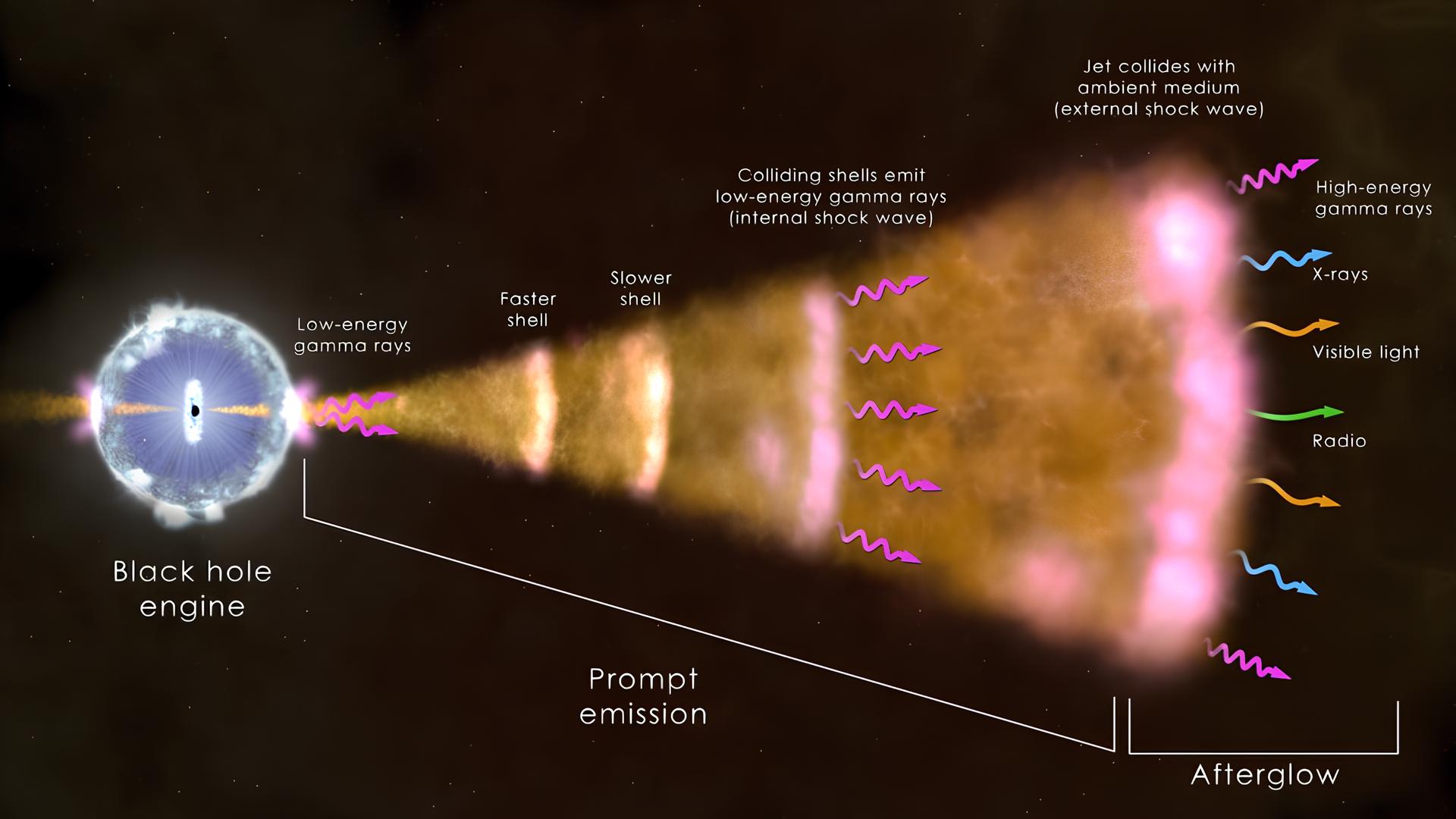
Cosmic Explosion Detected in 2022 Released Unprecedented Energy, Saturated Space Sensors, and Affected the Earth’s Ionosphere; Scientists Explain Why GRB 221009A Went Down in History.
On October 9, 2022, space telescopes operated by NASA and the European Space Agency (ESA) recorded an unprecedented event in the history of modern astronomy. The explosion, identified as GRB 221009A, was initially detected by the Fermi Gamma-ray Space Telescope and the Neil Gehrels Swift Observatory, both from NASA. The phenomenon originated in a galaxy located about 2.4 billion light-years from Earth, in the direction of the constellation Sagitta.
Hours later, additional data began to arrive from ground-based and space observatories, including the James Webb Space Telescope (JWST), the European Southern Observatory (ESO), and global gamma-ray monitoring networks. The consensus among scientists was quick: it was the most energetic gamma-ray event ever observed since the dawn of the space age.
What Is a GRB and Why Was This Case Different from Everything
GRBs (Gamma-Ray Bursts) are extremely energetic explosions associated, in most cases, with the collapse of supermassive stars or the merging of compact objects, such as neutron stars. They release more energy in seconds or minutes than entire stars produce over billions of years.
-
Motorola launched the Signature with a gold seal from DxOMark, tying with the iPhone 17 Pro in camera performance, Snapdragon 8 Gen 5 that surpassed 3 million in benchmarks, and a zoom that impresses even at night.

-
Satellites reveal beneath the Sahara a giant river buried for thousands of kilometers: study shows that the largest hot desert on the planet was once traversed by a river system comparable to the largest on Earth.

-
Scientists have captured something never seen in space: newly born stars are creating gigantic rings of light a thousand times larger than the distance between the Earth and the Sun, and this changes everything we knew about stellar birth.

-
Geologists find traces of a continent that disappeared 155 million years ago after separating from Australia and reveal that it did not sink, but broke into fragments scattered across Southeast Asia.


However, GRB 221009A exceeded any known parameter. Studies published in the scientific journals Science and Nature Astronomy estimated that the explosion released an isotropic energy close to 10⁵⁵ ergs, an amount equivalent to about 1,000 times all the energy that the Sun will emit during its roughly 10 billion years of life. All of this happened in just a few minutes.
The intensity was so extreme that various gamma-ray sensors became temporarily saturated, a rare occurrence even for this type of phenomenon.
Direct Impact on Earth: The Ionosphere Felt the Explosion
One of the most impressive aspects of GRB 221009A was the fact that its effects were detected in the Earth’s atmosphere, something never observed with such clarity.
Researchers from Stanford University, in collaboration with NASA, confirmed that the explosion caused a measurable disturbance in the ionosphere, the layer of Earth’s atmosphere ionized by solar radiation.
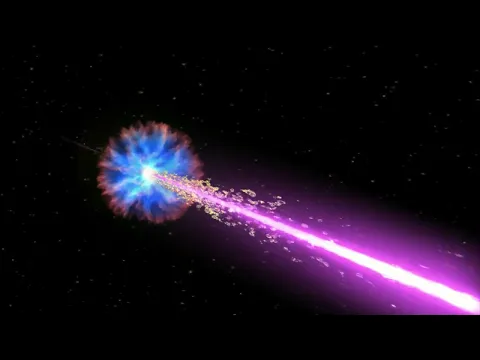

Instruments monitoring radio communications recorded changes in electron density, a direct result of the flood of gamma rays that crossed the planet.
Even occurring billions of light-years away, the event demonstrated that extreme cosmic explosions can leave detectable “signatures” on Earth, reinforcing scientific concerns about even closer events in the future.
Why GRB 221009A Became Known as “BOAT”
Among astronomers, the phenomenon gained a nickname that quickly became popular: BOAT — Brightest Of All Time. The designation is not exaggerated.
According to data from Fermi, the brightness of GRB 221009A surpassed that of any other cataloged GRB by dozens of times. At certain wavelengths, the emission was so intense that it temporarily eclipsed stable sources of deep sky light, such as quasars and active galactic nuclei.
This level of luminosity allowed the event to be studied with a degree of detail never before possible, opening a new window into the extreme physics of the Universe.
The Stellar Collapse Behind the Explosion
Spectroscopic analyses conducted by the James Webb Space Telescope indicate that GRB 221009A was caused by the collapse of a supermassive star, with a mass many times that of the Sun.
As it exhausted its nuclear fuel, the star underwent gravitational collapse, forming a black hole and releasing relativistic jets almost perfectly aligned with Earth.
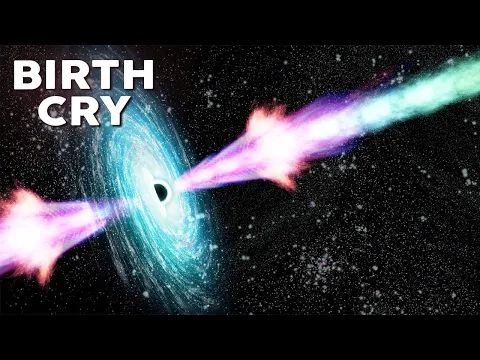
This specific orientation explains why the event was so intense from our perspective. Small variations in the angle of these jets can mean the difference between a common GRB and an extreme event like that recorded in 2022.
What Scientists Learned from This Unique Event
GRB 221009A provided crucial data for areas beyond traditional astrophysics. Researchers from the Max Planck Institute, University of Cambridge, and NASA Goddard Space Flight Center point out three main advancements:
First, the event allowed for testing theoretical models on particle acceleration at energies near the known physical limit. Second, it helped refine understanding of the internal structure of relativistic jets. Third, it provided new evidence on how cosmic explosions can interact with magnetic fields and interstellar media.
Additionally, the phenomenon reignited debates about the risks of a GRB occurring relatively close to Earth, something that, although rare, could have catastrophic consequences for the biosphere.
Is There a Real Risk to Earth?
According to NASA and ESA, GRB 221009A did not pose a direct danger to the planet due to the enormous distance involved. However, the fact that its effects were detected in the ionosphere underscores the need for ongoing monitoring of such events.
Previous studies indicate that a powerful GRB occurring within a few thousand light-years could cause severe damage to the ozone layer and affect entire ecosystems.
The 2022 event, therefore, serves as a scientific alert and not as an immediate cause for alarm.
Why This Event Changes the Way We Look at the Universe
GRB 221009A went down in history not only for its impressive numbers but for showing, concretely, the real scale of cosmic violence. It proved that the Universe is still capable of surprising us even after decades of advanced observations.
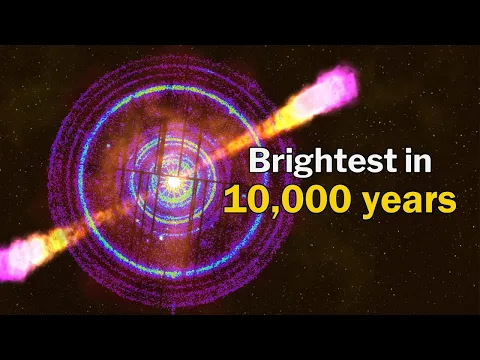
For astronomy, the event represents a watershed: an extreme natural laboratory, observed in real time, that will help calibrate instruments, revise theories, and plan future space missions.
In short, the explosion of October 9, 2022, redefined the limits of what was believed possible in the cosmos and reminded humanity that, in the face of the Universe, we are still spectators of forces far beyond our everyday scale.








-

Uma pessoa reagiu a isso.