





 Portuguese
  English
  Spanish
  5 min of reading
  0 comments


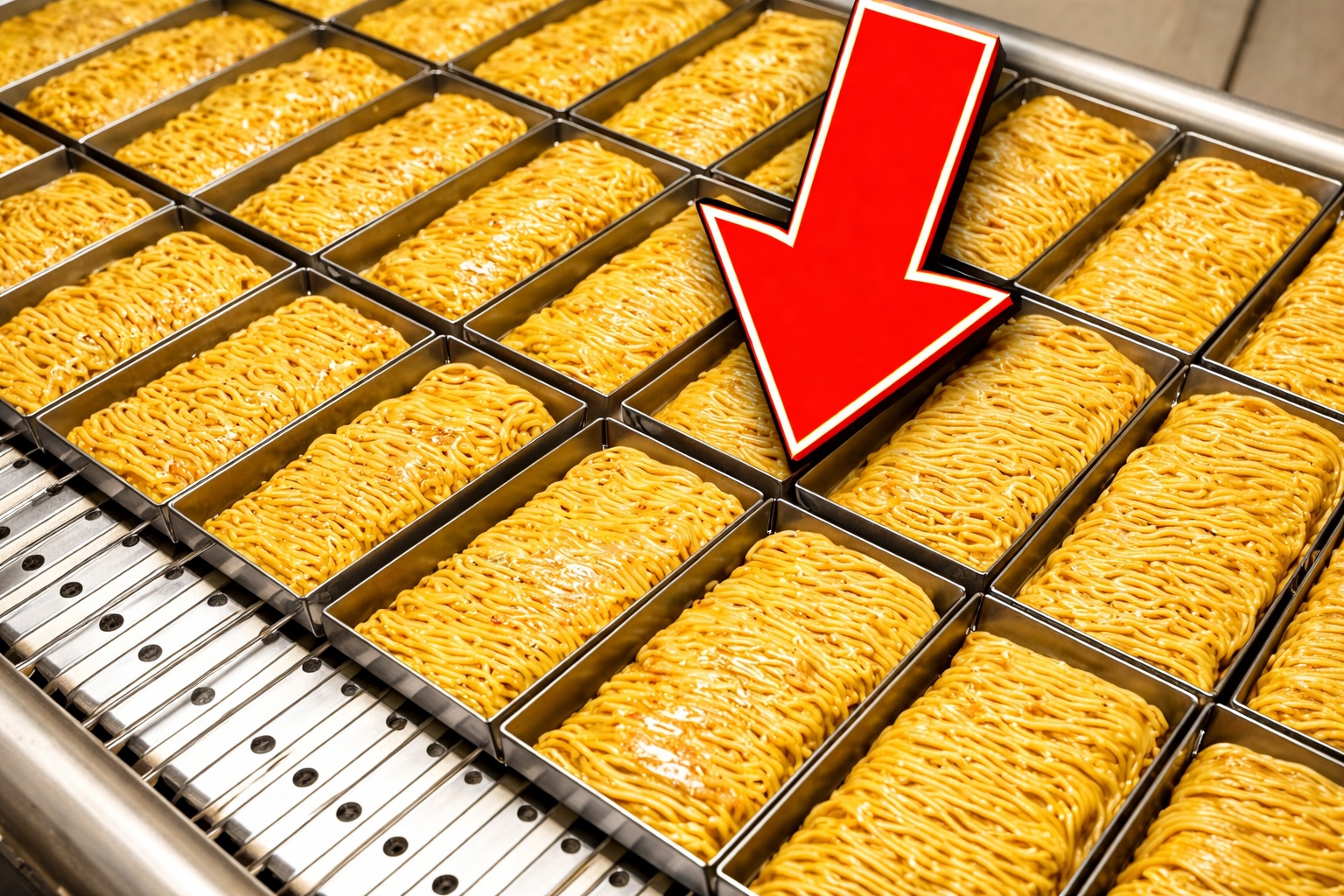
Frying At 140 °C, Accelerated Dehydration And 24h Lines Produce Billions Of Indomie Packages Per Year At The Largest Instant Noodle Plant In Indonesia.
The industrial production of instant noodles that supplies dozens of countries primarily takes place at the facilities of the company Indofood, which controls the brand Indomie. The company is based in Jakarta, Indonesia, and operates industrial complexes in different regions of the country, including West Java and East Java. According to public corporate reports and data presented by Indofood Sukses Makmur Tbk., the company produces billions of packages of instant noodles per year, serving more than 100 international markets in Asia, Africa, the Middle East, Europe, and Latin America.
Indomie was launched in 1972 in Indonesia and has since become one of the most widespread food products in Southeast Asia. Industrial expansion gained momentum in the 1990s and 2000s, keeping pace with Indonesia’s population growth and the consolidation of the country as one of the largest consumers of instant noodles worldwide. According to data from the World Instant Noodles Association (WINA), Indonesia consistently ranks among the top three global markets for instant noodles, behind only China and, in some years, competing with India for position.
The Industrial Scale Behind Billions Of Packages Per Year
Production takes place in highly automated plants that operate continuously, 24 hours a day, with multiple parallel lines. Each industrial line is capable of producing thousands of noodle blocks per hour. In large complexes, dozens of lines operate simultaneously.
-
With 74% of companies facing difficulties in hiring, technicians and engineers in renewable energy are becoming scarce in Brazil and are essential to support the expansion of solar, wind, and green hydrogen projects.

-
Historic bankruptcy of Centauro shocks the market, and the century-old company puts more than 500,000 products, machines, and complete infrastructure up for online auction.
-
New shoe factory in Ceará is expected to create 400 jobs and strengthen the local economy.
-
No one imagined it, but a mixture of sawdust with a mineral that fights fires surprises scientists with a result that changes the course of fire-resistant construction.
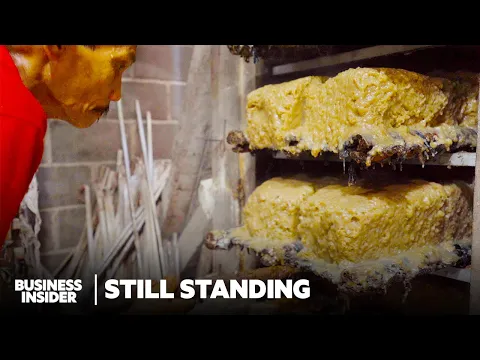

The process begins with mixing enriched wheat flour, water, and alkaline additives that ensure elasticity and texture. Large industrial mixers prepare dough in rapid and standardized cycles. Then, the dough passes through rolling cylinders that progressively reduce its thickness until a uniform sheet is formed.
This sheet is mechanically cut into thin, wavy strands. The waviness is crucial for allowing proper expansion during the final cooking by the consumer.
Steaming And Controlled Frying Above 140 °C
Once shaped, the noodles undergo an initial stage of steaming. This pre-cooking partially gelatinizes the starch and stabilizes the dough structure.
In the next stage, frying occurs in vegetable oil at temperatures that typically range between 140 °C and 160 °C. This process serves two main functions: it removes a significant portion of moisture and creates internal microcavities in the noodle block. These cavities allow the product to quickly rehydrate when hot water is added.
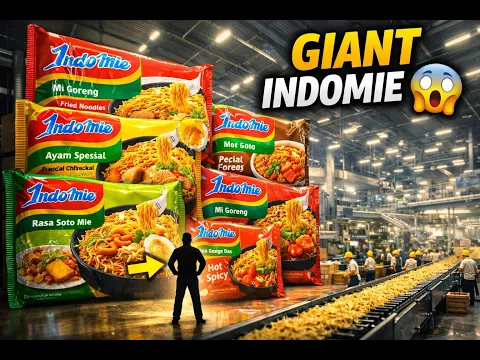
Industrial frying is highly controlled by temperature and time sensors. The goal is to achieve a residual moisture content that ensures a long shelf life, typically below 10%. This stage is crucial for the product to remain on store shelves for months without refrigeration.
Accelerated Dehydration And Standardization Of The Block
After frying, the blocks undergo cooling systems and automatic inspection. Conveyor belts transport the products through forced ventilation tunnels that stabilize the structure and reduce the temperature before packaging.
In some specific lines, depending on the type of product, there may be variations in the drying method, including non-fried techniques, but the traditional version of Indomie predominantly uses the quick frying method.
Each block is automatically weighed and measured by optical sensors. Out-of-spec units are discarded before moving on to the seasoning and packaging phase.
Automatic Dosing Of Seasonings And Sealing In Seconds
An important feature of mass production is the integration between the noodles and the seasoning sachets. Indomie is known for including multiple sachets in some flavors, such as flavored oil, seasoned powder, and sweet soy sauce.
Automated systems insert these sachets into the packaging in fractions of a second. Thermal sealing machines then hermetically close the plastic packages.
The complete line, from raw dough to sealed package, can operate with a very high degree of automation. Each package takes only a few minutes to pass through the entire system, but the accumulated volume over a day is enormous. In large plants, daily production can reach millions of units.
Quality Control And Food Safety Of Indomie
In factories of this size, quality control is strict. Samples are periodically collected for microbiological analysis, moisture content, nutritional composition, and packaging integrity.
Metal detectors are installed at the final stage of the line to identify any physical contamination. Optical sensors check for proper sealing and positioning of the internal sachets.

Furthermore, the factories adhere to international food safety standards, such as ISO certifications and HACCP systems required for exporting to demanding markets in Europe and the Middle East.
An Industry That Redefines Global Food Consumption
The success of Indomie cannot be explained solely by production scale. The model combines low cost, long shelf life, easy transportation, and cultural flavor adaptation. The brand has developed specific variations for African countries such as Nigeria, where instant noodle consumption has grown exponentially over the past two decades.
Indofood itself reports that it exports to more than 100 countries. In markets such as Nigeria and Egypt, Indomie has become a dominant presence in supermarkets and small shops, creating robust logistical chains.
According to data from WINA, global instant noodle consumption exceeds 120 billion servings per year. Indonesia accounts for dozens of billions of those units, helping to explain why its industrial plants operate at continuous pace.
Logistical Infrastructure And Vertical Integration
Another determining factor is Indofood’s vertical integration. The company does not only operate in instant noodles. It functions in wheat milling, edible oils, dairy, and distribution. This allows for cost control and stability in the supply of raw materials.

Strategic ports in Indonesia facilitate exports to Africa and the Middle East. Proximity to major Asian maritime routes also reduces logistical costs.
Energy Consumption And Industrial Efficiency
A plant of this size demands a large volume of thermal and electrical energy. Industrial boilers generate steam for pre-cooking. Heating systems maintain the oil at the ideal temperature. Compressors and electric motors power automated lines.
To maintain competitiveness, energy efficiency is constantly optimized. The use of pre-dehydrated blocks reduces weight and volume, lowering international transport costs.
Economic And Social Impact
The production of instant noodles in Indonesia represents a strategic sector in the national food industry. It employs thousands of workers directly and indirectly, from farmers to industrial operators.
Moreover, the product has become an accessible food solution for low-income urban populations, students, and informal workers. Its low price and ease of preparation help explain its global expansion.
What begins as flour and water in industrial mixers transforms, in a matter of minutes, into a product distributed to dozens of countries. Controlled frying above 140 °C, accelerated dehydration, automatic dosing of seasonings, and high-speed sealing make up a highly synchronized system that produces billions of packages per year.
The largest instant noodle plant in Indonesia is not just a factory. It is an example of how food engineering, global logistics, and industrial automation converge to create one of the most widely consumed foods of the contemporary era.








-

-

4 pessoas reagiram a isso.