





 Portuguese
  English
  Spanish
  4 min of reading
  1 comment


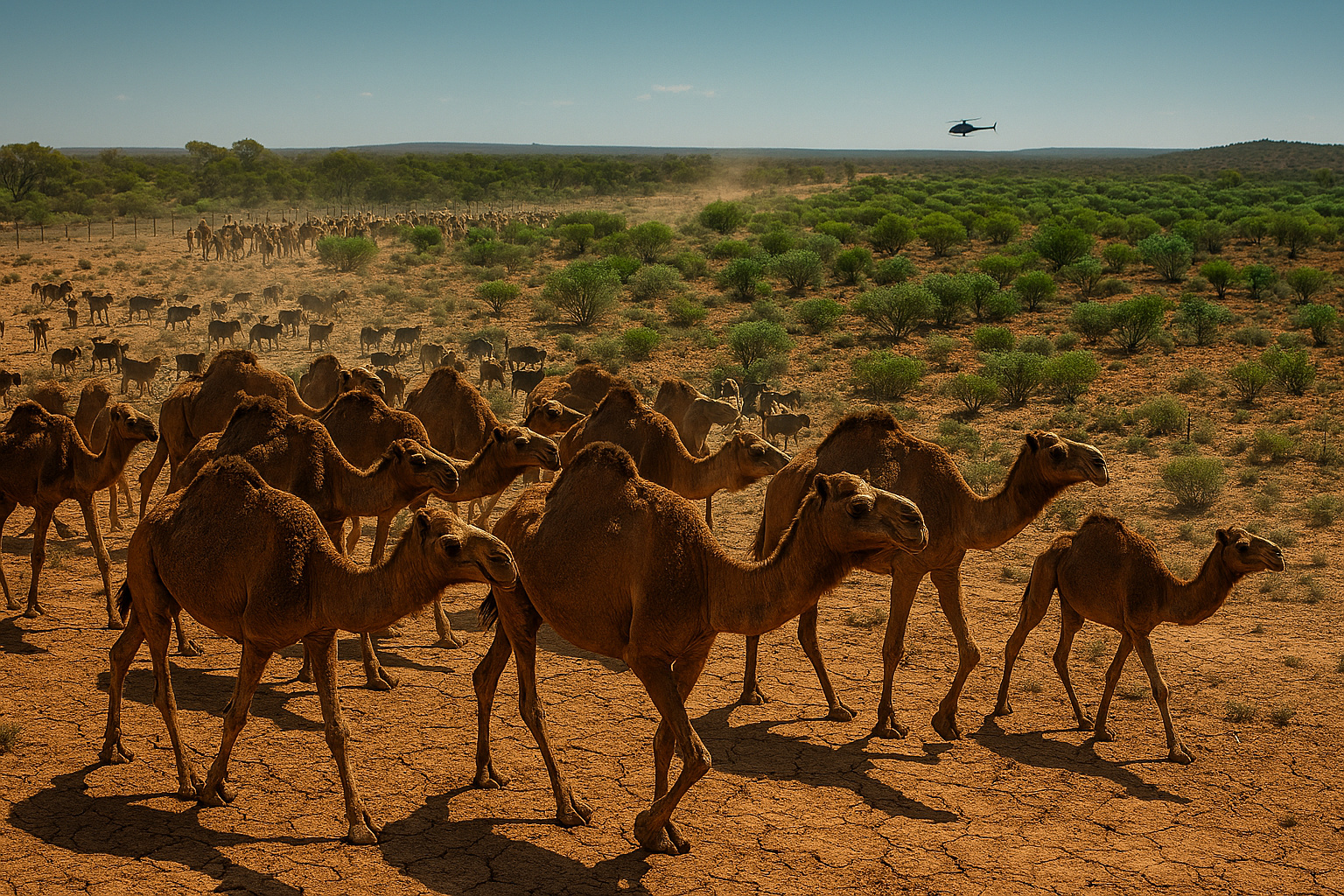


Australia Controls Camels And Goats On A Continental Scale To Combat Desertification, Recover Arid Soils, And Protect Aquifers.
The interior of Australia is home to one of the planet’s most extreme environments. Entire regions of the outback face fragile soils, irregular rains, sparse vegetation, and advanced processes of desertification. What few people realize is that part of this problem and also part of the solution involves animals in enormous numbers. Camels and goats, introduced throughout the 19th and early 20th centuries, have become involuntary protagonists of an environmental crisis that is now being addressed with large-scale ecological management programs.
Contrary to the idea of pure and simple extermination, the Australian strategy combines environmental science, population control, economic use, and gradual soil recovery, turning a biological problem into an environmental rebalancing tool.
The Origin Of The Problem: Camels And Goats Out Of Control In The Outback
Camels were introduced to Australia from 1840 for transportation in desert regions, before the arrival of roads and railways. Goats, on the other hand, came with European settlers as a source of food and income.
-
The eggshell that almost everyone throws away is made up of about 95% calcium carbonate and can help enrich the soil when crushed, slowly releasing nutrients and being reused in home gardens and vegetable patches.

-
This farm in the United States does not use sunlight, does not use soil, and produces 500 times more food per square meter than traditional agriculture: the secret lies in 42,000 LEDs, hydroponics, and a system that recycles even the heat from the lamps.

-
The water that almost everyone throws away after cooking potatoes carries nutrients released during the preparation and can be reused to help in the development of plants when used correctly at the base of gardens and pots, at no additional cost and without changing the routine.

-
The sea water temperature rose from 28 to 34 degrees in Santa Catarina and killed up to 90% of the oysters: producers who planted over 1 million seeds lost practically everything and say that if it happens again, production is doomed to end.


With the advancement of modern infrastructure, these animals were abandoned or escaped, forming feral populations.
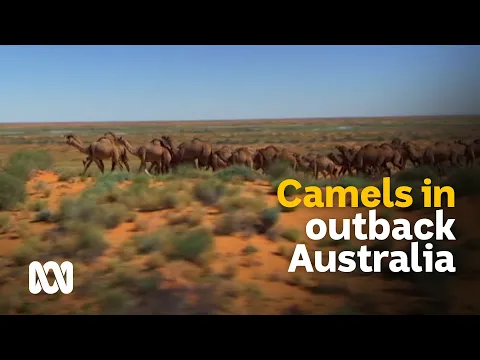

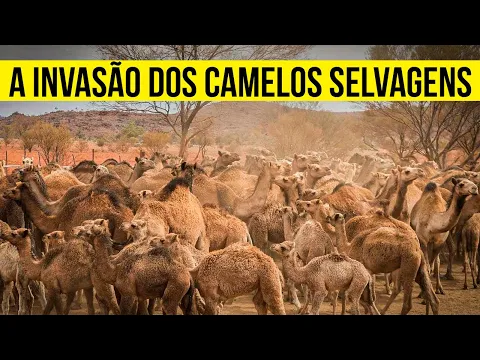
Without natural predators and with vast open areas, the population exploded. Official estimates from the Australian government indicate that, before control programs, the country had over 1 million feral camels and millions of wild goats scattered across arid and semi-arid areas.
These animals consume large volumes of native vegetation, trample fragile soils, compact the land, destroy young shoots, and directly compete with native species for water and food.
Direct Impacts On Desertification And Water Resources
The environmental effect goes far beyond the visible vegetation. Camels can drink up to 200 liters of water in a single stop, concentrating on natural wells, springs, and reservoirs. During drought periods, entire groups invade protected areas, break fences, destroy rural infrastructure, and dry up critical supply points.
Goats, in turn, feed on roots, low shrubs, and young plants, preventing the natural regeneration of the soil. This process accelerates erosion, reduces moisture retention, and favors the advance of dunes and exposed soil — a classic cycle of desertification.
Environmental reports show that areas with high densities of feral animals exhibit a sharp decline in plant biodiversity and greater vulnerability to irreversible soil degradation.
Large-Scale Ecological Management: How Australia Reacted
In light of this scenario, Australia implemented national and regional controlled animal management programs, especially from the 2000s onwards.
The central goal is not to completely eliminate the animals, but to drastically reduce populations to levels compatible with the environmental capacity of the territory.
The strategies include:
– Targeted population control in critical areas
– Capture and commercialization of live animals
– Selective culling supervised by environmental authorities
– Satellite and drone monitoring
– Strategic fencing of sensitive areas
The National Feral Camel Action Plan, for example, established clear population reduction targets across millions of square kilometers of the Australian interior, prioritizing regions with the greatest water and ecological impact.
Recovery Of Soil And Return Of Native Vegetation
The results began to appear a few years after the reduction of populations. In areas where the density of camels and goats significantly decreased, environmental studies recorded:
– Natural regeneration of grasses and shrubs
– Increased vegetation cover
– Greater moisture retention in the soil
– Reduced erosion and dune displacement
– Recovery of habitats for native species
This process is slow but cumulative. Vegetation returns, stabilizes the soil, and creates microenvironments that favor local animal and plant life, breaking the cycle of progressive desertification.
Controlled Economic Use As Part Of The Solution
A key point of the Australian strategy is to transform part of the management into a regulated economic activity. Captured camels and goats are used for:
– Meat production for export
– Supply of camel milk
– Leather and by-products
– Supply of remote communities
This creates economic incentives for ongoing population control, reduces public costs, and prevents the problem from getting out of control again.
Australia has even become one of the world’s largest exporters of camel meat, turning an environmental liability into a monitored production chain.
Comparison With Other Arid Countries
Unlike solutions based solely on heavy engineering, such as dams or large hydrological works, the Australian model stands out for using applied biology and ecological management.
Countries with similar arid environments, such as parts of Africa and the Middle East, are studying similar strategies, but few have achieved the Australian continental scale.
The difference lies in the combination of scientific data, strict environmental legislation, and integration among governments, local communities, and the productive sector.
An Example Of How Animals Can Help Defeat The Desert
The Australian case shows that animals are not just victims or environmental villains. When poorly managed, they accelerate degradation; when controlled intelligently, they become part of the solution.
Camels and goats, once symbols of desertification in the outback, now form part of one of the largest ecological management operations on the planet, helping to recover soils, protect aquifers, and restore balance to regions that seemed doomed to environmental collapse.
The Australian experience raises a powerful question: how many current environmental problems could not be mitigated if biology, economics, and public management worked together, instead of in isolated solutions?
The desert has not been defeated with concrete, but with strategy, science, and intelligent control of nature itself.










Dromedário 1 corcova, camelo 2 corcovas.