





 Portuguese
  English
  Spanish
  4 min of reading
  0 comments


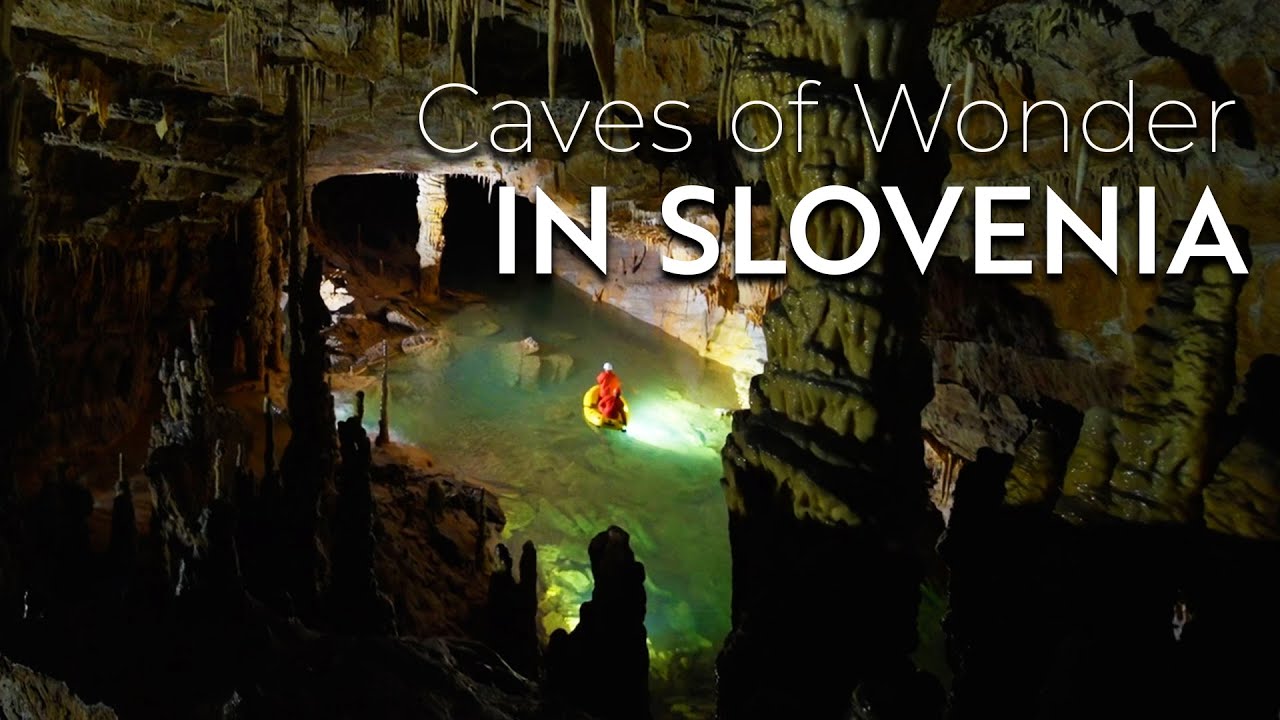
Karst Caves In Slovenia Guard More Than 24 Km Of Underground Rivers, Regulate Lakes, And Function As Natural Reservoirs Used For Centuries.
In the Dinaric region of Slovenia, a millennial geological phenomenon has shaped one of the planet’s most curious water infrastructures: a system of caves and galleries with more than 24 kilometers of continuous underground rivers flowing within a limestone massif. While much of the world has built dams, aqueducts, and pipelines, there nature did the work first: water infiltrates, circulates, and is stored within the rock, feeding lakes, plains, and small towns on the surface.
The system is part of the Postojna–Planina complex, a karst water network where the Pivka river disappears into the limestone, travels dozens of kilometers underground, and re-emerges as a different river in another valley. This underground course is not static: it varies according to the seasons, rainfall volume, and aquifer behavior.
How A River Works Inside A Cave

The hydrological functioning depends on four elements that the local geology naturally provides:
-
Friends have been building a small “town” for 30 years to grow old together, with compact houses, a common area, nature surrounding it, and a collective life project designed for friendship, coexistence, and simplicity.

-
This small town in Germany created its own currency 24 years ago, today it circulates millions per year, is accepted in over 300 stores, and the German government allowed all of this to happen under one condition.

-
Curitiba is shrinking and is expected to lose 97,000 residents by 2050, while inland cities in Paraná such as Sarandi, Araucária, and Toledo are experiencing accelerated growth that is changing the entire state’s map.

-
Tourists were poisoned on Everest in a million-dollar fraud scheme involving helicopters that diverted over $19 million and shocked international authorities.


- The limestone is permeable and soluble, allowing for deep infiltration.
- The network of fractures and joints guides water along specific pathways.
- The caves and galleries store the excess as reservoirs.
- And the internal pressure controls the speed and point at which the water returns.
This creates a unique system: when it rains a lot, the underground absorbs massive volumes and reduces flood peaks on the surface. When the climate dries, the water slowly returns through springs and sinkholes.
It’s a kind of natural dam, but without concrete, turbines, or valves — just geology and gravity.
Regulating Urban Lakes And Floods In Silence
The most impressive aspect of this system is not just storage but regulation. Around the city of Postojna and connected villages, there are lakes that appear and disappear according to the behavior of the underground river.
One of the best-known is Planina Polje, a plain that functions as a natural retention basin. When the volume underground increases, water emerges and forms a temporary lake. When the volume decreases, the lake drains through cracks and sinkholes, disappearing without human intervention.
In modern urban areas, this would require pumps, drainage channels, levees, and artificial reservoirs. There, the system works without operators, motors, or maintenance, a natural infrastructure adapted to water risk.
Human Use: From Scientific Exploration To Supply
Over time, the underground system ceased to be just a geological curiosity and began to integrate rural and urban supply strategies.
Water filtered through limestone rock typically shows low turbidity and less organic contamination, especially compared to exposed surface waters. Therefore, springs connected to the underground river have supplied nearby communities for centuries.
In the second half of the 20th century, universities and water institutes began cataloging the system to understand how a river can disappear and reappear in another city. Today, the Postojna–Planina is one of the most studied karst systems in the world and a reference for understanding complex aquifers.
This paved the way for modern use: hydrological monitoring, digital modeling, tracer tests, supply projects, and flood prevention.
The Role Of Geology: When Reservoirs Are Formed By Chance
Karst caves are the result of a slow process: slightly acidic water dissolves limestone over millions of years, creating tunnels and halls. This process was not “designed” to store water, but humanity discovered its functionality later.
The difference from artificial reservoirs is fundamental:
Artificial reservoirs: require engineering, excavation, dams, capture, and pumping.
Karst reservoirs: do not require construction, do not evaporate, have low thermal loss, and operate naturally.
While surface reservoirs lose water through evaporation and algae, karst systems preserve massive volumes within the rock, away from the sun and contamination. This gives the system strategic value in a century where water becomes an economic, geopolitical, and climatic vector.
What Makes The Case So Little Known?
Despite the scale and complexity, three factors keep this phenomenon off the global radar:
- It Is Hidden — there is no large visible work.
- It Is Geological, Not Urban — it does not fit into the narrative of “modern infrastructure.”
- It Is Decentralized — there is no single reservoir, but a network within the rock.
This is exactly what makes it fascinating: a city supplied by a river that cannot be seen, a lake that appears and disappears, and a reservoir that was never built, only discovered.








-

Uma pessoa reagiu a isso.