





 Portuguese
  English
  Spanish
  3 min of reading
  0 comments


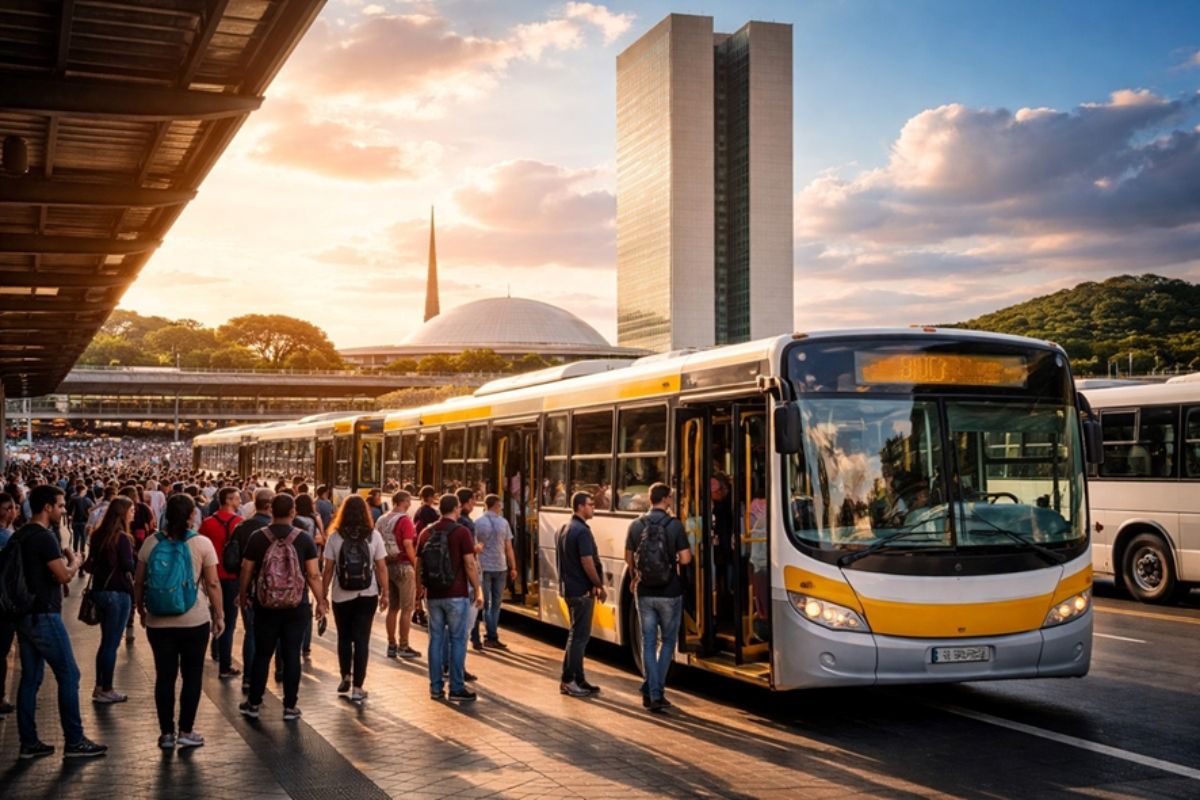
In Brasília, the House of Representatives approved with 304 votes the urgency regime for Bill 3,278 of 2021 to create a new legal framework for urban public transport, accelerating its progress and drawing attention from states, municipalities, and system users.
The House of Representatives took a decisive step that could transform how public transport is organized and financed in Brazil.
With the approval of the urgency regime for Bill 3,278 of 2021, the proposal no longer needs to go through all thematic committees and can be voted on directly in the plenary.
The impact was immediate on the pace of progress. What could have taken longer now depends only on the House presidency’s definition to enter the agenda.
-
The noise law will no longer be in effect at 10 PM starting in June with a new rule valid during the 2026 World Cup.

-
The Chamber opens a debate on driver’s licenses at 16 years old as part of a reform that includes around 270 proposals to change the Brazilian Traffic Code and may redesign rules for licensing, enforcement, and circulation in the country.

-
The new Civil Code could revolutionize marriages in Brazil with “express divorce” and changes that could exclude spouses from inheritance.

-
Banco do Brasil sues famous influencer for million-dollar debt and intensifies debate on delinquency, risks of seizure, and direct impact on Gkay’s credibility.


Approval with 304 Votes Accelerates Debate on Transport in Cities
The vote recorded 304 favorable votes and 113 opposed, demonstrating a broad majority in favor of accelerating the debate.
This number stands out because it reveals significant support for the discussion on structural changes in urban public transport.
With the urgency regime approved, the proposal can be analyzed at any moment in the plenary. The decision changed the political landscape of the project in a matter of hours.
Bill 3,278 of 2021 Seeks to Modernize Rules and Create a More Stable Environment

The text proposes the creation of a new legal framework for urban public collective transport.
The intent is to update rules related to financing, planning, and organization of services in Brazilian cities.
States and municipalities face growing difficulties in maintaining the economic balance of the systems. According to experts, a more stable regulatory environment can offer legal predictability and attract investment.
The central objective is to make the system more sustainable in the long term.
Decline in Passengers and Rising Costs Pressure the System
The sector has been facing structural difficulties in recent years.
The number of users has fallen, while operational costs have increased. This combination has put pressure on municipalities and companies responsible for the service.
Today, public transport financing primarily comes from the fare paid by passengers. This model has been considered insufficient given the current scenario.
It is precisely at this point that the new legal framework can represent a significant change.
Project May Open Space for New Forms of Financing in Cities
The project does not automatically create a new tax for car owners.
However, it may allow states and municipalities to develop alternative revenue sources to finance collective transport.
Among the possibilities discussed within this type of proposal are fees on transport applications, contributions linked to the use of the road system, charges on large traffic generators, municipal mobility funds, and models inspired by urban tolls.
But any new charge would depend on specific legislation in each municipality or state. There is no automatic application at the national level.
Understand the Logic Behind the Proposal and Its Impact on the Entire City
The proposal is based on the idea that public transport benefits the whole city, including those who do not use buses or subways.
When the system operates efficiently, there is a reduction in congestion, decrease in pollution, improvement in mobility, and a positive impact on the economy.
Therefore, some argue that the cost of the system should not fall exclusively on passengers.
Now, the debate moves to the plenary, where representatives can propose amendments and discuss the central points before the final vote. The outcome could redefine how public transport is financed in Brazilian cities.
And you, do you believe that public transport financing should be shared by society as a whole or continue to be concentrated in the fare paid by users? Leave your opinion.










Seja o primeiro a reagir!