





 Portuguese
  English
  Spanish
  5 min of reading
  0 comments


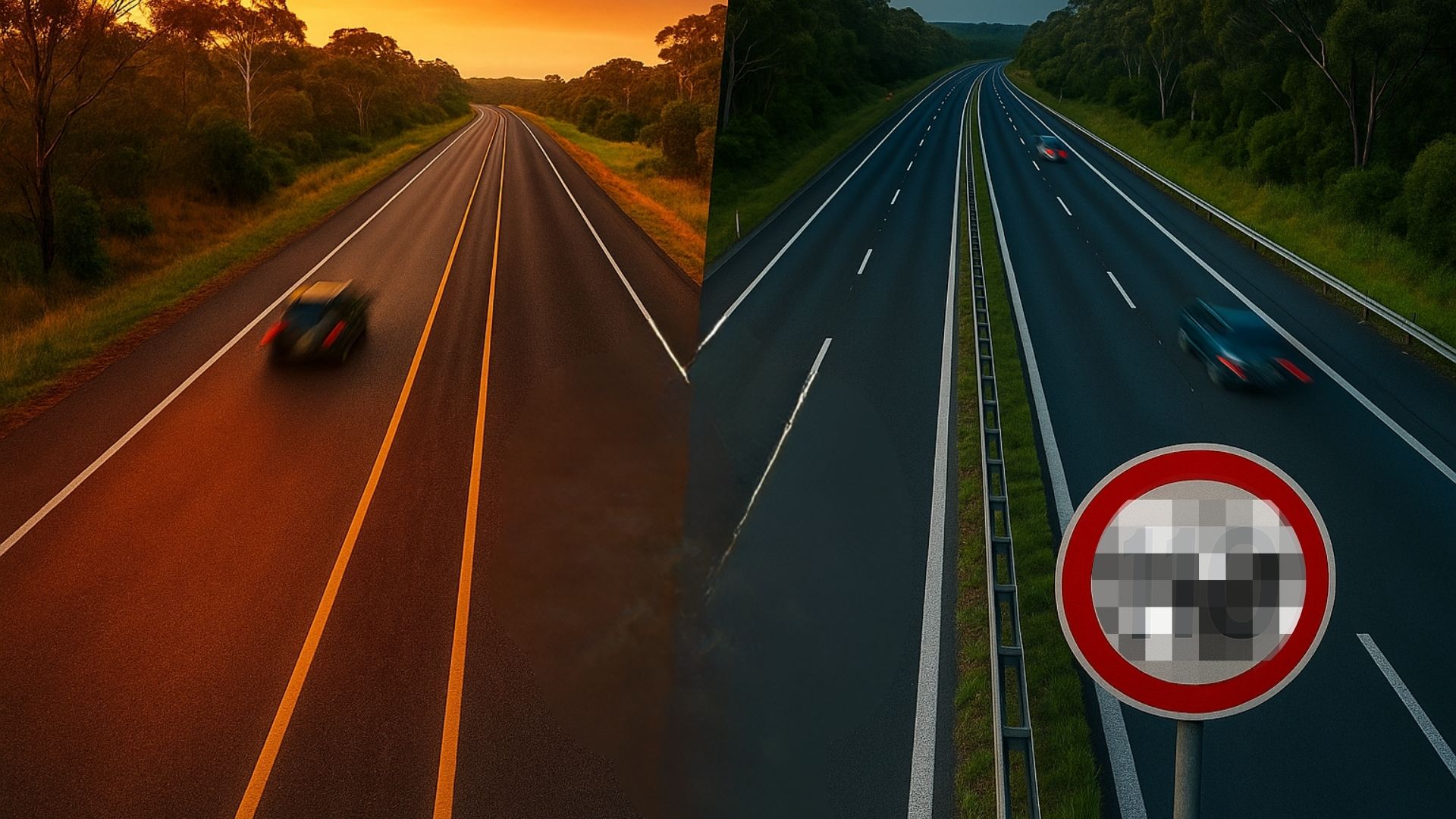
Nationwide Change in Speed Limits Redefined Standards on Single and Double Lane Highways, Altered Enforcement and Reorganized Signage Without Modifying Specific Rules for Each Section.
A change in the speed limits defined by law for Brazilian highways, in effect since September 2022, redesigned the way drivers must operate on single and double lanes across the country.
The update of the Brazilian Traffic Code (CTB), resulting from Law No. 14,440, of September 2, 2022, consolidated distinct parameters for light and heavy vehicles and required a reorganization of signage and enforcement on federal and concessioned stretches.
Although most roads already had limits defined by signs, the new wording of article 61 of the CTB became a national reference where there is no specific indication.
-
The government requests the Federal Revenue Service for a new system to automate the income tax declaration, reducing errors, time, and bureaucracy for millions of Brazilians.

-
Pix in installments, international Pix, and contactless payment without internet: the Central Bank revealed the new features coming to the tool that is already used by almost every adult in Brazil.

-
Mercado Livre has just started selling medications with delivery in up to three hours to your door, and this move could completely change the way Brazilians buy medicines on a daily basis.

-
In Dubai, rising tensions from the war in the Middle East are causing super-rich individuals to leave the Gulf and direct their fortunes to a new financial refuge in Asia.


In practice, double lane highways with good infrastructure gained higher margins for light vehicles, while single lane sections were standardized at more conservative speeds, aiming to reduce head-on collisions and make traffic flow more predictable.
At the same time, the law reinforced the differentiation between light vehicles and heavy vehicles, which became central in defining the general speed limits.
This separation determines rules both on highways and rural roads.
Speed Limits on Brazilian Highways
Law No. 14,440 amended the CTB and updated article 61, which addresses the maximum speed when there is no regulatory signage.
Today, the national standard is as follows: on double lane highways located in rural areas, the limit is 110 km/h for light vehicles and 90 km/h for other vehicles.

On single lane highways, the maximum speed is 100 km/h for light vehicles and also 90 km/h for heavy vehicles.
On unpaved rural roads, the limit is 60 km/h for all vehicle types.
These values apply as general rules and can be reduced by regulatory signs, depending on the characteristics of the section.
Therefore, even on double lanes, the driver may encounter limits of 80 km/h or 90 km/h in areas with curves, urban crossings, or a high history of accidents.
In many stretches, especially those modernized in recent decades, double lane highways such as segments of BR-101 and BR-116 had the limit consolidated at 110 km/h for light vehicles.
In areas of single lanes, like sections of BR-163, the standardization at 100 km/h sought to reduce the speed difference between cars and trucks, decreasing risks during overtaking.
Although the CTB sets these general thresholds, the hierarchy is clear: the road signage takes precedence over the general rule.
If a sign indicates 80 km/h on a double lane section, that is the limit to be followed.
Why Single and Double Lanes Received Different Rules
The design of the law took into account the structural difference between single and double lane highways.
On single lanes, both directions of traffic share the same lane, separated only by horizontal painting, which increases the likelihood of head-on collisions.
By standardizing 100 km/h for light vehicles in these stretches, the goal was to reduce the energy of impacts and decrease the speed difference in relation to heavy vehicles.
On double lane highways, the physical separation between flows reduces head-on collisions.
Thus, the limit of 110 km/h for light vehicles was maintained or consolidated in several stretches, provided that conditions of layout, visibility, and pavement were respected.
This combination seeks to balance safety and flow.
On roads with better infrastructure, the law allows for higher speeds.
On single lanes, the standard is more restrictive due to the risks during overtaking and the lack of physical barriers.
Impact of the Rules on Trucks and Buses

For trucks and buses, the guidance is clear: strict limit of 90 km/h on most highways.
On long inclines, steep descents, sharp curves, or sections with a history of accidents, specific signs lower the speed to 80 km/h, 60 km/h, or less.
Since heavy vehicles have longer braking distances, the aim is to ensure adequate reaction time and avoid rollovers and chain collisions.
Concessionaires and public agencies integrated more electronic enforcement, weight control, and speed monitoring into a single planning process.
In corridors with a high presence of trucks, radars and educational campaigns began to highlight the role of speed in the severity of accidents involving cargo vehicles.
Adjustments in Signage and Enforcement
The introduction of the new law required a task force for updates.
The National Department of Transportation Infrastructure and concessionaires reviewed signage projects, checked limits on signs, and recalibrated equipment.
This process included the reprogramming of fixed radars and redistribution of control points.
In several states, the Federal Highway Police adjusted operations to monitor driver behavior under the new limits.
Educational campaigns reinforced three main points.
The need to observe the road sign.
The difference between limits for light and heavy vehicles.
And the importance of maintaining a speed appropriate for rain, fog, heavy traffic, or construction, even when the legal limit allows for higher values.
Preliminary Results After the Change
Since the enforcement of the rules, federal agencies and transport entities have been monitoring accident data on federal highways.
Recent reports show a decrease in serious accidents on single lane stretches with limits standardized at 100 km/h and 90 km/h.
On modern double lanes, where the limit of 110 km/h was preserved, surveys indicate improved flow without a significant increase in serious occurrences.
Special operations by the Federal Highway Police during holidays and periods of high demand recorded point reductions in deaths and injuries when there was a combination of enforcement and speed control.
Experts state that it is difficult to attribute changes exclusively to the law.
Factors such as fleet renewal, expansion of double stretches, and the implementation of new radars come into play.
As monitoring continues, drivers are adapting to a scenario with more rigor on single lanes, greater flexibility on double lanes, and expanded responsibility for heavy vehicles.
In this context, how have you adjusted your driving on the roads since the new law came into effect?








-

Uma pessoa reagiu a isso.