





 Portuguese
  English
  Spanish
 5 min of reading
  0 comments


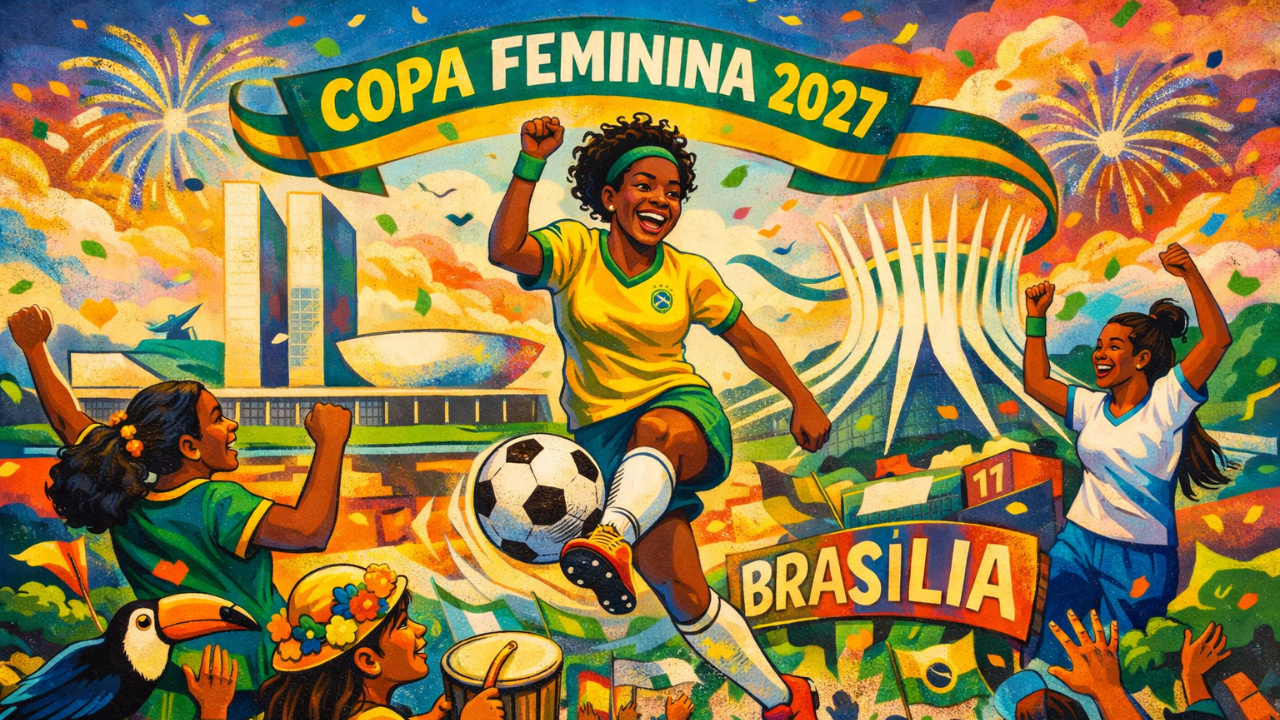
Urban Art by Izzy Credo Celebrates Brasília 500 Days to FIFA Womens World Cup 2027 and Highlights the Strength of Womens Soccer in Brazil.
500 days before the FIFA Womens World Cup in 2027, Brazil began to symbolically and culturally count down to the largest tournament of womens soccer in the world.
The visual artist and muralist Izzy Credo was invited by FIFA to represent Brasília at an urban art festival held on January 25th at Copacabana beach in Rio de Janeiro.
The initiative brought together artists from the host cities who, collaboratively, produced panels inspired by local identities.
-
Brazilian city bets on the business environment to generate jobs and attract investments in the energy sector — secretary reveals strategy at Macaé Energy 2026.

-
The largest South American oil company, Petrobras, is preparing for a historic leap in production with new FPSO platforms and the expansion of refining — projects that could add up to 900,000 barrels per day and strengthen Brazil’s energy security.

-
Billions of barrels in the Equatorial Margin could double Amapá’s oil production in Brazil and attract companies from the Campos Basin.

-
Mature Fields Take Center Stage and Are Expected to Generate New Opportunities in the Oil and Gas Sector


The goal was to connect sports, culture, and territory, reinforcing female prominence on the eve of the unprecedented event in South America, scheduled to take place between June 24 and July 25, 2027.
Urban Art and Womens Soccer: Cultural Connection Gains Strength
The works produced during the festival were designed to translate the emotion of womens soccer through visual language.
Each panel featured scenes of celebration, symbolic plays, and architectural references from the host cities.
Additionally, the proposal valued urban art as a tool for social engagement.
By occupying public space, the murals increase access to culture and stimulate a sense of belonging around the Womens World Cup.
With a strong female presence in the visual narratives, the works also highlighted the evolution of women’s participation in sports.
Thus, the project goes beyond aesthetics and establishes itself as a cultural and political manifestation.
Izzy Credo: Roots of the Cerrado and Black Protagonism in Art
Originally from Trindade, Goiás, Izzy Credo built her artistic trajectory from the dialogue between popular culture, regional identity, and black protagonism.
Her work draws from experiences in the Cerrado, incorporating festivals, beliefs, and expressions from the Brazilian countryside.
The artist’s murals are marked by vibrant colors, a sense of movement, and the relationship between the sacred and the profane.
This combination creates visual narratives filled with energy and symbolism.
Izzy is part of the duo Irmãos Credo, alongside her brother Jesus, and has worked for the Museum of Street Art in São Paulo, as well as partnerships with major national brands.
This repertoire has solidified her name within contemporary urban art in Brazil.
Inspirations to Represent Brasília at the Womens World Cup
Commenting on the creative process, the artist highlighted the influences that guided the work dedicated to Brasília:
“My main references are popular culture and black protagonism within these contexts.
And the context in which I was raised is the Cerrado.
I grew up in the countryside, amidst popular festivals, cultural expressions, and religious practices.
I find the blend of these traditions with music very beautiful — the vibrant colors, the sense of mystery, the interplay between the sacred and the profane, the act of truly believing.
The combination of all these elements makes our work energetic and connects with the Brazilian way of life and, in this project, specifically, with how people support their teams as well.”
This remark illustrates how the Womens World Cup served as a bridge between affective memory, cultural identity, and sports language.
Architecture of Brasília as a Narrative Element
The modernist aesthetics of the federal capital played a central role in the conception of the mural.
According to Izzy Credo, the city evokes futuristic images and sensations of projection.
“Brasília evokes in me the image of a place of hypothetical futures.
I really like the architecture because it intensely dialogues with this idea of movement, expectation, and projection.
And these are ideas that also appear when we think about soccer. I might be biased, but I think the city has a great variety of beautiful shapes, with a sunlight that intensifies and saturates everything.
The green is greener, the blue is brighter, and the white is truly white.
Thus, I see the fans as part of the landscape, as an element of a scene that is not just a backdrop, but also part of the narrative that soccer fans in Brazil are different — not only because of the energy and warmth, but also because of aesthetics.”
In this way, the panel connects architecture, fans, and sports emotion into a single visual narrative.
Artistic Immersion and Collective Experience
Participating in the project had a special meaning for the muralist, especially due to the collaborative nature of the international action linked to the Womens World Cup.
“I am very happy. I am so happy to be part of this project alongside other extremely talented artists.
And I am even happier because thinking about the World Cup (FIFA Womens World Cup) and soccer in Brazil means thinking about culture and, above all, about collective experience.”
The statement reinforces the role of womens soccer as a social phenomenon that goes beyond the field and reaches various cultural expressions.
Affective Memory in the Creative Process
The development of the work also brought back personal childhood memories for the artist, bringing the audience closer to the emotional dimension of the project.
“I went back to those childhood moments, lying on the floor and pretending to kick a ball while my cousins painted the outline of my body on the ground, which ended up completely covered in paint, all green and yellow, filled with small flags everywhere.
Thus, the entire process of this work was a lot of fun, and I hope that this feeling of nostalgia reaches others — because I know that when it comes to soccer in Brazil, that feeling does not originate from an individual experience, but rather from a collective experience.”
This symbolic retrieval brings urban art closer to the popular imagination linked to soccer.
Womens World Cup Leaves Cultural Legacy Before the Ball Rolls
Even with more than a year to go before the tournament, initiatives like this demonstrate that the legacy of the Womens World Cup is already under construction.
The artistic occupation of urban spaces strengthens local identities and increases the visibility of womens soccer.
In Brasília, the mural by Izzy Credo embodies this proposal by uniting architecture, popular culture, and sporting passion.
Thus, the federal capital becomes part of not only the sports calendar but also the symbolic map of the art linked to the largest event in womens world soccer.
See more at: 500 Days Before the Womens World Cup, Izzy Credo’s Art Paints Brasília – Blog Drible de Corpo










Seja o primeiro a reagir!