





 Portuguese
  English
  Spanish
  5 min of reading
  0 comments



The Social Security Legislation Guarantees the Payment of Accident Aid as Monthly Compensation to the Insured Who, After an Accident or Occupational Disease, Remains with Definitive Sequela That Reduces Labor Capacity, Even Without Leaving Work, According to a Specialist in Social Security
The Brazilian social security legislation ensures protection to the worker who suffers an accident or develops a work-related illness and lives with permanent limitations. In addition to the benefit granted during any eventual leave, the National Institute of Social Security (INSS) can pay a monthly compensation when, after the consolidation of injuries, there remains a definitive sequela that partially reduces capacity for regular activities. This payment is known as accident aid, as provided in the Article 86 of Law No. 8,213/1991, and can be due even when the insured continues working.
The information was released in an analysis conducted by social security lawyer Robson Gonçalves, who works on claims involving accident aid and other INSS benefits. According to him, many people fail to receive compensation due to ignorance or mistakenly believing that the benefit is only possible in cases of permanent leave from work.
“When the accident leaves a permanent sequela and the worker has more difficulty performing their function, there may be a right to accident aid. It is paid even without leave because it compensates for the definitive reduction of capacity,” explains Robson Gonçalves.
-
The noise law will no longer be in effect at 10 PM starting in June with a new rule valid during the 2026 World Cup.

-
The Chamber opens a debate on driver’s licenses at 16 years old as part of a reform that includes around 270 proposals to change the Brazilian Traffic Code and may redesign rules for licensing, enforcement, and circulation in the country.

-
The new Civil Code could revolutionize marriages in Brazil with “express divorce” and changes that could exclude spouses from inheritance.
-
Banco do Brasil sues famous influencer for million-dollar debt and intensifies debate on delinquency, risks of seizure, and direct impact on Gkay’s credibility.

What Is Accident Aid and How Does It Work
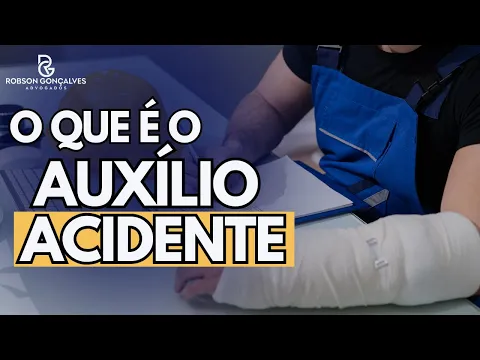

The accident aid is a compensatory benefit granted to the insured of the General Social Security System (RGPS) when, after the consolidation of injuries, a definitive sequela is proven that partially reduces capacity for regular work. Unlike other benefits, it does not replace salary and can be accumulated with remuneration when the insured remains active.
Precisely because of its compensatory nature, the payment does not require the worker to be on leave. The focus of the analysis is the existence of a permanent functional reduction, recognized through medical examination, and the link of this limitation to the accident or occupational disease.
“The central point is not to take the worker away, but to recognize that the capacity has diminished. This reduction, even if partial, can justify a monthly compensation,” adds the social security lawyer.
Who Can Receive Accident Aid from the INSS
The benefit can be analyzed when there is a permanent sequela resulting from an accident of any nature, including accidents that occur outside of the workplace, such as at home, during leisure, or in traffic. Furthermore, it also applies to occupational diseases developed over time, as long as there is proof of the partial reduction of capacity for regular activities.
In order to have the right to accident aid, it is necessary to demonstrate three main points: the consolidation of injuries, the existence of a definitive sequela, and the reduction of labor capacity. Additionally, the insured needs to be covered by the RGPS on the date of the accident or the beginning of the incapacity, according to the applicable legal framework.
“The right does not depend on whether the accident occurred within the company. An accident outside of work can generate accident aid, as long as it leaves a permanent sequela and reduces capacity for regular activities,” states Robson Gonçalves.
As a rule, insured individuals such as employees, domestic workers, casual workers, and special insured individuals may have the right to the benefit, adhering to the rules established in Law No. 8,213/1991. The analysis always considers the category of the insured, the social security coverage, and the criteria from expert examinations.
Benefit Amount and Duration of Payment
The amount of accident aid generally corresponds to 50% of the benefit salary, calculated based on the average contribution salaries, according to the criteria established by social security legislation. Due to its compensatory nature, the amount may be less than the minimum wage, as it is not intended to completely replace the worker’s income.
“In practice, accident aid functions as a continuous financial compensation. The insured can continue working, but receives an additional amount because they have a permanent limitation,” explains the lawyer.
Payments usually begin after the consolidation of injuries or after the cessation of the benefit for temporary disability, when this was previously granted. Accident aid is maintained until the granting of retirement or until the death of the insured, according to applicable rules.
Even with an Old Accident, the Right Can Be Analyzed
In certain situations, even when the accident occurred many years ago, the request for accident aid can still be analyzed. This occurs mainly when there is medical documentation capable of demonstrating the permanent sequela, the link with the event, and the reduction of labor capacity, in addition to proof of the insured status at that time.
“There are cases where the accident is old, but the sequela remains today. If it is possible to demonstrate the reduction of capacity, there may still be feasibility to request the benefit,” explains Robson Gonçalves.
The analysis in these cases depends on the evidential set, especially medical reports, exams, and documents that evidence the functional limitation and its impact on regular activities.
How to Request Accident Aid
The request for accident aid is made to the INSS, usually through the Meu INSS platform (website or app) or through the Central 135. The insured must register the request and schedule the medical examination, an essential step for the granting of the benefit.
During the analysis, the INSS evaluates medical documents, the history of the accident or illness, and the existence of permanent sequela, always in light of the Article 86 of Law No. 8,213/1991 and the Social Security Regulation.
“Since the granting depends on technical criteria and how the sequela is presented in the examination, it is ideal to seek specialized guidance before the request,” advises the social security lawyer.
Have you ever suffered an accident or developed a disease that left permanent sequelae and never imagined that you could receive a monthly compensation from the INSS even while continuing to work?









Seja o primeiro a reagir!