





 Portuguese
  English
  Spanish
  4 min of reading
  0 comments


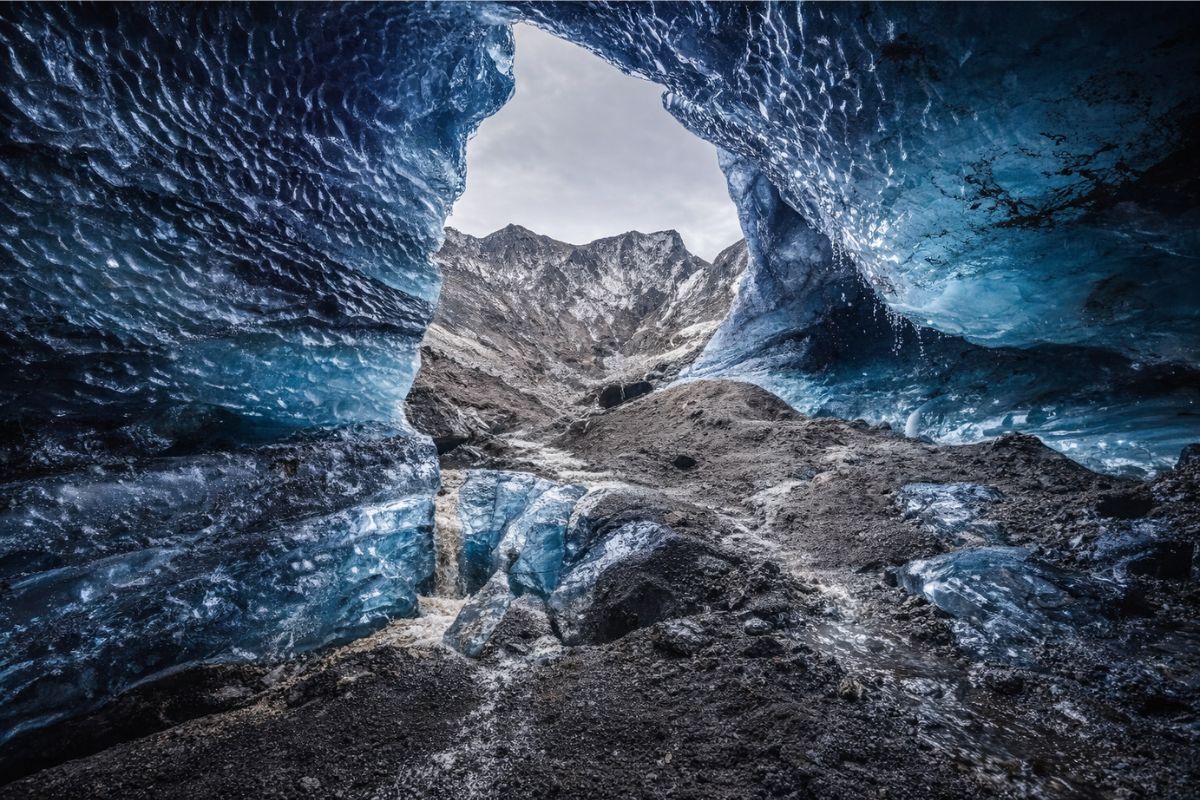
In The Central Pyrenees, The National Museum of Natural Sciences Conducted Monitoring of 6,100 Years of Ice in Cave A294 to Analyze Climate Changes, Sounding A Scientific Alarm About Accelerated Melting and Drawing Attention from The International Community
For more than six millennia, an ice deposit remained preserved inside a cave in the Central Pyrenees. What seemed impossible began to change in just a few years.
The A294 ice cave, considered the oldest active cave in the world, is melting at an unprecedented rate. The phenomenon worries researchers because it involves not only the loss of ice but also a climatic record accumulated over 6,100 years.
The detail that drew the most attention was the speed of the transformation. In some areas, the retreat of the ice reaches nearly two meters per year.
-
Friends have been building a small “town” for 30 years to grow old together, with compact houses, a common area, nature surrounding it, and a collective life project designed for friendship, coexistence, and simplicity.

-
This small town in Germany created its own currency 24 years ago, today it circulates millions per year, is accepted in over 300 stores, and the German government allowed all of this to happen under one condition.

-
Curitiba is shrinking and is expected to lose 97,000 residents by 2050, while inland cities in Paraná such as Sarandi, Araucária, and Toledo are experiencing accelerated growth that is changing the entire state’s map.

-
Tourists were poisoned on Everest in a million-dollar fraud scheme involving helicopters that diverted over $19 million and shocked international authorities.


What Happened in Cave A294 and Why It Became a Climatic Alert
Located in the Cotillea Massif in the Central Pyrenees, Cave A294 houses an ice deposit formed over millennia. This ice serves as a true natural archive of the region’s climate.
The problem is that this archive is disappearing.
A study conducted by the National Museum of Natural Sciences of Spain revealed that the melting has reached levels not seen in the last 6,000 years. The acceleration is directly associated with rising temperatures.
The loss is not only environmental. It is scientific. Each layer of ice carries information about climate, precipitation, and atmospheric conditions of the past.
How Researchers Measured Melting and Analyzed 6,100 Years of History
The scientific team conducted a detailed stratigraphic analysis within the cave. Ice cores were extracted, and the geochemical composition of each layer was studied.
These samples allowed for the reconstruction of climatic conditions from the formation of the deposit to the present day.
Systematic monitoring began in 2009, in partnership with the Cotiella Scientific Speleological Association. Since then, sensors and annual measurements have tracked the evolution of temperature and ice thickness.
The results surprised specialists.
Increase of Up to 1.56°C Inside the Cave and Drastic Reduction of Freezing Days
Since the start of monitoring, the average air temperature inside the cave has risen between 1.07°C and 1.56°C.
It may seem like a small amount, but in permanent ice environments, this variation is critical.
At the same time, there has been a significant reduction in the number of days with temperatures below zero. This jeopardizes the natural replenishment of ice that used to accumulate during the winter.
In the Pyrenees as a whole, the average temperature increase has already reached +1.3°C since 1949, nearly double the global average recorded during the same period.
Annual Loss Varies from 15 to 192 Centimeters and Scenario Is Considered Critical

The comparison between old photographs, historical topographies, and recent measurements revealed the extent of the problem.
The melting rates vary by area of the cave, ranging from 15 centimeters to 192 centimeters per year.
Among the main factors accelerating the melting are:
- Warmer winters that reduce ice formation
- Increased summer rainfall that raises internal temperature
- Decreased snowfall
- Shorter duration of seasonal snow cover
Even though they are naturally isolated environments, caves are no longer protected as they once were. The conditions that ensured preservation for centuries can no longer offset recent warming.
What The Possible Loss of Cave A294 Represents for The Future
The A294 ice cave is considered one of the oldest climate records in the Pyrenean region. Its disappearance would mean the irreversible loss of information about the environmental evolution of the past six millennia.
In addition, it serves as an early indicator of climate change in mountain ecosystems.
The impact goes beyond the local. It reinforces the global alert about the pace of environmental transformations.
What remained intact for 6,100 years could disappear in just a few decades, and this contrast is what draws the most attention.
The situation of Cave A294 shows how temperature increases, even in fractional degrees, can completely transform a millennial natural heritage and forever alter records that would help understand the planet’s past.
Do you believe that environments considered protected are truly safe from climate change? Leave your opinion in the comments.










-

-

2 pessoas reagiram a isso.