





 Portuguese
  English
  Spanish
  3 min of reading
  0 comments


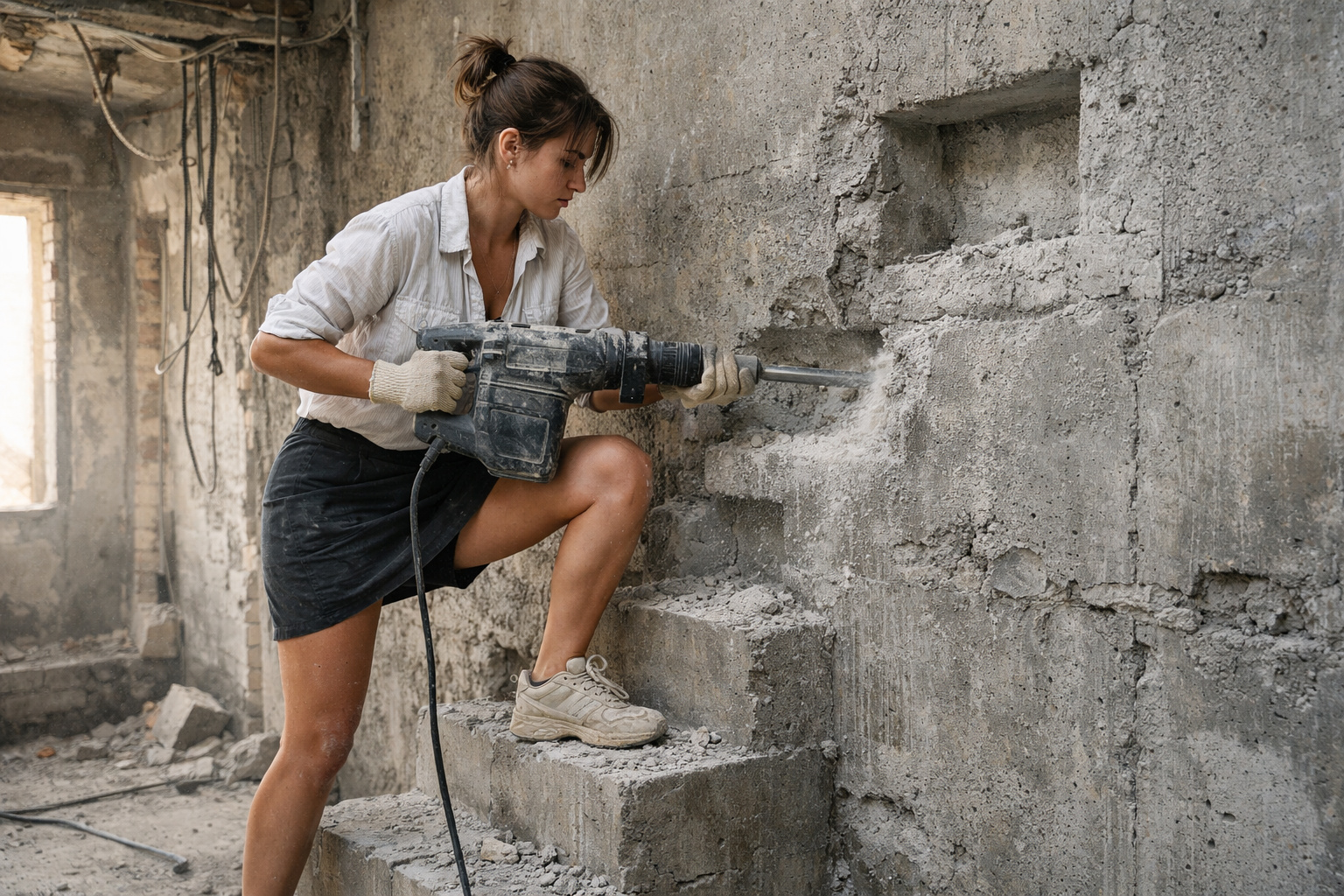
Project Breaks Patterns of Traditional Architecture by Eliminating Right Angles, Simulating Real Rock Formations, and Creating an Indoor Environment That Challenges the Perception Between Construction and Natural Landscape
What starts as an old, empty, and completely geometric studio ends as a space that appears to have been excavated by nature itself. In just 35 days, the young creator Janine Bruce conducted a radical transformation that caught attention on social media and video platforms by converting a common interior into a functional luxury cave, where each surface was designed to break with traditional construction logic.
The information was shared on YouTube through the channel Janine Bruce, where the entire process was documented from start to finish, revealing technical decisions, structural challenges, and creative solutions that allowed the project to be completed in just over a month. Throughout the execution, the space transitioned from merely being an enclosed environment to taking on the visual and sensory characteristics of a natural rock formation.
From day one, the goal was not to decorate, but to deconstruct the idea of an architectural box. Straight lines, flat ceilings, and predictable corners were eliminated to make way for organic curves, irregular surfaces, and visually expanding volumes. As a result, the environment appeared larger, deeper, and, above all, less artificial.
-
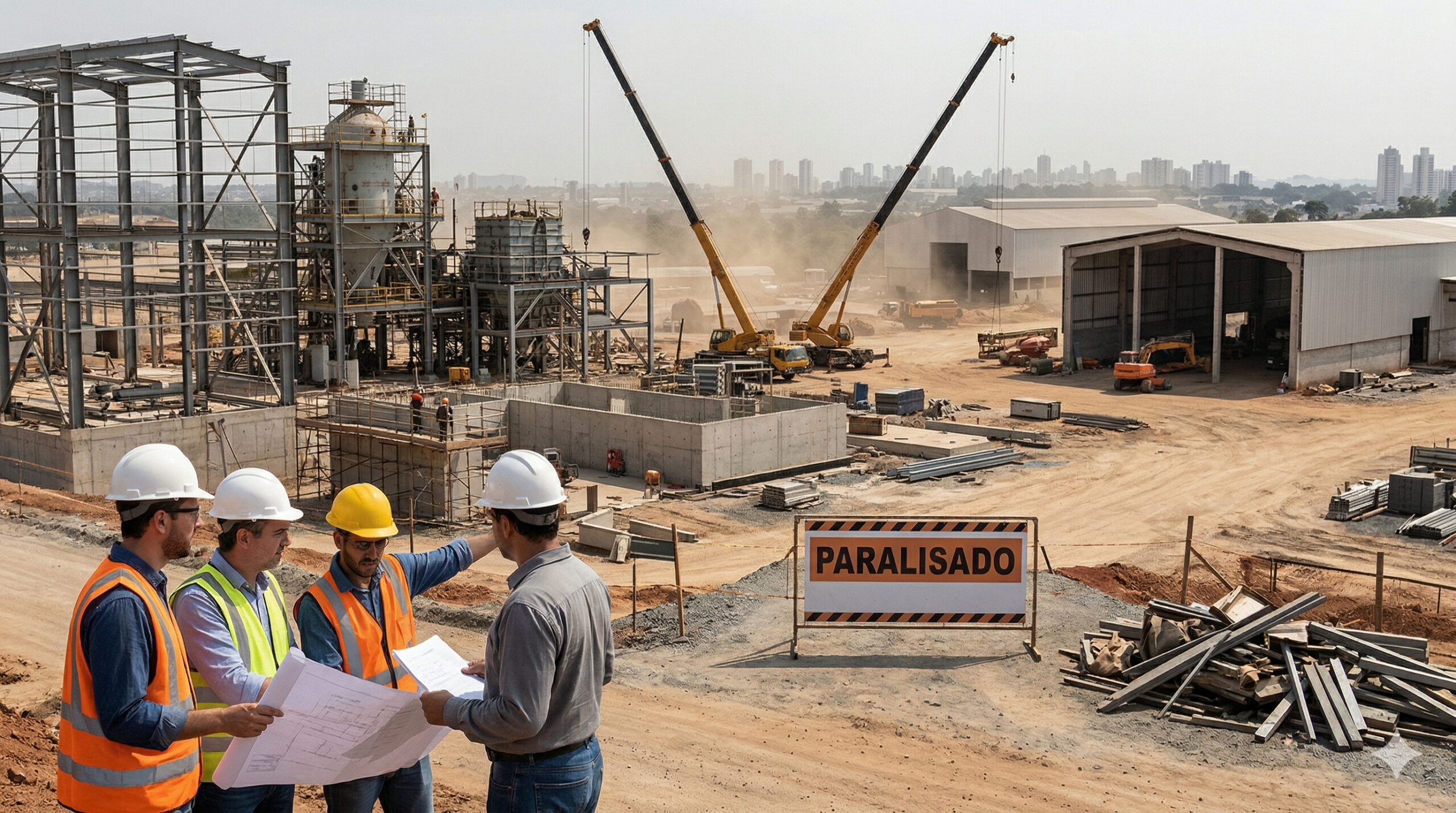
The lack of welders, electricians, and operators becomes a structural threat in 2025, with the construction industry and manufacturing already suffering from delays, cost pressures, and labor shortages in Brazil.
-
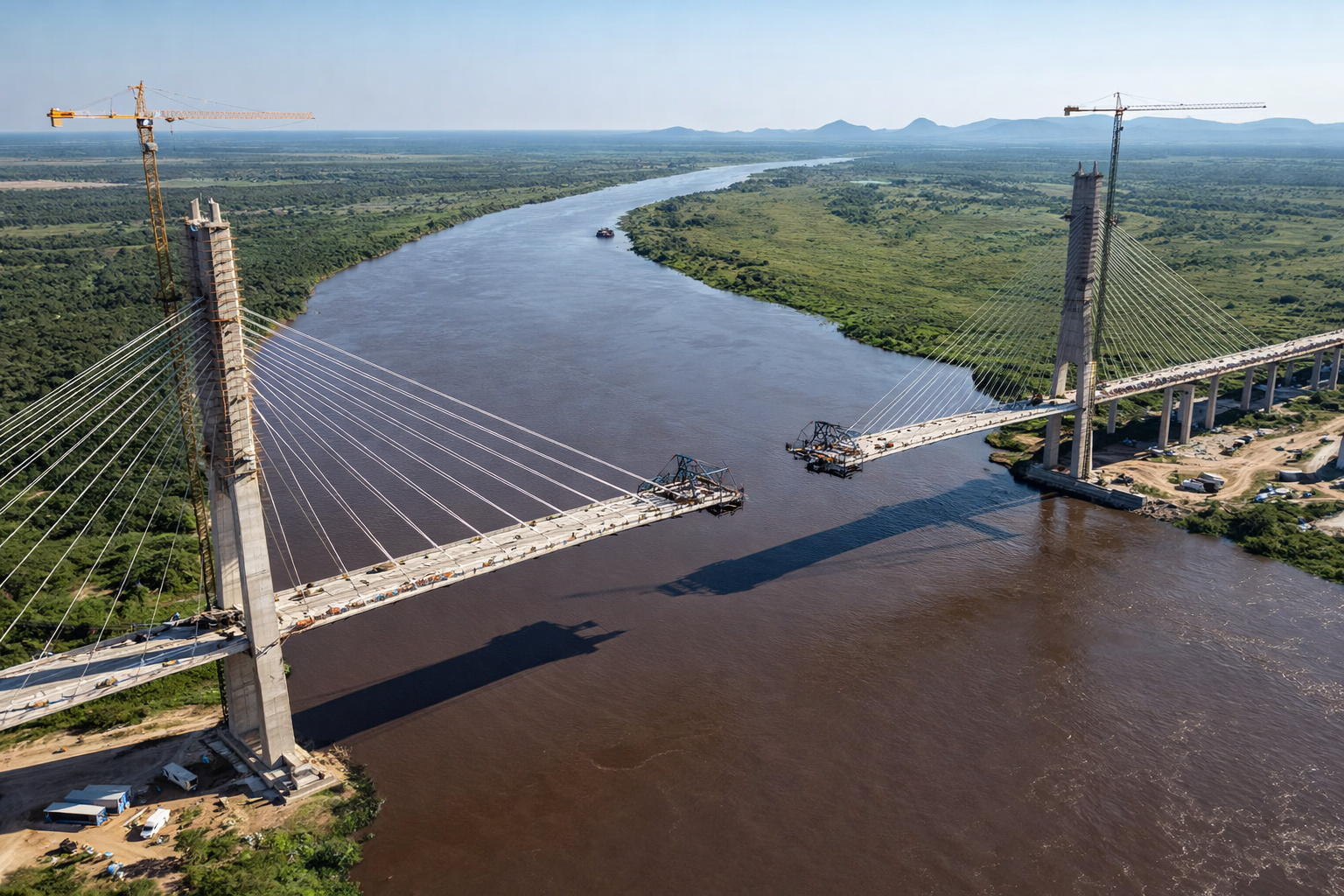
Brazil and Paraguay are just 46 meters away from a historic union on the bioceanic bridge that promises to revolutionize trade between the Atlantic and the Pacific.
-
With 55 km over the sea, a cost of US$ 20 billion, and enough steel to build 60 Eiffel Towers, China’s largest project has connected Hong Kong, Zhuhai, and Macau in a colossal bridge that defies the logic of engineering.

-
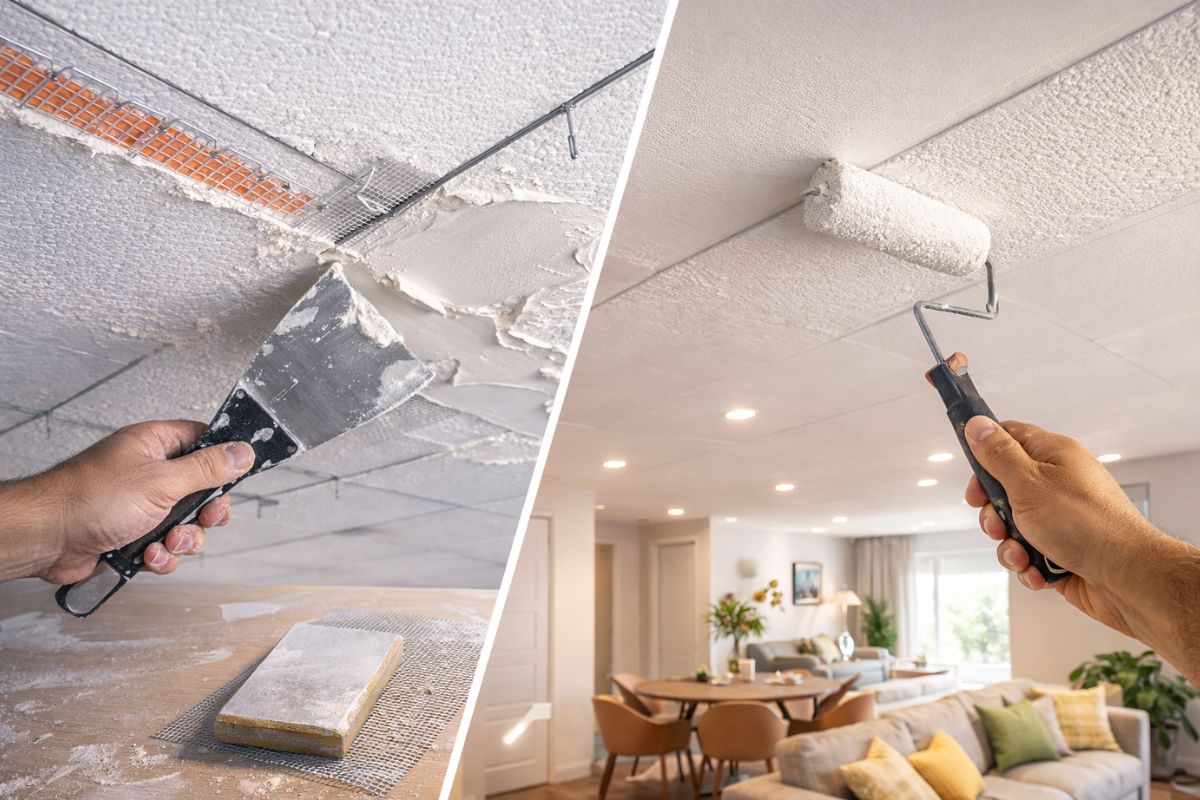
A trick with joint compound transforms a Styrofoam ceiling into a plaster-like ceiling: leveled panels, wires and mesh at the joints, sand, paint, and change the environment while spending little today.

How Exposed Concrete and Manual Sculpture Created the Illusion of Natural Rock
The heart of the project lies in the intensive use of reinforced concrete molded on-site, which was later hand-carved to simulate fractured rocks. Instead of smooth, geometric countertops, the surfaces arise as if they are cliff edges, with irregular breaks and asymmetrical volumes.

Additionally, a fireplace built with masonry blocks was completely redesigned. First, it received layers of plaster hand-carved and then went through a meticulous hand painting process, replicating textures and hues of natural stone. The result is a piece that does not appear installed but seems to emerge from the environment’s very structure.
Meanwhile, the flooring followed the same logic. Each “stone” was mapped, grouted, dyed, and sealed individually, removing any appearance of tiles or industrial patterns. Thus, the visual transition between walls and floor dissolves, reinforcing the sense of geological continuity.
Hidden Lighting and “Open” Ceiling Expand the Sense of Outdoor Space
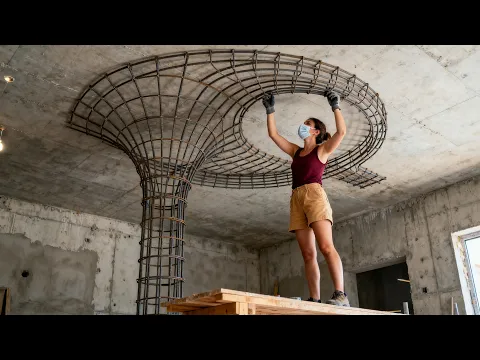
Another key point of the transformation lies in the ceiling. Instead of maintaining a conventional flat surface, Janine Bruce developed a customized “open sky” system, combining reflective metal geometry, hidden LED drivers, glass panels, and a wooden skylight structure.

This composition completely breaks the upper plane of the environment. The light does not behave like direct artificial lighting, but rather as an atmospheric luminosity, diffused and indirect, similar to natural light filtered through a rocky opening. As a consequence, the observer finds it difficult to identify where the solid ceiling ends, dramatically increasing the perception of depth.
Furthermore, the reflective materials were strategically positioned to manipulate light and shadow, creating visual zones that change according to the angle of observation. This feature amplifies the space without increasing its actual footage, a classic trick of sensory architecture applied here to an extreme.
Furniture, Electrical Systems, and Layout Reinforce the Narrative of Natural Erosion

For the illusion to be complete, the project required the installation of entirely new electrical systems, capable of powering multiple zones of recessed lighting without interfering with the organic aesthetic. Wires, outlets, and light points were concealed to avoid breaking the visual narrative.
At the same time, the arrangement of furniture was conceived as part of the sculpture. Nothing appears to be simply placed; it all seems to have been shaped by erosion over time. Sofas, tables, and decorative elements follow natural curves, reinforcing the idea that the space was “excavated,” not constructed.
The final result is an environment that balances extremes: rustic and cozy, organic and functional, primitive and highly designed. At the end of the process, the old box-shaped room transforms into a contemporary cave where architecture, art, and perception merge.









-

-

-

7 pessoas reagiram a isso.