





 Portuguese
  English
  Spanish
  5 min of reading
  8 comments


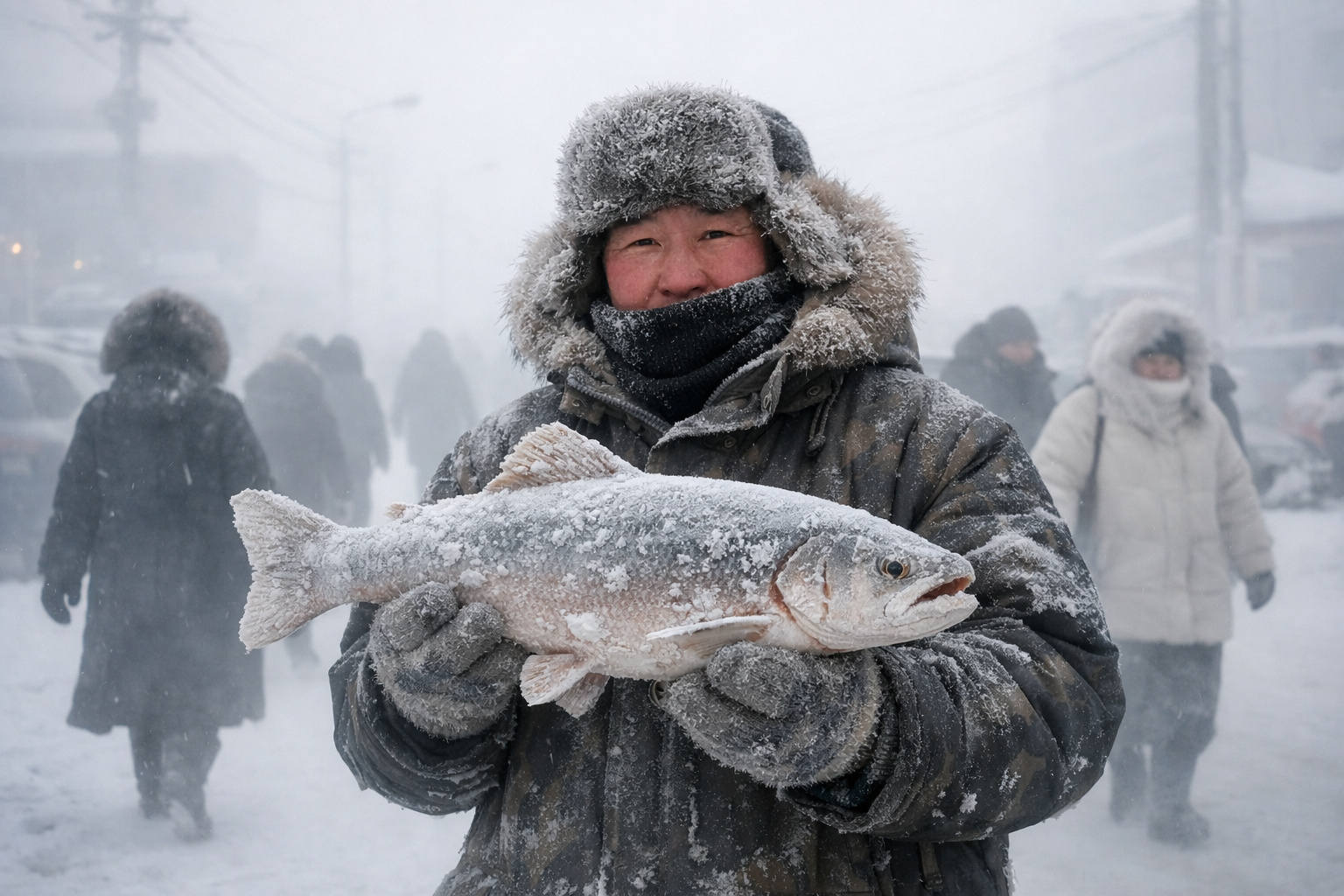


In One of the Most Hostile Regions on the Planet, Entire Cities Operate Below −50 °C, Coexisting with the Polar Night and Revealing How Humans and Animals Challenge the Limits of Survival
Imagine, above all, a cold so aggressive that it ceases to be just a weather condition and starts to act like a constant physical presence. In Siberia, the cold is not just uncomfortable. On the contrary, it attacks, paralyzes, and can kill. At temperatures reaching −60 °C, the physics learned in school seems to fail. When someone throws boiling water into the air, it doesn’t fall as a liquid. Instead, it explodes instantly into a cloud of ice crystals before even touching the ground.
The information was shared through documentary content from the channel Living Planet, which shows, based on scientific and historical records, how life works in the coldest permanently inhabited region on the planet, according to reports from residents and researchers.
Moreover, the extreme cold turns even simple actions into real risks. When touching metal without gloves, skin not only freezes. In practice, it can bond to steel. Even sound changes. When someone breathes outdoors, the vapor freezes so quickly that it produces a subtle noise, known by the locals as “the whisper of the stars”.
-
Spain surprises the world by erecting 62 artificial dunes, mixing sand with natural remains of posidonia, and causing the structure to lose only 1.4% of its volume in 1 year.

-
With 16 Bulava missiles, improvements in acoustic stealth, and a design focused on silent patrols, Russia’s nuclear submarine was born to ensure Moscow’s invisible retaliation and has become one of the pillars of its maritime strength.

-
‘Populous’ city in Rio among the worst in Brazil in national ranking and exposes silent development crisis.
-
Couple buys house in the South Zone of São Paulo, opens a hidden door in the garage, and finds a secret wine cellar with dozens of old wines forgotten since the 1970s.

In this extreme setting, Yakutia emerges, considered one of the most hostile and isolated regions on Earth. While much of the world complains when the thermometer drops below zero, there children eat ice cream at −40 °C, believing it helps warm their bodies. However, surviving in this environment requires its own set of rules.
The Road of Bones and the Path to the Heart of the Cold
To reach the center of this frozen hell, there is only one land route: the R504, better known as “The Road of Bones”. However, the name is nothing symbolic. This highway, approximately 2,000 kilometers long, was built during the darkest period of the Soviet Union, under orders from Joseph Stalin.
During that time, millions of prisoners from the Gulag, including common criminals, intellectuals, and political opponents, were sent to break the permafrost with hand tools. They worked under temperatures close to −50 °C, poorly fed and dressed in rags. When someone died, there was neither time nor conditions to dig graves in the frozen ground. Thus, the bodies were placed directly in the foundation of the road and covered with gravel.
Today, therefore, every meter of this highway rests on an invisible cemetery. Still, it has become the only vital artery connecting Yakutsk to the rest of the world. Therefore, there is one non-negotiable rule: never travel alone. If a car breaks down and no one passes by within two hours, the chance of survival drops drastically.
Yakutsk, the City That Floats on Eternal Ice
Upon arriving in Yakutsk, the first sensation is not just the cold, but blindness. For much of the winter, the city is shrouded in a constant icy fog. However, this is not common mist. In fact, this phenomenon arises from the combination of exhaust smoke, factories, and human breath, which remains suspended in the still air.
As a result, visibility can drop to less than 2 meters. Even so, Yakutsk continues to function normally. After all, it is the largest city in the world built on continuous permafrost.
However, Yakutsk does not represent the limit of inhabited cold. If we continue for another two days inland, we reach Oymyakon, known worldwide as the pole of cold.
Oymyakon and Temperatures Lower Than on Mars
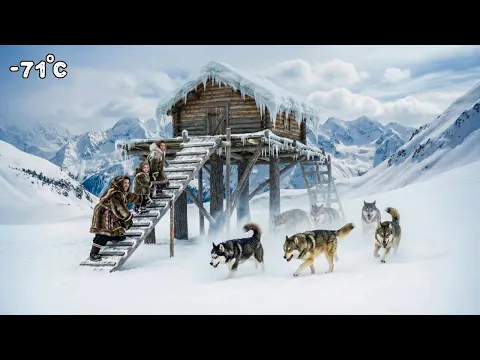

In Oymyakon, the thermometer has already recorded −71.2 °C, the lowest temperature ever measured in a permanently inhabited location. For comparison, this value is lower than the average surface temperature of Mars.
In this environment, the cold dictates every detail of life. The ink in pens freezes. Cell phone batteries die within seconds when exposed to the air. Additionally, glasses with metal frames can burn the skin, leaving permanent marks on the face.
Still, the routine follows its own rules. Schools only suspend classes when the temperature drops below −52 °C. Before that, the school day proceeds normally, reinforcing how the concept of “normality” changes in these regions.
Animals Forged by the Extreme Cold of Siberia
While humans require layers of protection and constant heating, wildlife thrives. Siberia is home to animals that not only tolerate the cold but have been shaped by it. The prime example is the Yakut horse.
Despite their gentle appearance, these animals survive outdoors in temperatures of −60 °C. Their fur is so dense that snow does not melt on their backs. Furthermore, during the winter, their metabolism enters a state of extreme energy conservation.
Alongside them live reindeer, true nomads of the tundra. Curiously, their eyes change color. In summer, they are golden. In winter, they turn deep blue, allowing them to see ultraviolet light reflected in the snow. This way, they locate food and predators where humans would be blinded.
Food, Water, and the Inverted Logic of Survival

Similarly, human food follows its own rules. In Yakutsk, the market operates outdoors at −40 °C. There are no freezers. After all, the entire city already is one. Fish is stacked like firewood, and milk is sold in solid blocks.
The local delicacy is stroganina, made from frozen raw fish, shaved into thin slices and consumed with salt and pepper. Contrary to what it seems, the fat melts in the mouth and warms the body from within, providing essential energy.
Water, in turn, needs to be mined. During winter, residents cut blue ice blocks from frozen rivers. Whenever they need water, they break off a piece and let it melt inside the house.
Suspended Houses, Constant Heating, and the Invisible Risk
Finally, housing represents an engineering challenge. In Yakutsk, buildings do not touch the ground. They are all suspended about 2 meters above the ground, supported on concrete stilts. The reason is simple: the heat from the construction could melt the permafrost and cause the structures to collapse.
Furthermore, heating must operate 24 hours a day. If it fails, residents have between 3 and 5 hours to fix the problem. Otherwise, the water freezes, pipes burst, and the house becomes uninhabitable until spring.
Despite so many challenges, about 33 million people live spread out over a region that occupies 77% of Russia’s territory. The number one rule there is solidarity. On the road, no one leaves anyone behind.
Siberia does not forgive mistakes. Nevertheless, for those who call this ice desert home, the cold is not suffering. It is identity.
Could you live in a place where the cold can kill in minutes and each day requires extreme survival strategies?
Source: Living Planet








O pessoal lá nem precisa pescar, já tira o peixe do congelador.🤣🤣🤣🤣
Cadê o tal aquecimento global?
Não afeta lá pq é perto da muralha do domo
Excelente matéria!! Informações muito interessantes e fiéis!! Parabéns!!