





 Português
  Inglês
  Espanhol
  5 min de leitura
  0 comentários


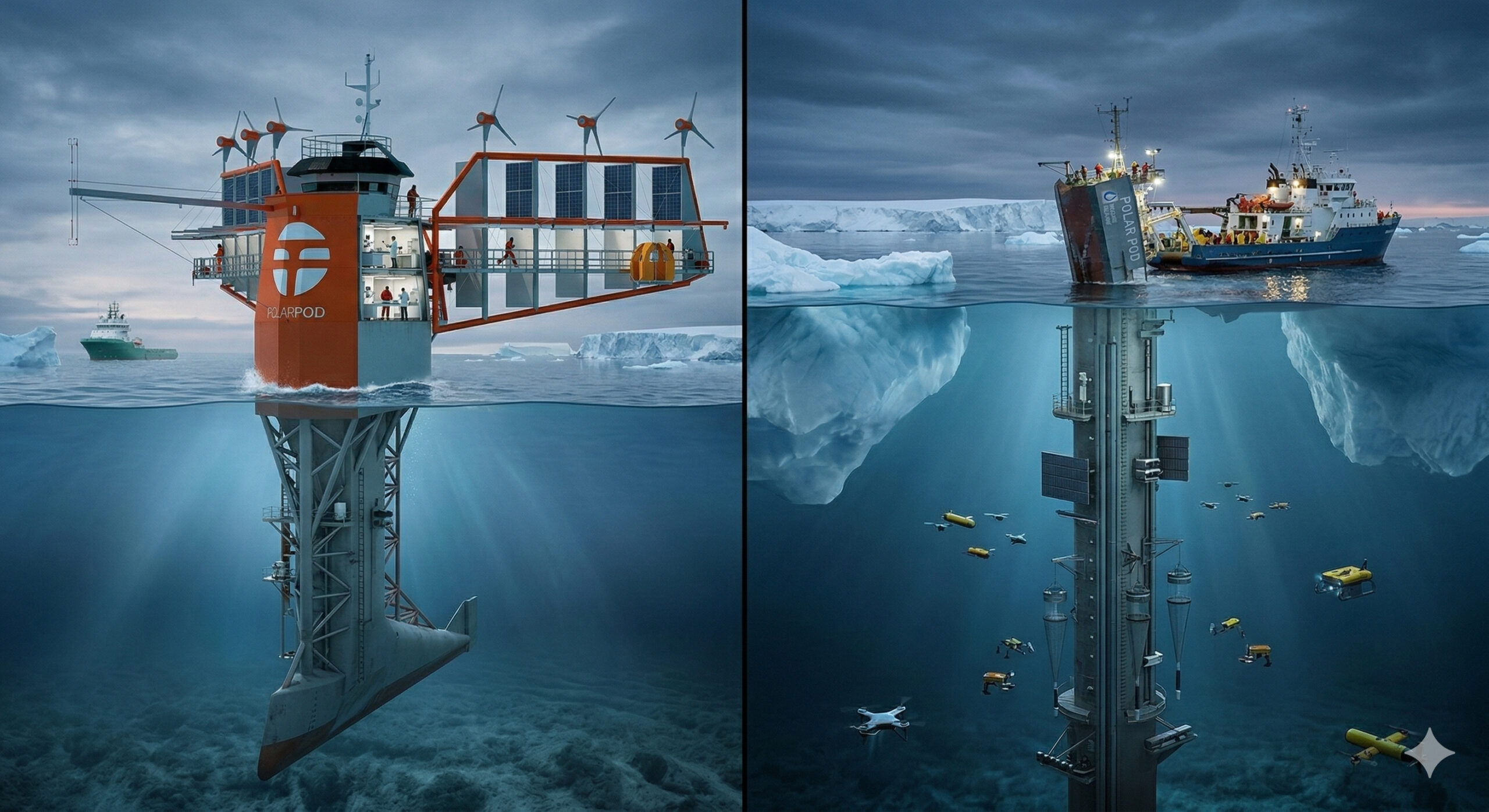
Polar POD is a 100-meter ocean platform that drifts in Antarctica to measure CO₂ and heat, potentially redefining global climate models
There is an irony at the heart of modern climatology: the Southern Ocean, responsible for absorbing about 40% of all carbon dioxide emitted by humanity, is also the least studied ocean on the planet. According to recent research data conducted by institutions such as NASA and the University of Hawaii, this ocean plays a central role in regulating the global climate but remains critically under-measured for most of the year.
It is in this context that the Polar POD emerges, an inhabited oceanographic platform developed by Ifremer in partnership with CNRS, CNES, and led by French explorer Jean-Louis Étienne. With 100 meters in height, about 1,000 tons, and vertical operation with up to 75 meters submerged, the structure is designed to operate in the planet’s most hostile regions and collect continuous data on carbon, temperature, and ocean dynamics.
Polar POD Project: a 100-meter ocean platform inspired by FLIP to measure CO₂
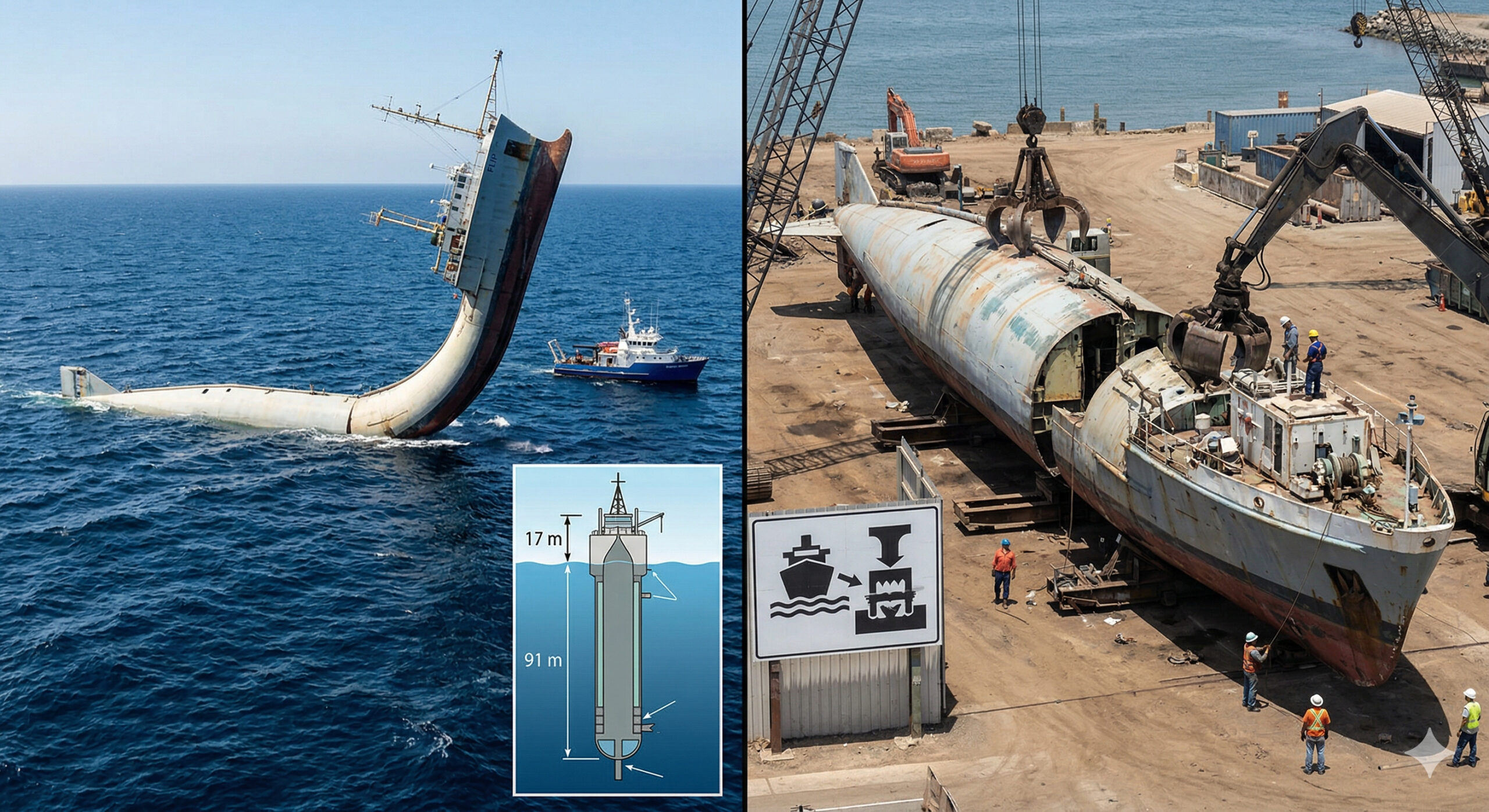
The Polar POD, short for Polar Platform Ocean Drifter, represents a direct evolution of the American FLIP concept. Like its predecessor, the structure is towed horizontally to the operational area and then rotates to the vertical position by filling ballast tanks.
-
With a length of 108 meters and a giant spoon shape, the FLIP was the only ship in the world capable of rotating 90 degrees in the ocean and remaining vertical, with 91 meters submerged, operating for 60 years until it was retired and sent to the scrapyard in 2023.
-
Neither the USA nor China: a small European nation has become one of the largest maritime powers on the planet, controlling one of the largest merchant fleets in the world with thousands of ships and dominating the global transportation of oil and strategic cargo.
-
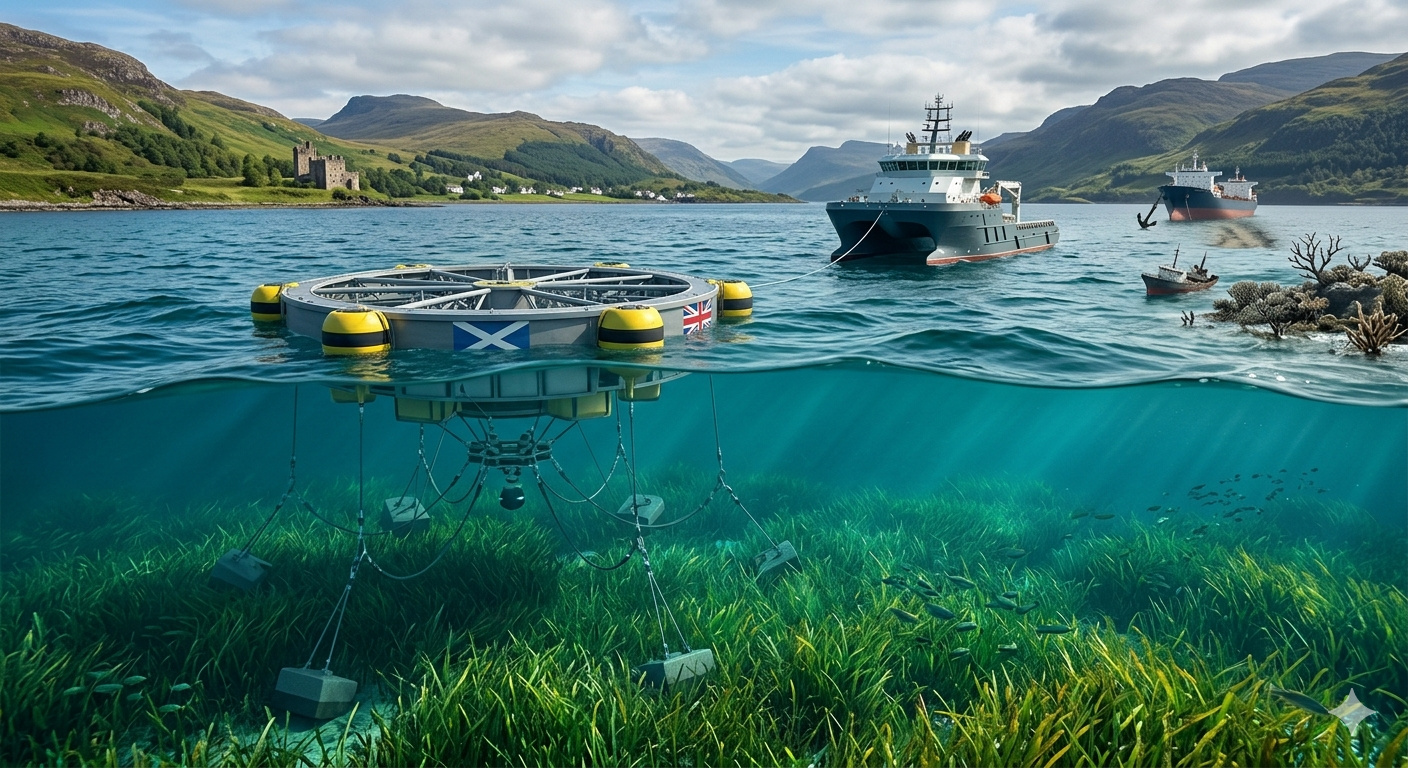
Scotland and the United Kingdom have created a new anchoring system that floats in the water without touching the seabed, after discovering that the current from a conventional anchor destroys up to 50 m² of seagrass meadow per event and that ship-damaged reefs showed no signs of recovery even ten years later.
-
Weighing 175,500 Tons, Measuring 345 Meters Long, and With Capacity for Over 4,300 Passengers, the Sun Princess Becomes the Largest Ship Ever Built by Princess Cruises and Attracts Global Attention for Its Huge Glass Dome Inspired by Santorini’s Architecture Installed on Top of the Vessel

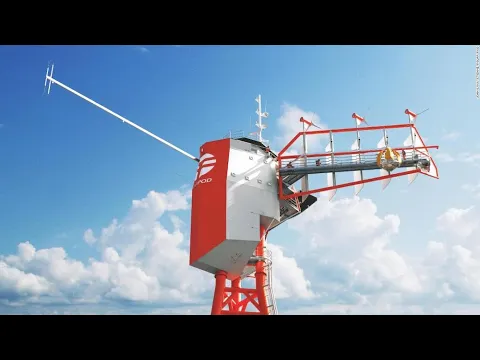

The fundamental difference lies in the mode of operation after verticalization. Unlike FLIP, the Polar POD does not remain anchored nor does it have propulsion. It is released to drift freely, being driven by the Antarctic Circumpolar Current.
This approach transforms the very force of the ocean into the engine of the scientific mission, allowing continuous coverage of regions where measurements are virtually non-existent.
Southern Ocean and global climate: how Antarctica absorbs CO₂ and heat from the atmosphere
The Southern Ocean plays a critical role in climate regulation. Studies indicate that it absorbs between 60% and 90% of the excess heat retained in the atmosphere by greenhouse gases.
Additionally, the biological production of the region captures approximately 3 billion tons of carbon per year, equivalent to about a quarter of global annual emissions.
The Antarctic Circumpolar Current acts as the central axis of this process, connecting the Atlantic, Indian, and Pacific Oceans. This circulation promotes the exchange of deep and surface waters, allowing for carbon absorption and sequestration on a planetary scale.
The absence of continuous measurements in this system directly compromises the accuracy of global climate models.
Operation of the Polar POD: platform drifts in the Antarctic Circumpolar Current
After being towed to the initial point near South Africa, the Polar POD will be inserted into the Antarctic Circumpolar Current, where it will begin to drift freely.
The average speed of the current is about 1.8 km/h, allowing for a complete circumnavigation of Antarctica in approximately 18 months, covering about 24,000 kilometers.
The plan foresees up to three years of continuous operation, with uninterrupted data collection in all seasons of the year, including the austral winter, a period currently under-studied.
Structure of the Polar POD: 75 meters submerged ensure extreme stability in the ocean
With 75 meters submerged, the Polar POD operates below the zone of greatest influence from surface waves. Its vertical oscillation period is approximately 60 seconds, much longer than the typical wave period of the region, which is around 21 seconds. This ensures exceptional stability even in extreme conditions known as the “furious fifties.”
This stability allows for high-precision measurements in an environment where conventional ships cannot operate safely.
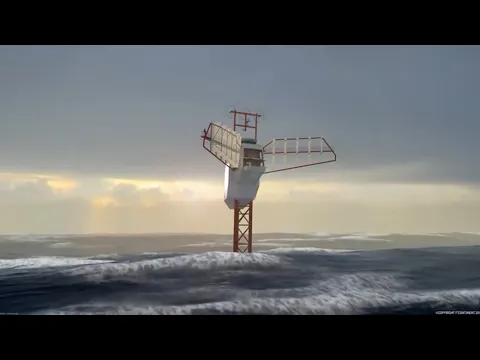
The habitable structure of the Polar POD is located about 20 meters above the waterline and is designed to accommodate eight people. The team includes sailors responsible for passive navigation and sail adjustment, scientists in charge of measurements, and a cook.
Logistical support is provided by the ship Persévérance, which conducts crew changes and resupply every two months. Life on board requires adaptation to an unusual vertical environment, where floors and walls change orientation after the initial transition.
Energy of the Polar POD: wind turbines and solar panels replace engines
The Polar POD has no engine. All energy is generated by six wind turbines of 3.2 kW each, complemented by solar panels.
This configuration eliminates mechanical noise, creating an ideal environment for acoustic measurements and studies of marine mammals.
The absence of propulsion and vibration makes the platform extremely quiet, a critical factor for advanced ocean research.
During the mission, the Polar POD will perform continuous measurements of:
- CO₂ exchanges between ocean and atmosphere
- Temperature and salinity
- Marine biodiversity through acoustic sensors
- Presence of microplastics and pollutants
- Calibration of satellite data
The program involves 43 scientific institutions from 12 countries, with data made available in open format for the global community. The scale and continuity of these measurements could redefine scientific understanding of Earth’s climate.
Construction: €28 million project faces delays
The project began development in 2010 and had its construction formalized in 2022, with an estimated budget of €28 million, plus €13 million for operation. The production involves the Piriou shipyards and the company 3C Metal, responsible for the structure and assembly.
However, political and financial impasses in France halted the project’s progress in 2024, delaying the launch to at least 2027.
According to information released in 2025, the project faces a conflict between Ifremer and the shipyards responsible for construction, related to costs. The halt occurs even with the support ship already ready and the scientific program structured.
This scenario highlights the impact of political and financial decisions on large-scale scientific projects.
Importance of the Polar POD for global climate models and warming prediction
Current climate models depend on incomplete data about the Southern Ocean, especially during winter. The absence of this information generates significant uncertainties in global warming projections.
The Polar POD was designed to fill this gap, operating continuously in extreme conditions and providing unprecedented data. The difference between estimates and direct measurements could redefine climate predictions in the coming decades.
The central concept of the Polar POD is simple yet powerful: to use the environment itself as a means of displacement. By drifting with the planet’s strongest current, the platform covers vast areas without the need for propulsion.
This approach allows for continuous measurements in regions where traditional ships and sensors cannot operate. If operational, the Polar POD could become one of the most important tools ever created to study Earth’s climate.






Seja o primeiro a reagir!